Snapshots of Learning: Creative Writing Adventures

Often the most difficult aspect of creative writing, for adults and for students, is the character and story ideas. Who–or what–will be my characters? What will happen in my story? Take a peek into Amy Murch’s class to see how she and several other HSE elementary teachers are using Night Zookeeper to foster creative ideas and promote writing fluency this year. Night Zookeeper is an online adventure land for students, built to encourage creative writing and provide a global network for story sharing. The Night Zoo is full of adventures waiting to happen…if only the students will write them!


Snapshots of Learning: Research in First Grade

Think back to your own first grade experience. Was the term research a part of your vocabulary? Did your teacher ever refer to you as a researcher? An inquirer? For my part, I’m fairly certain that at age six I had no idea what research and/or inquiry meant. These terms…well, they just never came up in class conversation.

Not so in HSE primary classrooms today. Check out this 2-minute example from TCE teacher Courtney Gibson’s class. The first-graders’ curiosity about geodes has led to exploration, discovery, and the sharing of new knowledge. According to TCE Principal Sara Curran, these young investigators “are still sharing what they are learning, as I heard more about geodes yesterday in the hallway!”


Extending HSE21’s Reach

In today’s post, Technology Integration Coach, Kelly Moore, reflects on the development and expansion of HSE21. Kelly specializes in helping teachers to integrate digital tools for learning in meaningful, appropriate ways. Teaching and learning are at the core of HSE21 – modern technologies are one tool that foster the principles on which HSE21 is based.

Since HSE21 first emerged several years ago, and as it continues to develop, the reach and scope of the program continues to expand.

HSE21 72dpi

For the 2015-16 school year, the program has grown from grades 5 & 6 into grades 7-12. Over 12,877 students in grades 5-12 are now learning with 1:1 technologies. Students in grades 5-8 will utilize iPads, while students in grades 9-12 will learn using a device of their choice under a Bring Your Own Device program. In addition, 23 K-4 iPad pilot teachers, are using iPad carts to enhance their students’ learning experiences with HSE21 tenets.

IMG_0072

An Indiana Department of Education Digital Learning Grant, awarded in 2014, has allowed for additional HSE21 professional development for our teachers. This is not only technology-focused up-skilling, but also a zeroing-in on changing classrooms. Professional Development focuses on shifting instruction from traditional teaching methods to student-centered problem solving in blended learning environments. Best Practice is consistently infused in PD as teachers proceed along their personal instructional technology continuum. Curating and developing digital content is ongoing, and our teachers are increasingly integrating digital content and using Blackboard, our Learning Management System.

In June, our Summer Learning Fair was a highly successful three-day event. Over 80 HSE21-focused sessions were attended by over 330 teachers with a total of 1970 training hours!

As HSE21 extends its reach, its vision remains steadfast! HSE21 will equip students with the content knowledge, unique skills, and new literacies they will need to contribute positively in their communities and success in the 21st-century global economy.

Click here to learn more about HSE21 by visiting the website!

Elementary Design: The Inquirers

In our last post, we met the 2015-16 Elementary Design Team — 23 teacher leaders who together are paving the way to discover best practices for technology integration in the primary grades. Click here to read this short introduction, if you missed it last week!

For this week, here’s another quick look at this important Team, 23 teacher-explorers on a quest of discovery!


1:1? It’s Elementary!

We know that HSE21 is all about teaching and learning in authentic and relevant ways to prepare today’s students for the modern world. It’s an inquiry-based approach to content (and to life!); it’s about collaborating with others to create, discover, and problem-solve.

Elementary DesignThis HSE21 approach to learning is exactly what is taking place among a group of HSE teachers this year as well. During the 2015-16 school year, twenty-three teacher leaders – we call them the Elementary Design Team – have come together as pioneers to discover best practices for the implementation of 1:1 technology in grades K-4.
Why a focus on K-4 technology integration this year? Easy. Our K-4 buildings are ‘on deck’, slated to roll out 1:1 student iPads in 2016-17. It will be the culmination of a three-year K-12 plan to get a digital tool for learning into the hands of each and every student. To be clear, technology is just that – one tool – but it’s an important tool when the goal is to foster collaborative, globally-connected learning and to prepare students for the future.

Our Elementary Design pioneers are tasked this year with several things – all under the umbrella of this driving question: What are best instructional practices when considering 1:1 technology integration in grades K-4? The Team is exploring digital content and resources; they are using technology to promote  project- and problem-based learning, as well as using the technology to promote inquiry and creativity. As pioneers, this group of teachers is also wrestling with more practical questions:  screen time, Internet safety, and device logistics for starters.

As the year unfolds, the Elementary Design Team will continue to innovate and experiment, curating resources and lesson ideas as they go, coming together often to debrief and share their learning (meeting in-person and virtually). They will practice creative problem-solving as they work to develop best practices to share with their colleagues. Teachers as learners – an example of HSE21 in action.

Those HSE21 Shoes!

IMG_1721In traditional classrooms, character trait study likely consisted of a teacher lesson (read: lecture) to explain the term ‘character trait’, followed by individual seat work. Students would sit quietly at their desks, read a story alone, and then write a paragraph about the story’s characters and their traits. Students’ written work would be graded and sent home in a folder. The end.

Take a peek into HSE21 classrooms, though, and what you’ll see is completely different! HSE21 means that character study – indeed all academic content – is presented in active, student-centered ways that lead to deeper learning. What does does HSE21 look like in the classroom? Consider this recent HSE21 example of character trait study:

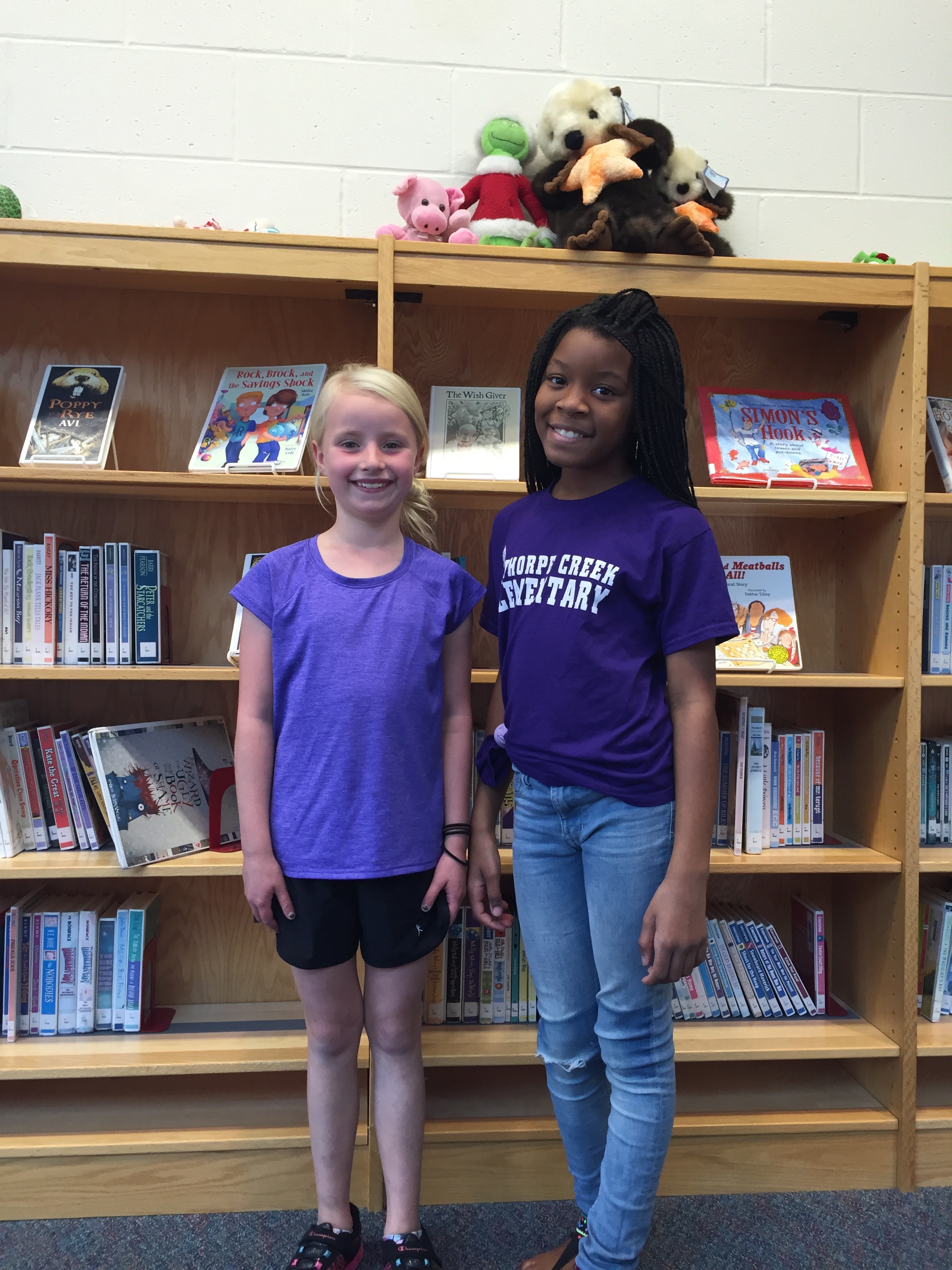
At Thorpe Creek Elementary, third grade teacher Mrs. Muegge introduced character traits to her students through  an HSE21 lens. Following her interactive mini-lesson, Muegge asked student pairs to choose books for their own character studies. Partners considered the characters in their stories and, with Muegge’s guidance and help, decided on traits that best exemplified each. Students then created, shared, and discussed presentations and what they’d learned. Here’s a final product, created and shared by Aariyah and Gabrielle:

While staying true to the academic standards, HSE21 teaching and learning turns the traditional quiet classroom into a vibrant learning lab.

  • Student Choice – Which book would you like to use for this project?
  • Collaboration – Let’s work with partners to analyze the characters; we can learn from each other!
  • Engagement and Creativity – Design a presentation to teach us what you learned!
  • Extension of Learning – We’ll post our presentations and share our learning with each other and those beyond our classroom walls!

In which type of classroom would you rather learn?


Changing Lives Through Global Connections

MURCH1Brooks School Elementary connected educator Amy Murch has always been a pioneer when it comes to bringing the world to her classroom. Last year, Murch’s fourth graders participated in the Skype 50 State Challenge – racking up a total of 45 states and 5 countries! Through forums such as Skype Education and Twitter, Mrs. Murch and her students have taught Irish students about Genius Hour, celebrated creativity on International Dot Day, learned principles of flight from a NASA researcher, and written a blog post for world explorer Justin Miles. Night Zookeeper has become the class’ portal for writing enrichment; and this week, Murch’s fourth graders are gearing up for the Global Read Aloud, in which students from over sixty nations will connect through literature.

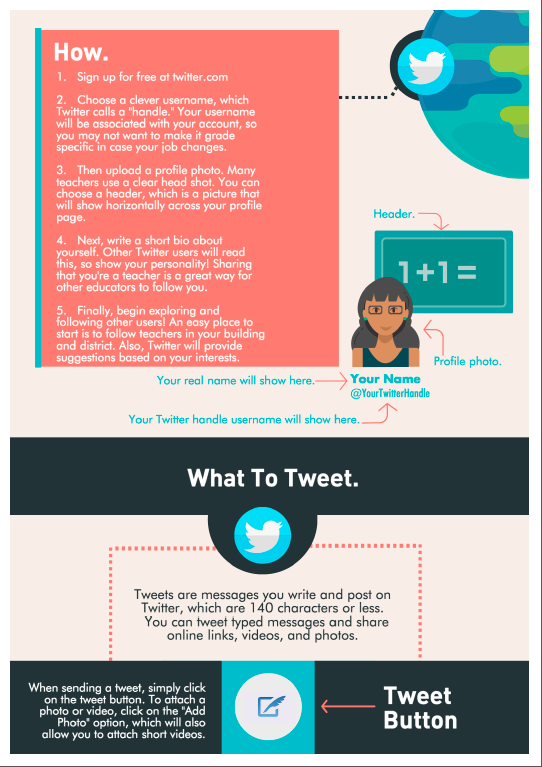
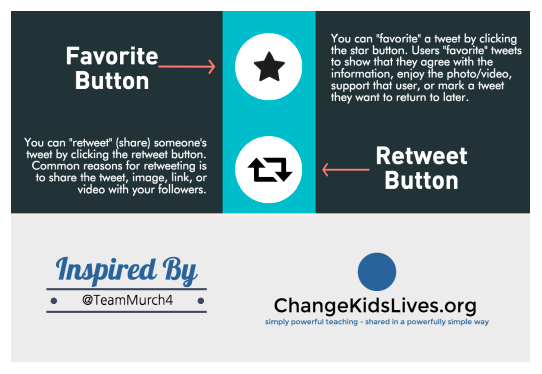
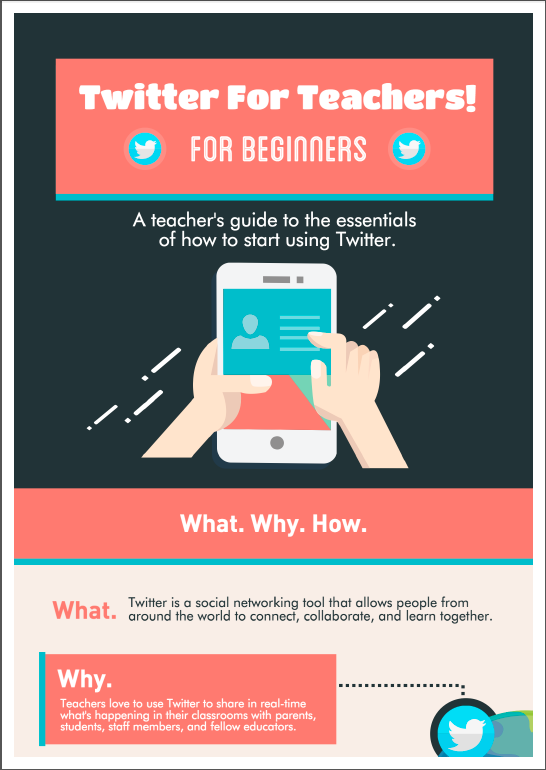
All that to say, by becoming a global connected educator herself, Mrs. Murch has developed quite an expertise in connecting her students — and is now helping other teachers learn to connect their classrooms as well. Don’t miss Amy’s new article on using Twitter in the classroom at ChangeKidsLives.org.

Then download the Murch-inspired Twitter for Educators Infographic (shown below) here:  Twitter+for+Beginners+PDF

Screen Shot 2015-09-29 at 6.11.50 PM

Screen Shot 2015-09-29 at 6.12.08 PM

Screen Shot 2015-09-29 at 6.12.23 PM


Reinventing School Libraries – Makerspace!

Makerspaces are a natural evolution for libraries. We need to make the resources available to our students that will help guide their inquiry and exploration. Who can predict what our students will create when given the space and tools necessary?

– Phil Goerner in School Library Journal

What is a makerspace? Essentially, a makerspace is a physical area, often in a library, that is set aside and laden with diverse materials for student exploration. Students are encouraged to create,  design, imagine and problem solve as they choose. Makerspaces provide a natural environment where creativity and critical thinking happen naturally.

This slideshow requires JavaScript.

Many HSE school media centers are developing makerspaces. At Fishers Elementary, media specialist Cristie Ondrejack has designed a makerspace around three verbs: Create. Solve. Design.

In the Create area, students use a variety of art supplies to create whatever they can imagine. Solve challenges students to use their critical thinking skills to tackle puzzles, riddles, and logic problems. Perseverance is a goal here! Design encourages students to explore with Legos, K’Nex, Magnetix, Marble Maze and other building supplies. Students collaborate as they envision, plan and build.

Later in the year, HSE21 Shorts will bring you stories of makerspaces at other building levels in the district. Who knows what future inventions or discoveries will be found to have originated in an HSE makerspace!


A New Beat in Music Class

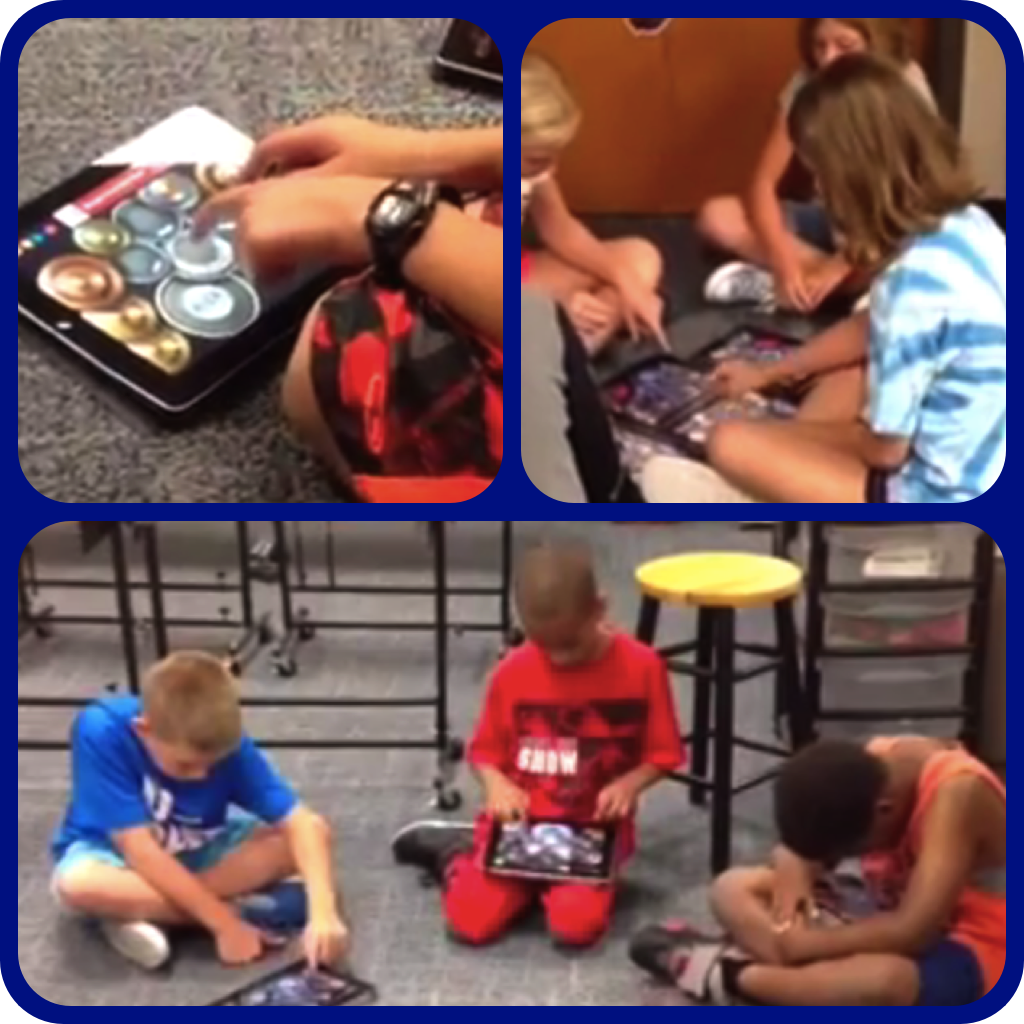
fcemusicThanks to FCE Music Teacher Marcia Abraham for sharing the innovation taking place in her Music classes at Fall Creek Elementary this fall! Mrs. Abraham is one of 23 elementary teacher ‘pioneers’ this year. As part of the Elementary Design Team, these teachers – from across the district – are discovering how iPads can support inquiry and problem-based learning in their classrooms. Click here to be taken to the FCE Music Blog. You’ll learn more about this new beat in music class, as well as hear some samples of student-created music.