 This two-part story is a wonderful example of how great teachers foster deep and meaningful learning. As you read about the Celebration Houses project, notice how Indiana’s Academic Standards are addressed in ways that are inquiry-based, engaging, and authentic. Notice how student teams collaborate towards a final creative product. One more…Notice how technology was employed purposefully as a cognitive learning tool!
HSE21 Shorts asked fifth grade teachers Amber Hudson and Lisa Keaffaber, from Hamilton Southeastern Intermediate & Junior High, to take us into their ‘teacher brains’ to explain how this learning experience connected content from across the curriculum. In our next post, we’ll examine ways in which this project fostered community connections both within the classroom and throughout our city.
Q: How did this project come about?
A: It all started when Amber said, “Hey, I heard about this gingerbread house idea, and I think we should try it.” After brainstorming some ideas on how to incorporate it into our curriculum, standards, and our students’ interests, the Gingerbread Celebration House Project was born.
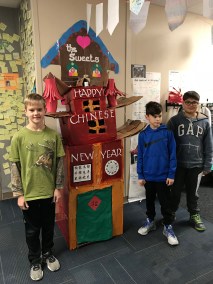
Students returned from Thanksgiving break to find the classrooms transformed. In place of desks were heaps of cardboard and cardboard boxes. Hanging around the rooms were 31 QR codes with pictures, and huge sheets of paper with thought-provoking questions.
Before students could experience the room, we read two picture books: one on being an American and one on faith. Both books focused on the beautiful differences that are among us and seen in our celebrations of faith. After experiencing the songs, dances, videos, and pictures of the various holidays via the QR codes and pictures, each student uploaded a video to FlipGrid explaining which celebrations they found most interesting. This is how we determined which student would construct which house.
 Q: What were your goals for the project?
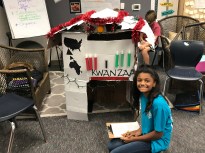
A: Our goals were to give students an awareness and appreciation of cultural celebrations from around the world that occur throughout the year AND to have them share their understanding with the people of Fishers.
Though many families in our district do celebrate Christmas, other important holidays are celebrated by families in our classroom and around the world that are also significant and special.
Q: How did the learning experience align with academic standards?
In humanities class, social studies is incorporated into reading and writing. Through reading, students discovered both similarities and differences they had with other students’ traditions. For example, light (as in candles and strands of lights) are a common feature in holidays for Buddhists, Christians, Jews, and Muslims.
Here is a sample of Indiana Academic Standards for humanities subjects that were addressed in this project:
Reading standards:
- Determine two or more main ideas of a text.
- Explain the relationships or interactions between two or more events, ideas, or concepts based on specific information in the text.
- Combine information from several texts or digital sources on the same topic in order to demonstrate knowledge about the subject.
- Determine the meaning of general academic and content-specific words and phrases in a nonfiction text relevant to a fifth grade topic or text.
Writing standards:
- Introduce a topic; organize sentences and paragraphs logically, using an organizational form that suits the topic.
- Employ sufficient examples, facts, quotations, or other information from various sources and texts to give clear support for topics.
- Connect ideas within and across categories using transition words (e.g., therefore, in addition).
- Include text features (e.g., formatting, pictures, graphics) and multimedia when useful to aid comprehension.
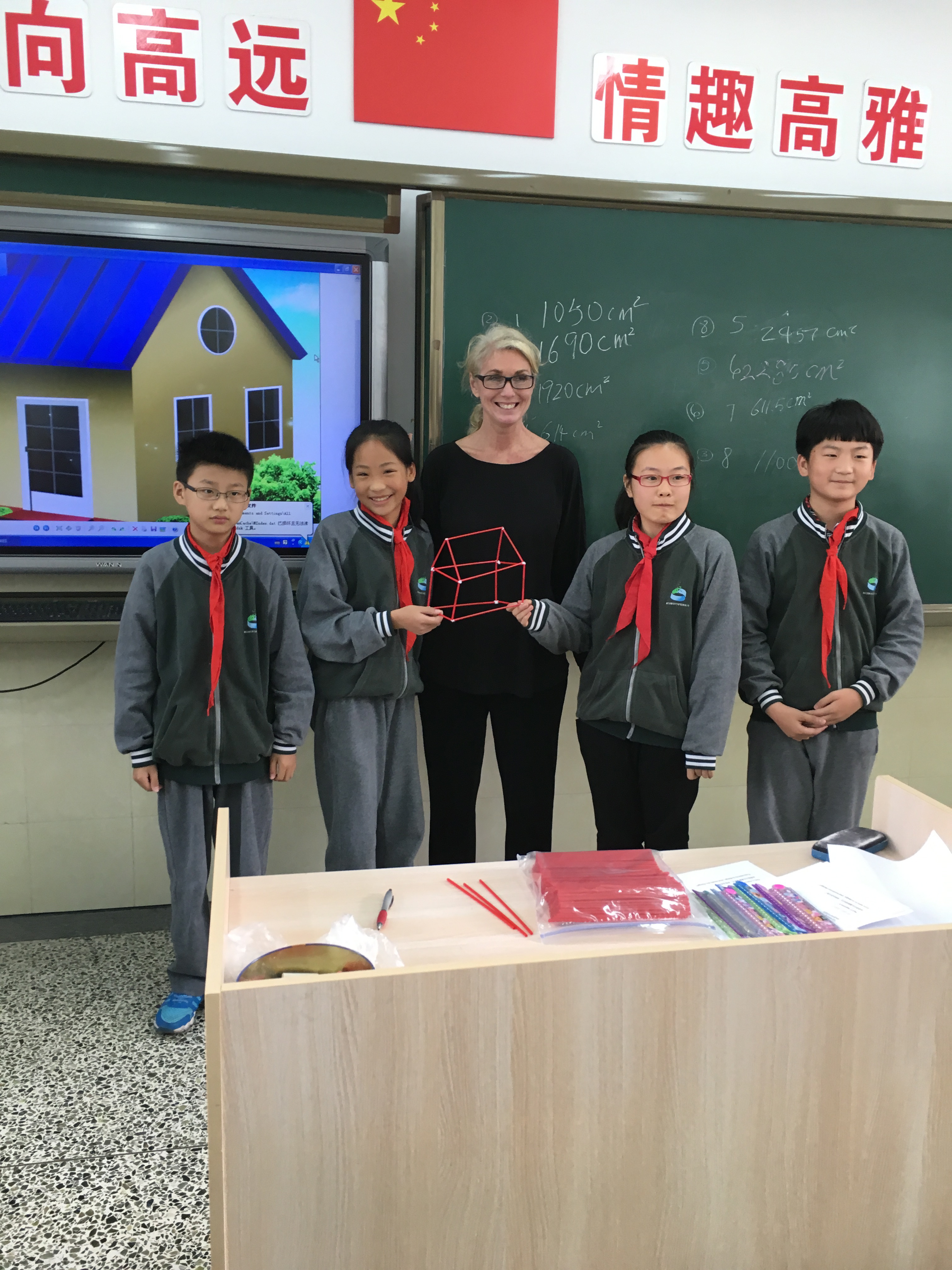
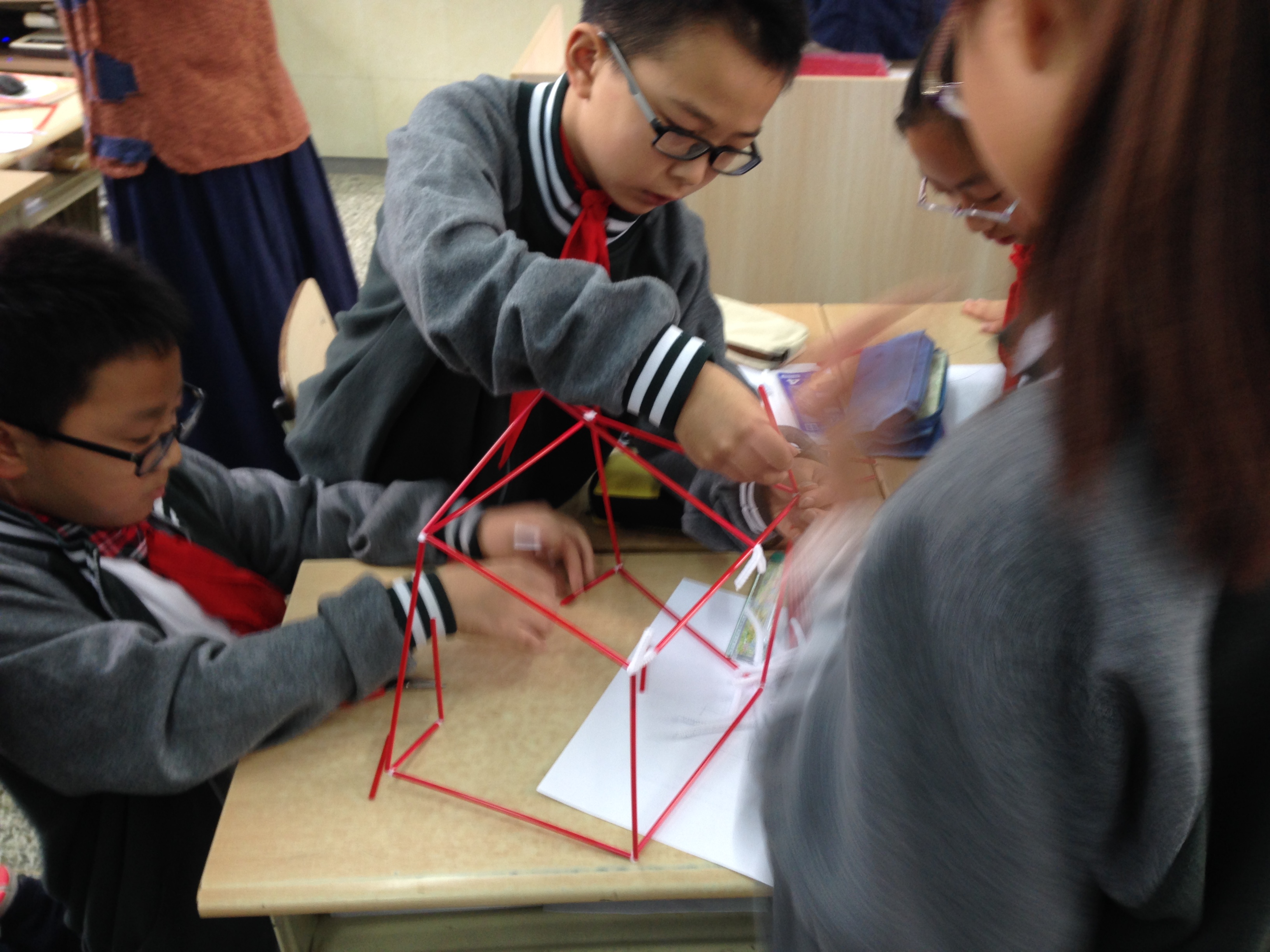
In STEM (Science-Technology-Engineering-Math) class, math and science are interwoven for a more real world experience. Constructing and decorating the Celebration Houses became an authentic means through which students could practice STEM skills. Students used the engineering design process to develop a viable structure for their house; they then applied their skills to construct and decorate their houses. Hands on. The engagement was through the roof — literally!
Math standards:
- Multiply multi-digit whole numbers fluently using a standard algorithmic approach.
- Add, subtract, multiply, and divide decimals to hundredths, using models or drawings and strategies based on place value or the properties of operations. Describe the strategy and explain the reasoning.
- Solve real-world problems involving multiplication and division of whole numbers and decimals
- Find the area of a rectangle with fractional side lengths by modeling with unit squares of the appropriate unit fraction side lengths, and show that the area is the same as would be found by multiplying the side lengths. Multiply fractional side lengths to find areas of rectangles, and represent fraction products as rectangular areas.
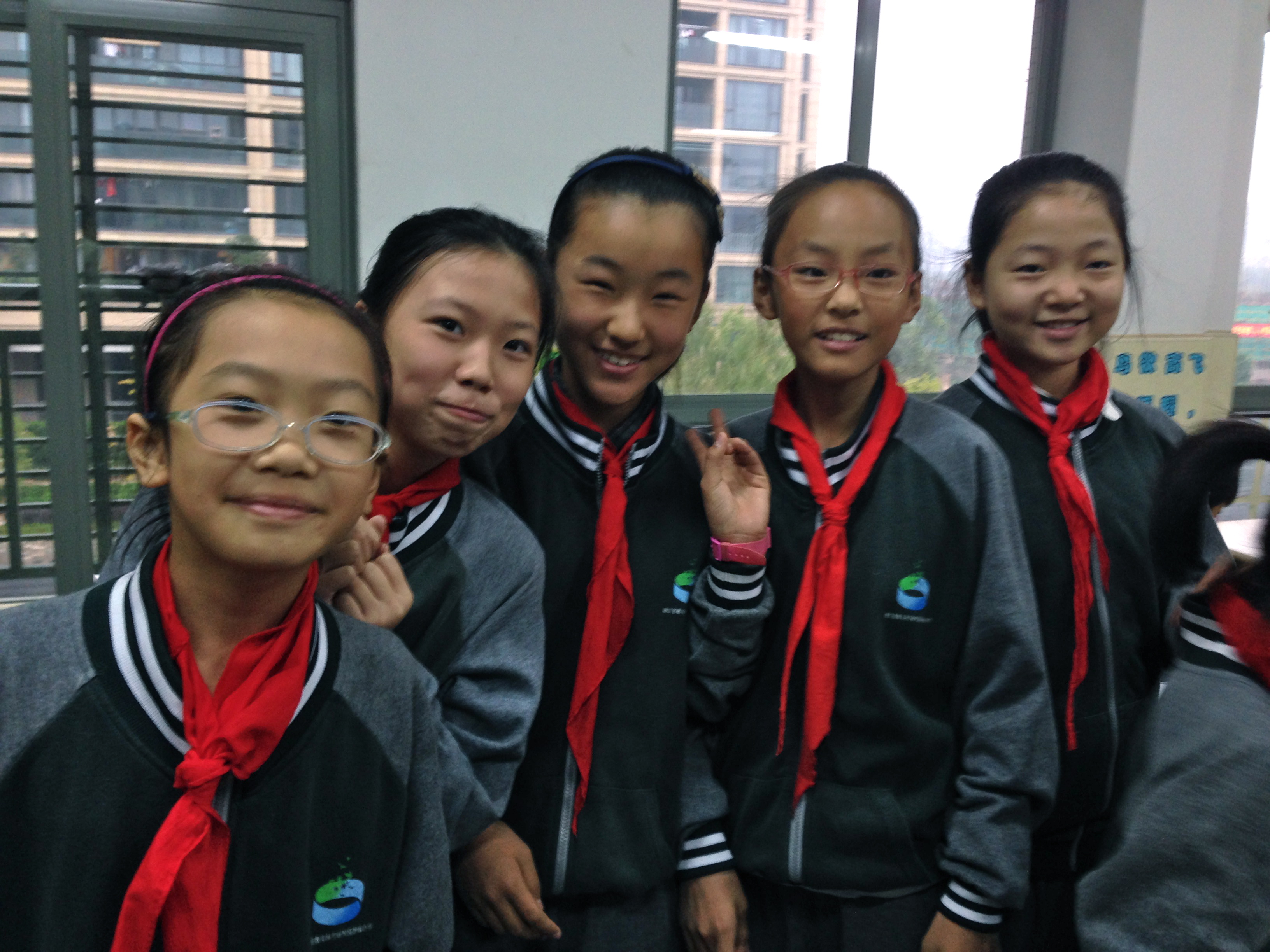
Enjoy the Celebration House photos below, and be on the lookout for Celebration Houses 2, as the Celebration Houses head out to the Fishers community!


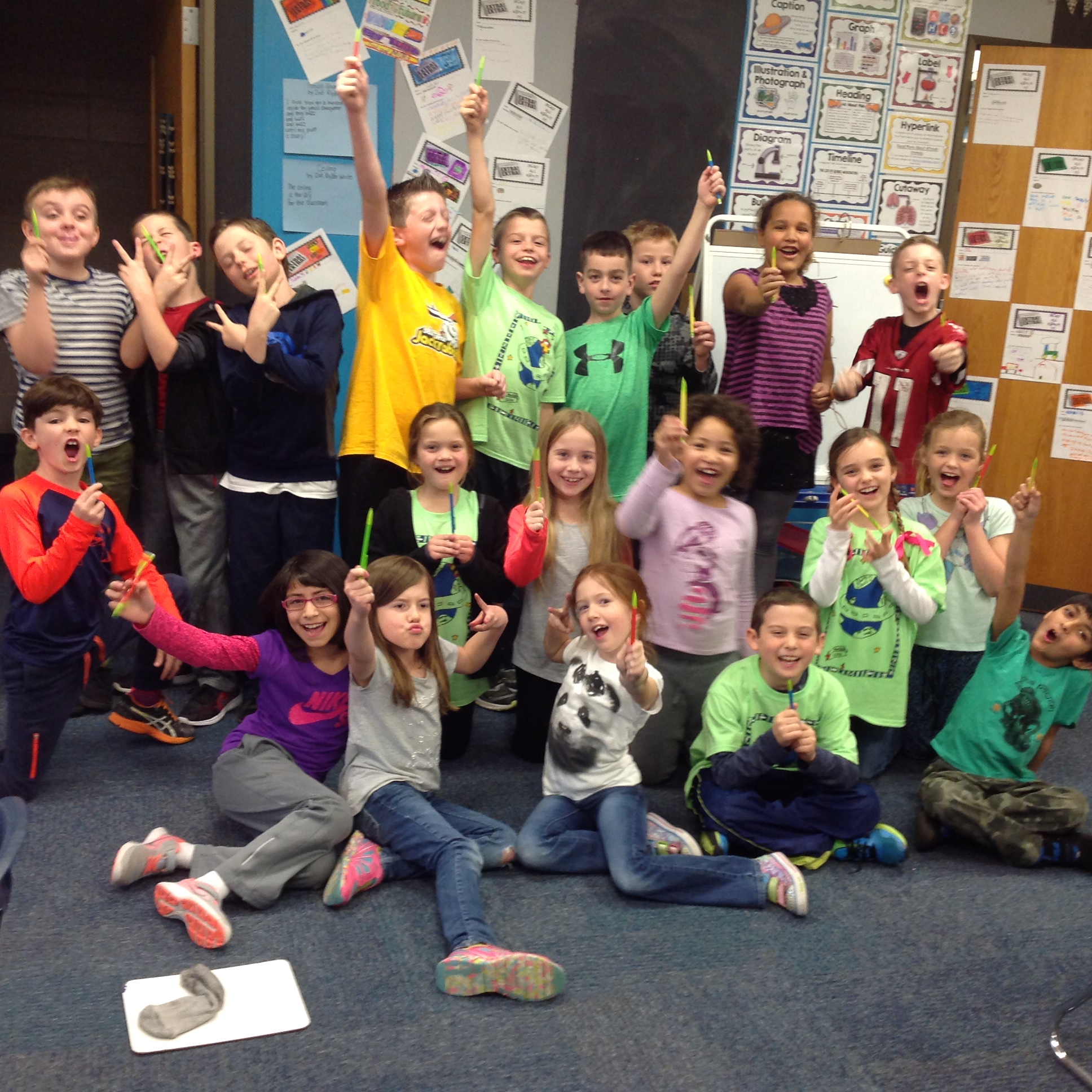
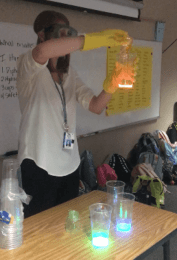 Have you ever wondered what makes a glow stick glow? Erica Erickson’s 4th graders used that question as a springboard for an investigative process practicing the scientific method. First, students hypothesized and gathered materials. Following an intriguing demonstration by Mrs. Erickson, students wrote the steps to the procedure, formed observations, and drew conclusions. Through the experiment, students discovered that glow sticks have two chemicals. In the large plastic tube is the diphenyl oxalate. The plastic tube also contains a smaller glass tube which holds hydrogen peroixide and chemiluminescent dye. When a glow stick is cracked, the shattering of the glass tube allows the chemicals to combine and form a reaction. Now that’s a GLOWING experiment! #buddingscientists


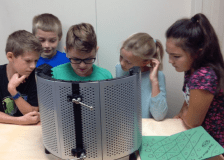
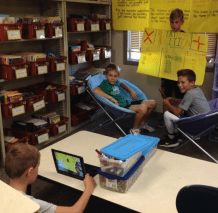
 Students are our future leaders, and what better way to show them that by offering them chances to BE leaders now. This year my eighth graders were challenged to write an “About Me” paragraph — something that, by eighth grade, they have done several times. The difference? This paragraph could not include their name. In these “About Me” paragraphs, the eighth graders’ aim was showcase their best qualities in an effort to appeal to a 5th/6th grade audience. Without knowing names, the younger students read and selected buddies based solely on the power of the 8th graders’ writing.
  After connecting with their buddies in the library, students were asked to discuss what they like to read and select a book that would inspire all members of the partnership. Students set reading goals, exchanged e-mail communication, and discussed characterization and plot development as they worked their way through the novel. Eighth graders walked in to every meeting with a plan, and they were met with thoughtful and engaging questions from their buddies.


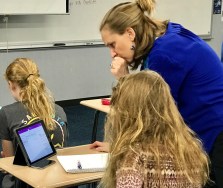 At first glance, nothing looked “messy” in Señora Eisinger’s junior high Spanish class. I had arrived to help students connect their Canvas (Learning Management System) accounts with Office365, in particular, to a OneNote Class Notebook through which Señora and her students would connect digitally and collaborate over the coming year. When I entered, students were seated and still, reviewing the day’s objectives. All was peaceful. All was traditional and comfortable. All was quiet.
 Digital connection and collaboration, though, don’t lend themselves to quiet, traditional practice – and they are rarely peaceful to set up! There’s the matter of accounts – Are you logged into Canvas? Good. Now log into OneDrive on your iPad. Oops – No, that must be your personal account – you need to find your school account. What? You don’t see your Canvas course for Spanish class? Okay. Click here. Your page won’t load? Forget the wifi and sign in again.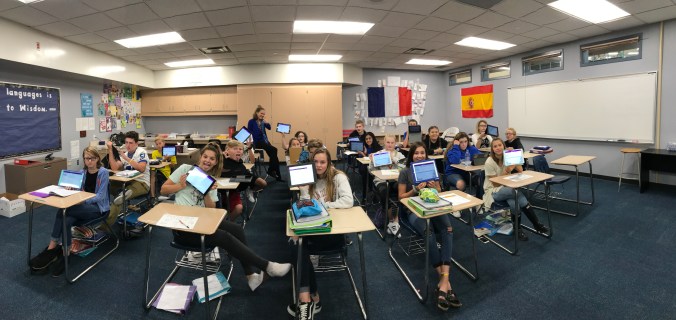


 Cramming for finals. Memorizing hundreds of useless (now Google-able) facts that were promptly forgotten. Most all of us can recount at least one nightmarish exam saga in our high school or college past!
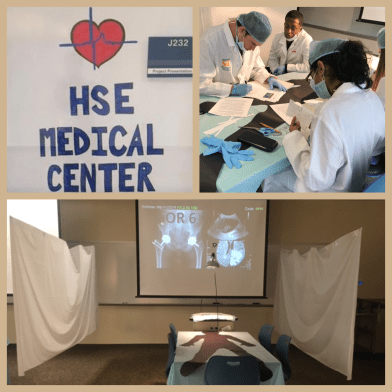
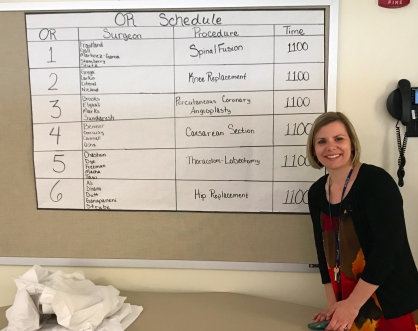 Biomedical Innovations is designed for students to work through open-ended problems focused on health challenges of the 21st century. After having students work in groups throughout the year, an independent paper and pencil type of final did not feel right. Instead, I decided to transform the presentation lab into six operating rooms where students would work through the final as a group. The final was composed of six “surgeries” based on problems we studied throughout the year. The students recorded their answers to each problem on the paper body. To complete the experience, students dressed in their lab coats and received hospital ID badges, scrub hats, masks, booties, and gloves.


 HSE21 Shorts