It’s the digital age! Enjoy a newscast…live from ROME! Thank you, Mrs. Alig (Riverside Intermediate), for sharing your 6th grade newscast with HSE21 Shorts!
It’s the digital age! Enjoy a newscast…live from ROME! Thank you, Mrs. Alig (Riverside Intermediate), for sharing your 6th grade newscast with HSE21 Shorts!
 Chances are you grew up doing research by visiting encyclopedia pages. Also, chances are that you presented your learning by writing a research paper. And…(one more), chances are, you don’t remember anything you learned by doing that assignment!
Today’s digital tools make possible a plethora of multimedia information resources for research study; these same digital tools also enable new, highly creative ways for students to share their learning.
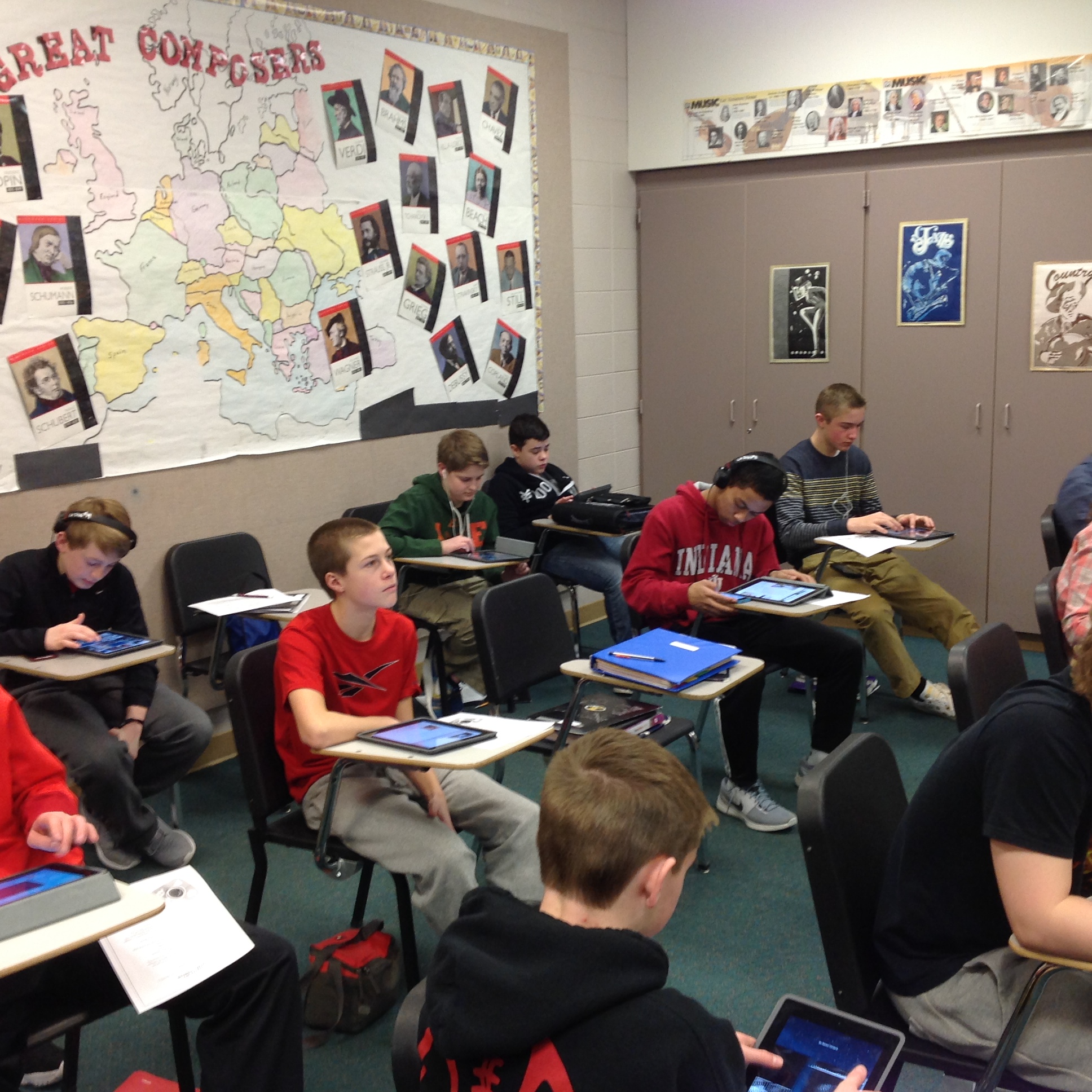
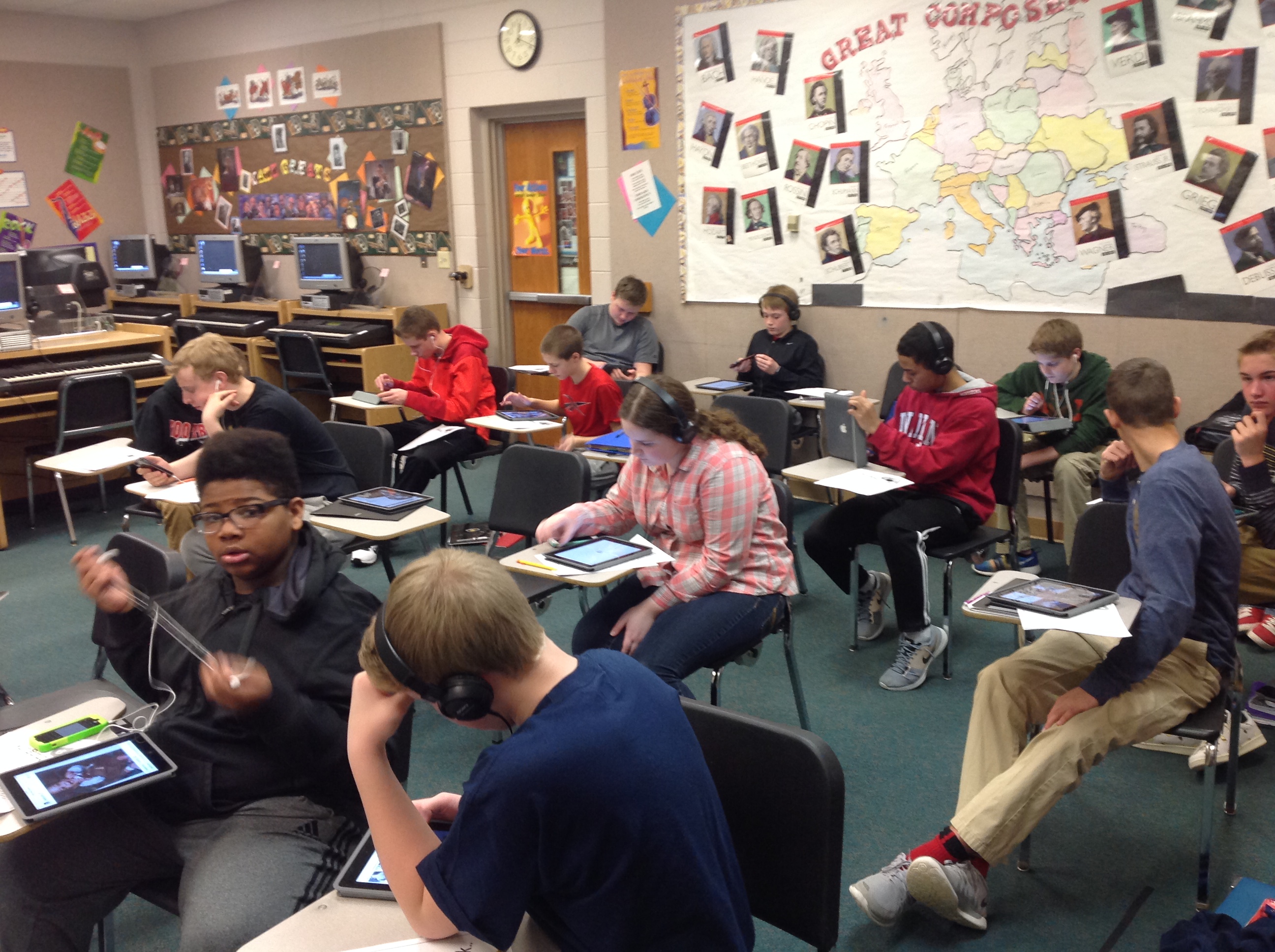 A project recently completed in Brandon Spidel’s, general music classes at Fishers Junior High offers a great example of how technology can unleash creativity to make learning fun and meaningful. Mr. Spidel’s general music classes are studying jazz–both the movement and the musicians. Instead of learning about jazz greats through likely outdated books, Spidel led his students to sites like The Radio Hour, where they could not only read, but also listen the work of the musician under study. All in one location.
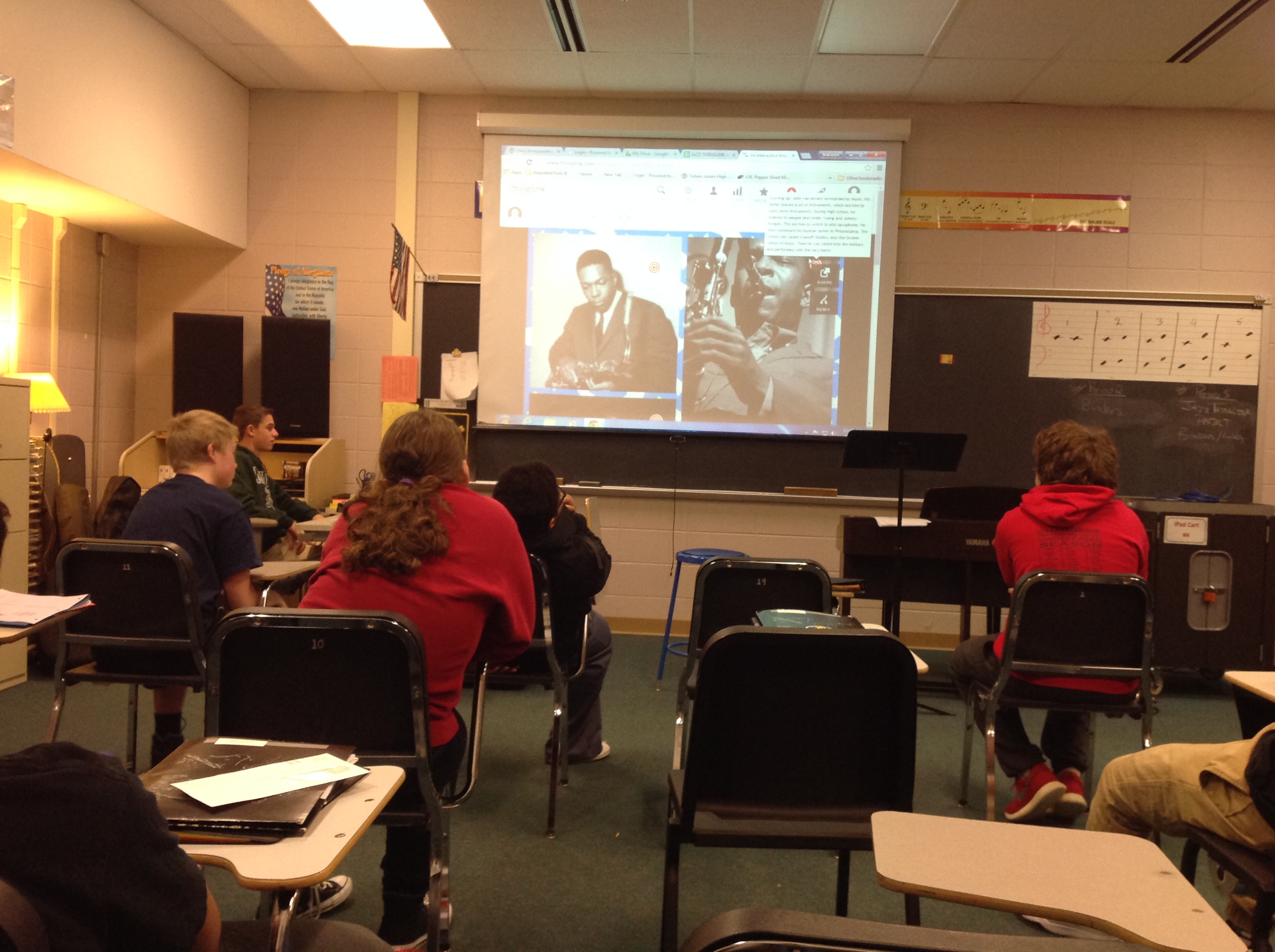 The eighth graders augmented their learning with key images, using these to create unique PicCollages of their chosen jazz musician. Through an app called ThingLink, the students were able to link segments of their PicCollages to music and information on the web–links that could easily be visited by others wishing to learn more about the particular musician. According to Spidel, the ability to research online has given students a much fuller picture of jazz music and jazz musicians. Being able to use their own creativity and digital apps to display their new-found knowledge…well, these eighth graders won’t be forgetting what they’ve learned any time soon! Sometimes you need to write a research paper. Sometimes you don’t.
Meaningful technology integration deepens and enriches learning. Today’s post exemplifies this transformation, showing how this year’s fifth and sixth grade iPad roll out has enabled students to learn in active and inquiry-driven ways. As you read, notice that iPads are not used as expensive worksheets, but as creation tools.
![image[1]](https://hse21shorts.com/wp-content/uploads/2015/01/image1.png) Students in Stephanie Alig’s and MaryLynn Moore’s social studies classes at Riverside Intermediate learned about the Roman Empire this month through through a creative and interactive project. The students gathered in small groups to research an aspect of ancient Rome: clothing, government, war, games, architecture, religion, tools/weapons, or the fall of Rome. The groups then wrote news skits, dressed in costume and acted out their interviews/skits. Skits were recorded using the camera on an iPad, and an app called Green Screen enabled the students to insert authentic Roman backgrounds into their
Students in Stephanie Alig’s and MaryLynn Moore’s social studies classes at Riverside Intermediate learned about the Roman Empire this month through through a creative and interactive project. The students gathered in small groups to research an aspect of ancient Rome: clothing, government, war, games, architecture, religion, tools/weapons, or the fall of Rome. The groups then wrote news skits, dressed in costume and acted out their interviews/skits. Skits were recorded using the camera on an iPad, and an app called Green Screen enabled the students to insert authentic Roman backgrounds into their ![image[2]](https://hse21shorts.com/wp-content/uploads/2015/01/image2.png) new casts. Then skits were dropped into iMovie where each television news cast came together. Through this active learning process, historical Rome became real for the students, and understanding deepened. As a bonus, conversation was fostered at home, since it was easy for students to share their newscasts with their families.
new casts. Then skits were dropped into iMovie where each television news cast came together. Through this active learning process, historical Rome became real for the students, and understanding deepened. As a bonus, conversation was fostered at home, since it was easy for students to share their newscasts with their families.
![image[3]](https://hse21shorts.com/wp-content/uploads/2015/01/image3.png)

Thanks to Hamilton Southeastern High School Art Teacher Liz Clark for today’s post!
“Great things are done by a series of small things brought together.” -Vincent Van Gogh
 Art is about the process as well as the product. As students become more sophisticated as artists, they need to understand the importance of devoting adequate time to research, planning, and idea generation. Most students want to breeze over this step and go straight to production. After they start, most students realize that they did not spend enough time thinking through the process. Often this realization comes after they have devoted a great deal of time to an idea that does not work. How could I get my classes to spend time planning and developing an idea before committing it to materials?
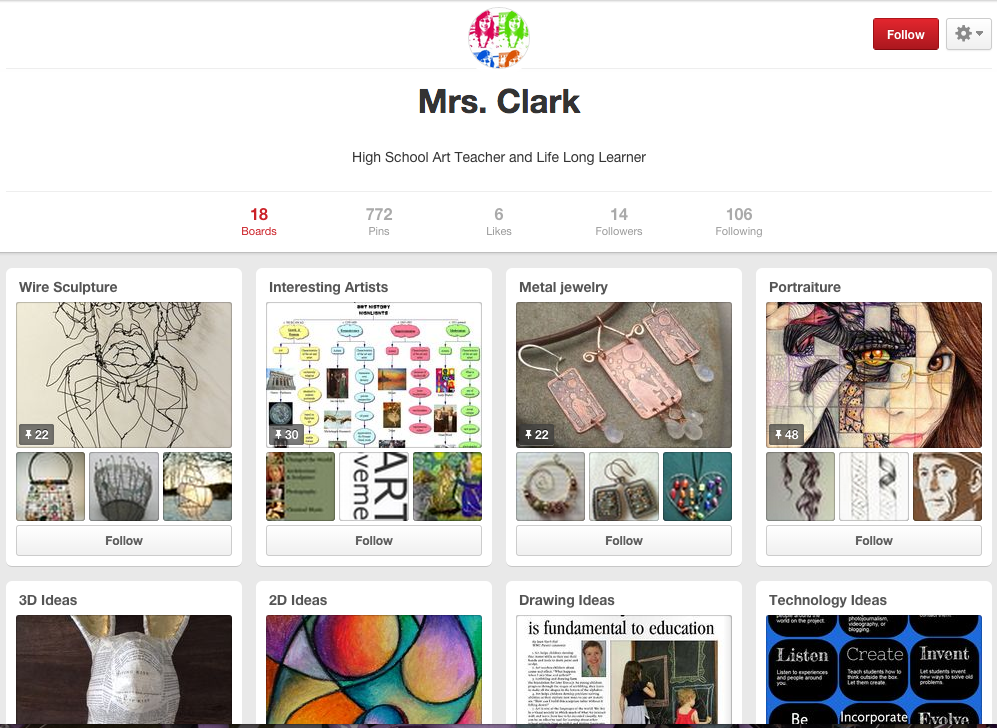
I discovered a great way to help students gather and connect relevant information in order to make well informed artistic decisions. My students started using a social network called Pinterest. Pinterest is like a virtual scrapbook. It is great for organizing information and visual brainstorming. I use it to collect resources for students about a topic. In the past, I checked out books from the library with examples. Often, the examples weren’t current. Now, students can see what I want them to see and create their own boards if they choose.
There are many great ideas on Pinterest. My students spend time on the site outside of the classroom. Many of them create their own pin boards. It inspires self-directed learning.
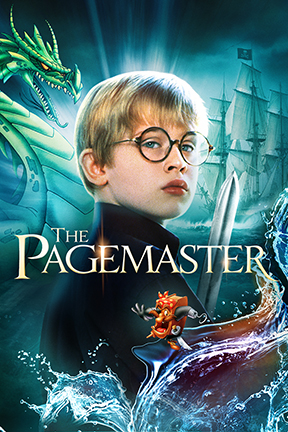 Each spring, the Fishers High School performing arts department showcases students in a unique way. An event, known as the Performing Arts (PA) Festival, is the culmination of a year’s focus around a common theme. During the year, all teachers in the performing arts department–band, orchestra, choir, drama, speech, and tech theater–engage their students in curriculum-driven ways to foster learning around the chosen theme. Throughout the year, learning deepens, connections are made, and collaboration grows, culminating in a stellar event that conveys a deeply understood and heart-felt message to eager audiences. Past themes include War & Peace, Love, The Oscars, and The Magic of Disney.
This year’s PA Festival will be based on the film The Pagemaster, a story of transformation from timidity to courage. Throughout this fall semester, performing arts students have been reading, researching, and collaborating. They’ve begun the artistic design process. In the spring, they’ll continue design, and begin rehearsals. In May, the Fishers community will be treated to the product of a year’s work of nearly five hundred students and faculty. HSE21 Shorts will revisit preparations for the PA Festival as the event approaches. Stay tuned!
The Pagemaster Project exemplifies 21st century learning. In the example below (from the vantage point of the FHS Bands), notice that student-choice, creativity, collaboration, critical thinking, creation and presentation are all integral parts of the assignment. This fall, these factors have been at work within performing arts sectors. In the spring, these elements will still be present, as collaboration happens between the areas. HSE21 Shorts is excited to see how these groups, working together, will connect the dots and build the Festival!
View example: The Pagemaster Project – band
Image Source:
http://images.zap2it.com/moviephotos/AllPhotos/3917/3917_aa/the-pagemaster.jpg
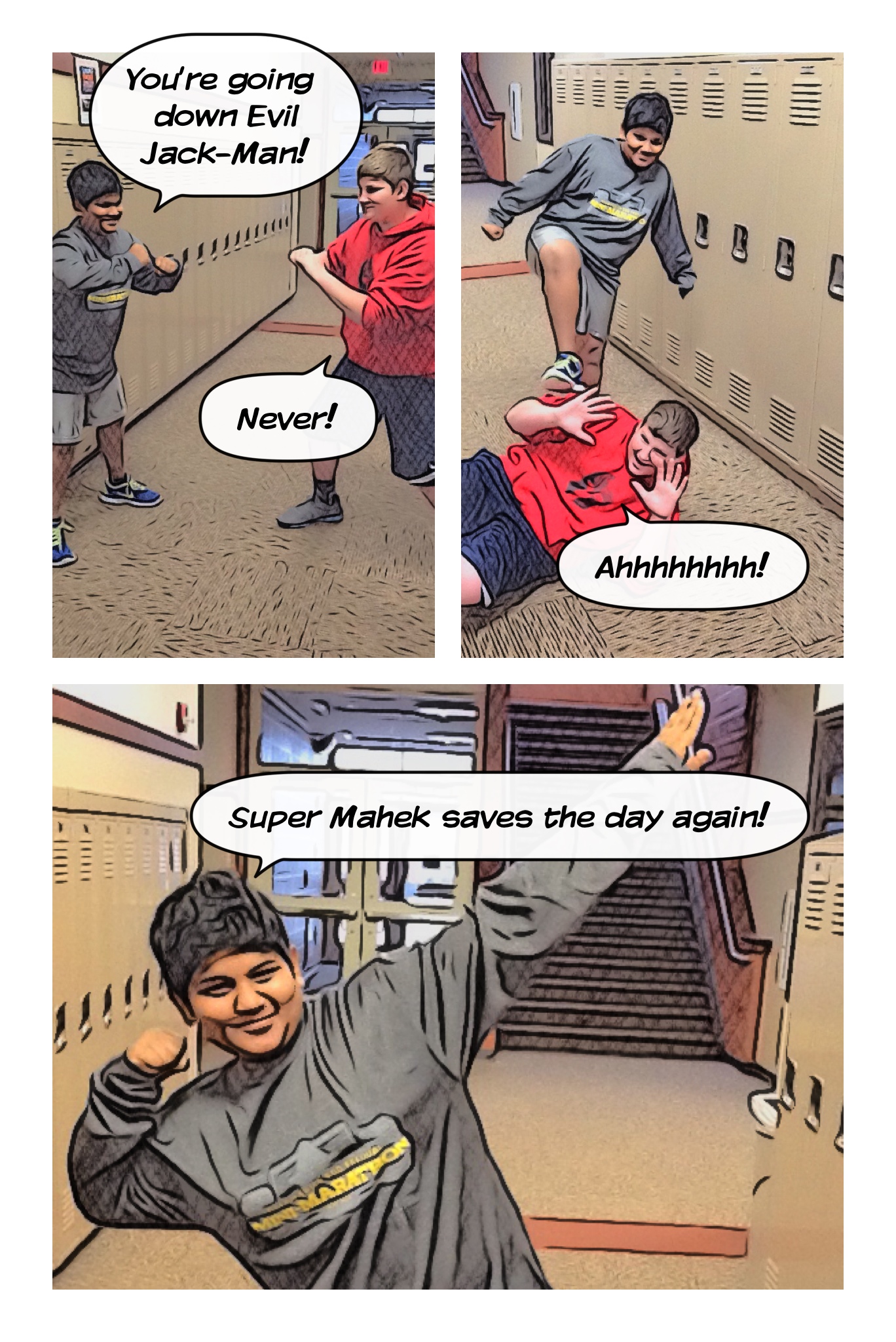 When it was time for HSE Junior High’s Jeff Libey to teach the monomyth, aka, the ‘Hero’s Journey’, to his seventh grade English composition students last year, he didn’t even consider mere lecture. This key story structure, integral to much of classic and modern literature, begged for an interactive project–an activity in which the students could demonstrate understanding by constructing a narrative of their own. Libey’s answer: the monomyth comic book! This 2013 project was so successful that Mr. Libey recently encored it with this year’s seventh graders.
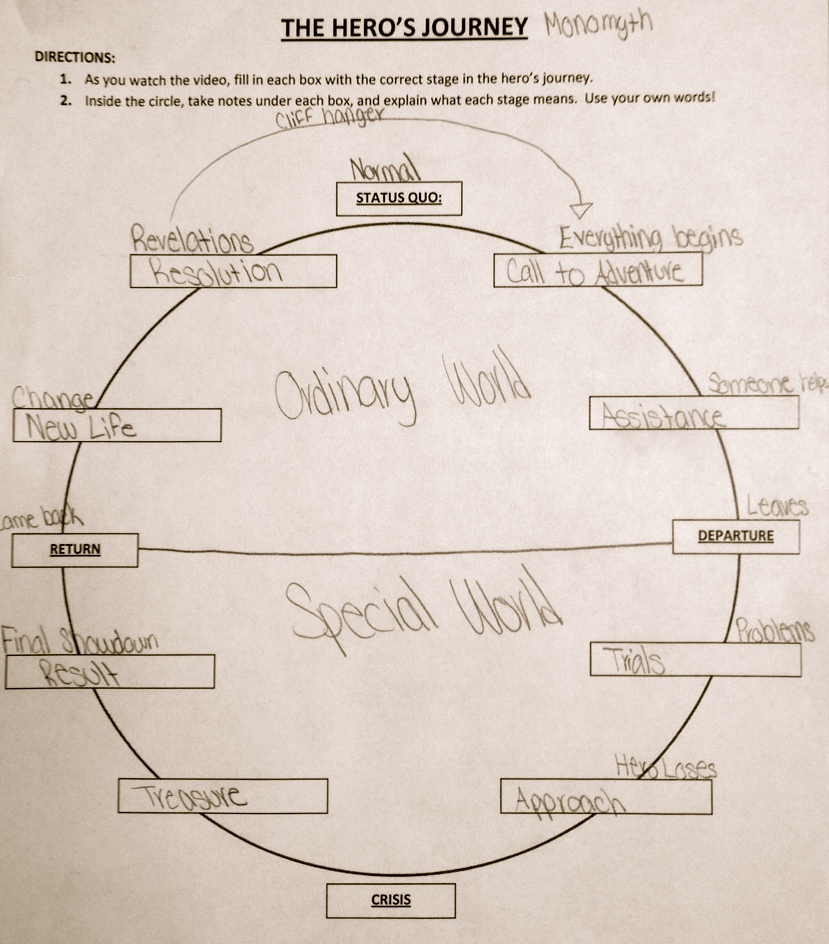 When HSE21 Shorts visited HSEJH last week, Libey had just finished covering introductory material–the Hero’s Journey cycle–with his students, and had shown examples of the hero’s journey in film and text. Then it was the students’ turn to show what they’d learned: HSE21 Shorts followed along as each student storyboarded their own monomyth, i.e., wrote the tale of a hero’s journey. Students acted out and photographed (with iPads and smartphones) their monomyths , and then edited the photos (comic-y filters!). Next would come layout and the addition of text, then peer-to-peer sharing to locate hero’s journey elements in classmates’ myths.
Interacting with new concepts through creation and presentation aids in deep learning. Jeff Libey’s students will remember this creative and fun class project for years to come–even more, they’ll remember the Hero’s Journey cycle and recognize it as they approach literature in the future.


Today’s post is written by Max Goller, one of the eighteen teachers who has been an integral part of our HSE21 pilot for the past two-and-a-half years. HSE21 Shorts asked Mr. Goller to talk about what a technology-enabled classroom has meant to him as an educator. The Gonzo Journalism example is lagniappe!
The digital invasion of Hamilton Southeastern is drawing to a close. Soon, student’s faces will be basked in the glow of their electronic devices. It will be a time of fear and loathing…and more fear as we reconsider everything we have ever learned about learning. Having been on this runaway train since the term 1:1 first came into the district lexicon, I am here to inform you that your fears are all…
Let me stop there for a moment and share some background on the author Hunter S. Thompson. As you might already know, Hunter was the founder of a brand of journalism known as Gonzo Journalism. Gonzo Journalism is characterized by the insertion of a very strong, often dark bias about the subject being covered, frequently with the writer as a first-person protagonist. As you might have guessed, I have made use of this technique to introduce you to my experiences with 1:1, although I have to be honest and tell you there is very little to fear, and certainly nothing to loath about our move to digital technology. Here are some of my experiences as a 1:1 pilot instructor. Results may vary.
As an English teacher, I have found much to appreciate about students having technology in their hands. Student compositions, which I have them type up in Google Docs, are much easier to handle. I can guide students through multiple revisions of papers and track their activity at all times. This not only gives me insight into their personal work ethic and motivation, but also it allows me to have a student turn in a paper before they have even begun working on it. This means I have a lot fewer missing assignments. Additionally, accommodations for different learning needs of students are easier to manage because I can see in real time what they are comprehending and what they are missing.
Technology in the classroom has opened more opportunities to tap into each student’s creative flair. I frequently invite students to select the apps that they think will work best for different projects. This might mean Tellegami character narrating a book talk, or sock puppets acting out scenes of a Shakespeare play, or multi-media iMovies of a rhetorical advertisement. It is a joy for me to see students interpret their tasks is ways that I could never have imagined on my own.
Group work plays a big part in my curriculum, and Google Drive has added flexibility to that process. Through Google Drive, students are able to share their work with each other, and members can be given the ability to read other member’s work to use as guidance for their own contribution, or they can be given the ability to fully edit a project collaboratively. When minds are able to connect and work cooperatively together, greater individual learning is often the result.
I won’t say that a move to the digital classroom will not be without its moments of frustration, fear, and at times maybe a little loathing. However, for me the opportunities have far outweighed the frustrations, and I have no desire to look back.
The Progressive Era was a fascinating time of political and social change in United States history, but sometimes it does not seem so to distracted sixteen-year-olds. Embedded within this unit of study are many key terms–people, events, and actions–that must be understood in the context of the times. In addition to class discussion of this era and its place in the overall story of our nation, Mrs. Gelhar-Bruce of HSE High School recently incorporated a fun digital tool to actively engage students in the learning process.
Watch and listen as Supersteakie and the Seventeenth Amendment describe the roles they played in the Progressive Era. Far from being superfluous side trails, digital tools like ChatterPix can enhance instruction by providing opportunities for students to learn actively. As students build creative presentations to showcase facts and concepts, learning deepens and students build understandings that will more likely endure.
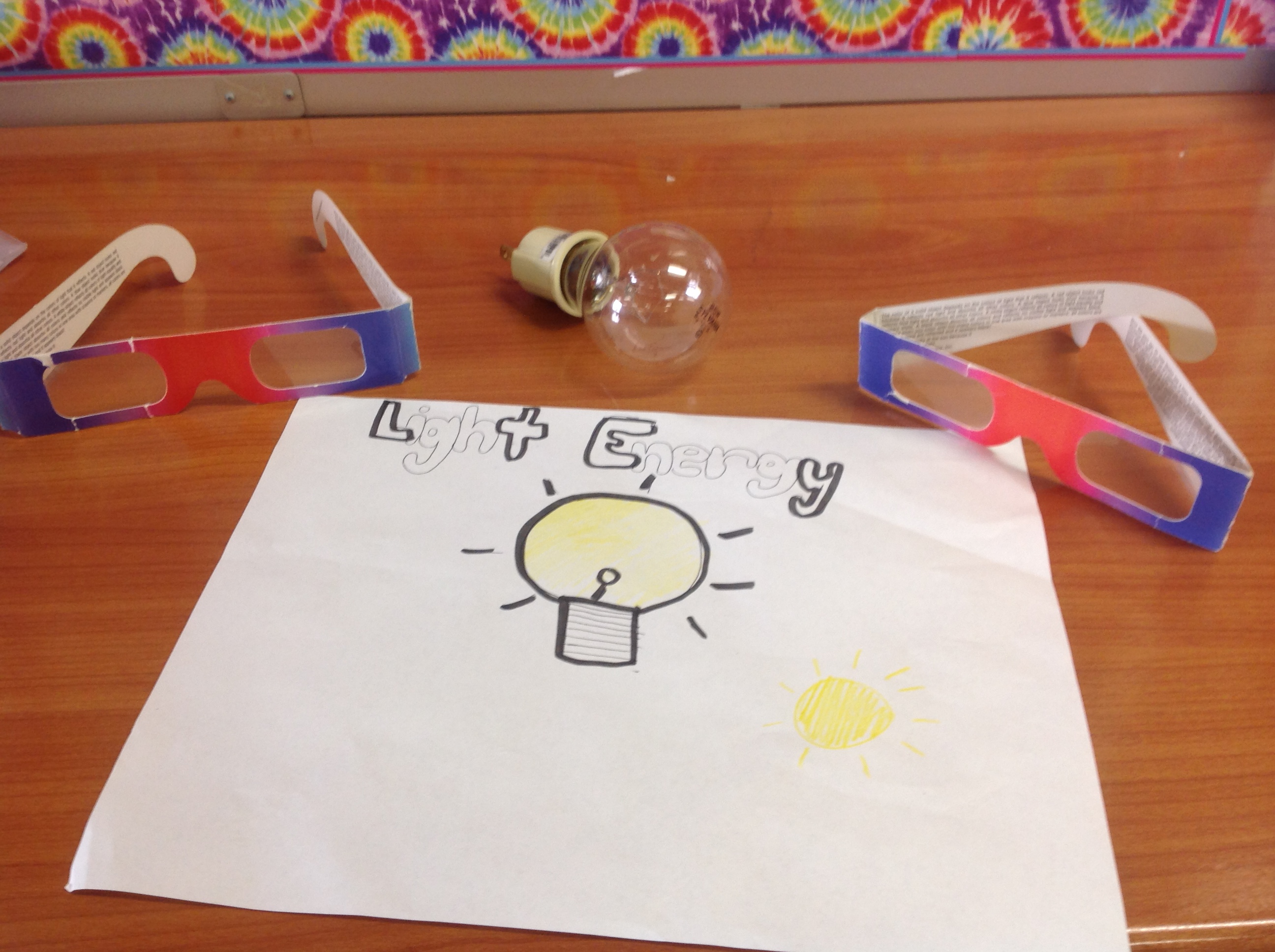 Indiana’s sixth grade science standards state that students will “understand that there are different forms of energy with unique characteristics.” In generations past, a lesson on this topic might have included reading a textbook section and filling in a worksheet, not a method conducive to deep learning. Today’s HSE21 Short, from Stephanie Alig’s classroom at Riverside Intermediate, provides a compelling example of 21st century learning, where student inquiry and collaboration, powered-up by 21st century digital learning tools, foster enduring understandings of important scientific concepts.
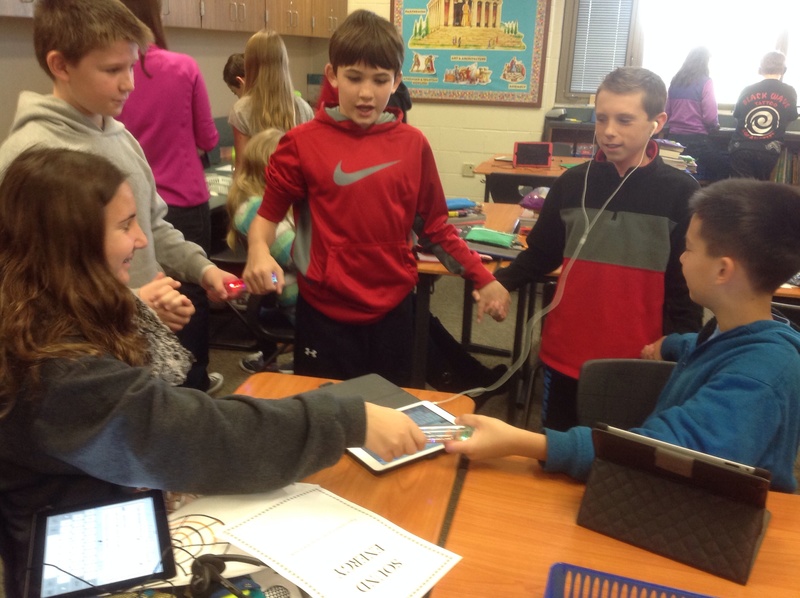 “I placed students in groups of two or three, so that they might collaborate and learn from each other. Each group investigated a form of energy (sound, light, heat, electrical, chemical, or elastic), by researching in their textbooks and online with their iPads. Each group’s responsibility was to create a one-minute presentation representing their form of energy. Groups used a variety of digital presentation tools to share their findings: iMovie, Haiku Deck, and Adobe Voice were three popular tools.”
 “Next, groups created Auras (using Aurasma) or QR codes as vehicles for presentation sharing. I placed the Auras and QR codes at ‘energy stations’ where the students a) watched the presentations; b) completed a mini-lab (made a circuit, energy sticks, measured heat, vinegar/baking soda, poppers, and diffraction grating glasses); and, c) submitted responses through Blackboard to demonstrate their understanding.”
If you are over thirty, does that sound like YOUR sixth grade science instruction?
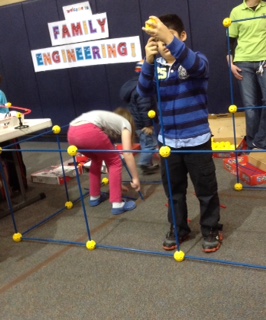
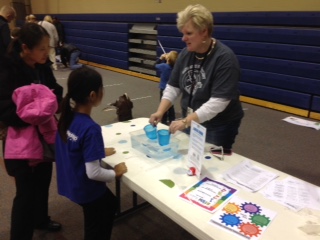
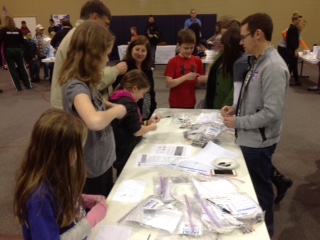
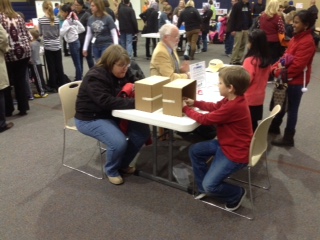
Young children are naturals when it comes to creation and design. Catapults, rockets, roller coasters…just mention these words, and creative constructions are not far behind! Sand Creek Elementary recently provided a wonderful opportunity for budding engineers and designers to explore science, technology, engineering, and mathematics (STEM). The event, known as Family Engineering Night, brought together over two-hundred-and-fifty members of the SCE community.
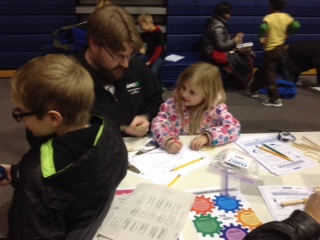
Family Engineering Night came about through the vision of SCE third-grade teacher Holly Miller, who was awarded a grant for the project from the Hamilton Southeastern Schools Foundation. Attendees of the event witnessed a packed gymnasium where students and their families visited their choice of thirty hands-on engineering stations. Side-by-side, children and adults practiced creative design, critical thinking, and problem-solving. What type of boat will hold the most pennies? Can we design a roller coaster that will keep a marble moving for 5 seconds? Which materials make the most powerful catapult? Inquiry, design, and family interaction were highlights of the smashingly-successful evening…the photos shown here tell the story best.
![FullSizeRender[1]](https://hse21shorts.com/wp-content/uploads/2014/11/fullsizerender11.jpg)
 HSE21 Shorts
