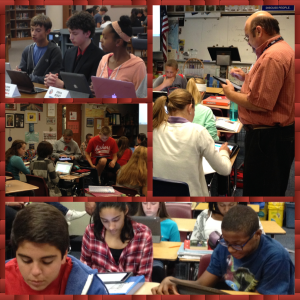
 Walk into Mike Fassold’s sixth period social studies class at Fishers Junior High, and what you won’t hear is a standard lecture. What you won’t see are students silently completing worksheets. Instead, you’ll experience a student-centered learning lab, with groups of students working together as they research and evaluate key questions surrounding American history, law, and society.
This unique class is all part of We the People, a national competition sponsored by The Center for Civic Education. We the People student teams work in small groups (known as ‘units’) to prepare and present position statements on United States history questions in the areas of philosophy, law, civil liberties, and more. Following the national success of the 2014 Fishers High School We the People team*, history teacher Fassold explored what it would mean to teach eighth grade U.S. history standards through a We the People framework.
On a typical day in his pilot We the People class (pictured above), Fassold circulates among the units, coaching students as they search for reputable sources and asking timely questions to encourage deep, critical thinking. Though the learning is student-centered, Fassold is still teacher and guide.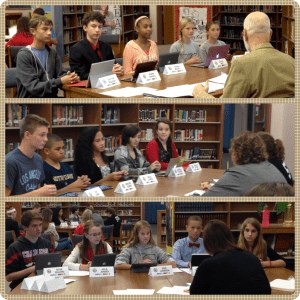 He worked closely with students to help them build their four-minute opening statements, which they presented today before an authentic audience of legal scholars from the community (pictured on right). HSE21 Shorts will revisit this innovative class later in the year to follow the students’ progress and get their perspective on this unique learning experience. Stay tuned!
*The 2014 FHS We the People team were state champions and finished an amazing 4th place in the national finals held in Washington, D.C.
 Students in Mrs. Beck’s first grade class at Geist Elementary recently completed personal inquiry projects around the topic of fire safety. With help from experts at the Fishers Fire Department, the students first learned important lessons about what to do in the event of a fire. With this base knowledge, inquiry and application of learning began! The first-graders went home to survey their own homes and develop fire escape plans with their families.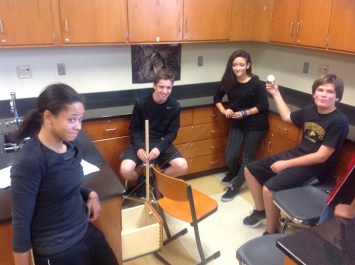
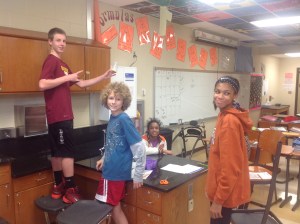 This introductory science inquiry project gives a clear example of HSE21 learning in action. In dynamic 21st century classrooms, students think critically and creatively to find solutions to problems. In this case, teams pooled their creative ideas and scientific knowledge to design a successful marble path. Along the way, they learned the concepts of precision and accuracy, and they gained experience in collecting/analyzing data, writing lab reports, and collaboration. Heckly, Folta, and King will spend the rest of the year helping their students build on these foundational skills as classes delve deeper into chemistry and physics through the school year.
 HSE21 Shorts