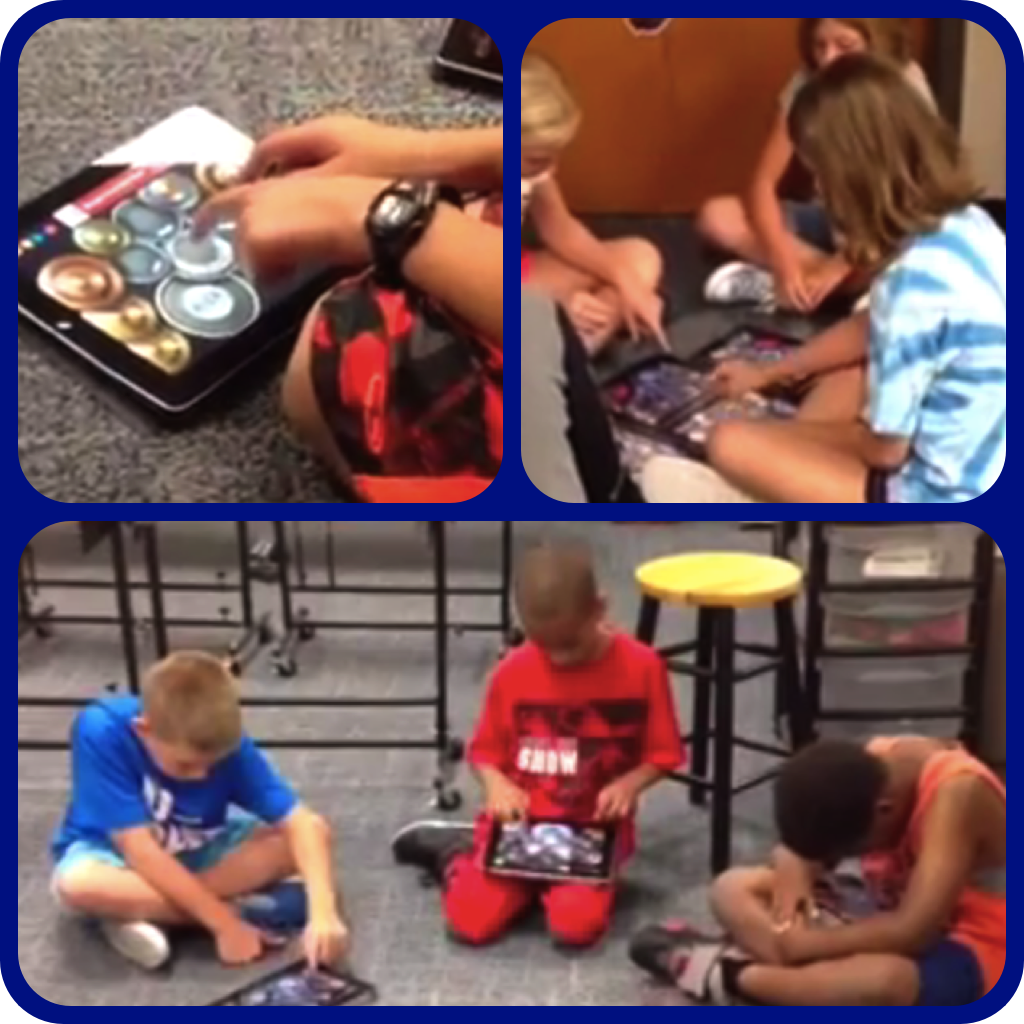
A New Beat in Music Class

fcemusicThanks to FCE Music Teacher Marcia Abraham for sharing the innovation taking place in her Music classes at Fall Creek Elementary this fall! Mrs. Abraham is one of 23 elementary teacher ‘pioneers’ this year. As part of the Elementary Design Team, these teachers – from across the district – are discovering how iPads can support inquiry and problem-based learning in their classrooms. Click here to be taken to the FCE Music Blog. You’ll learn more about this new beat in music class, as well as hear some samples of student-created music.

Collaboration Stations Foster Teamwork

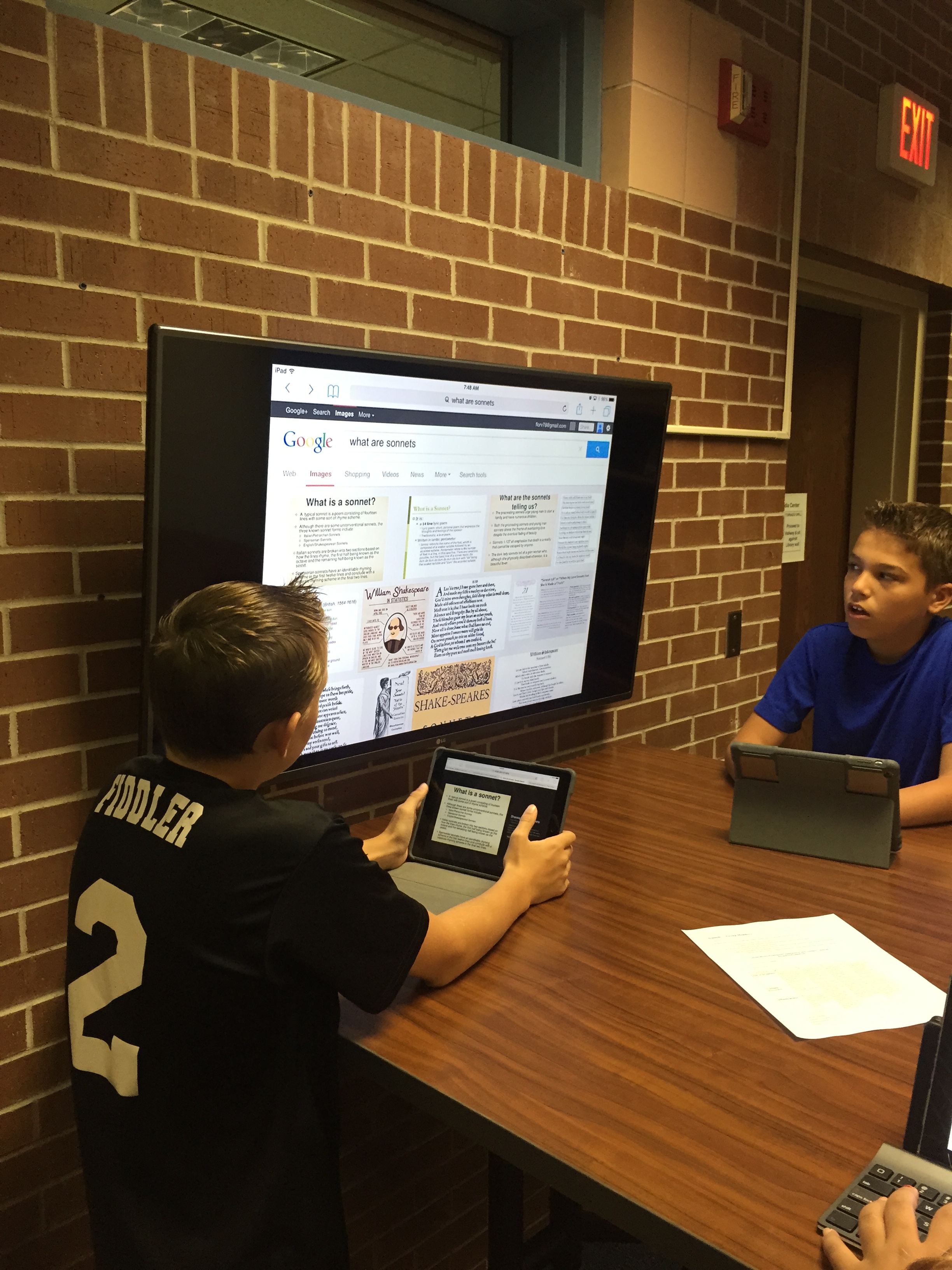
IMG_0503Twenty-first century careers require the ability to work with others to innovate and problem-solve. Fall Creek Junior High students in Mrs. Hiatt’s English class gained collaboration experience this week, as they worked in teams to research  types of sonnets and create presentations to share with the larger class.

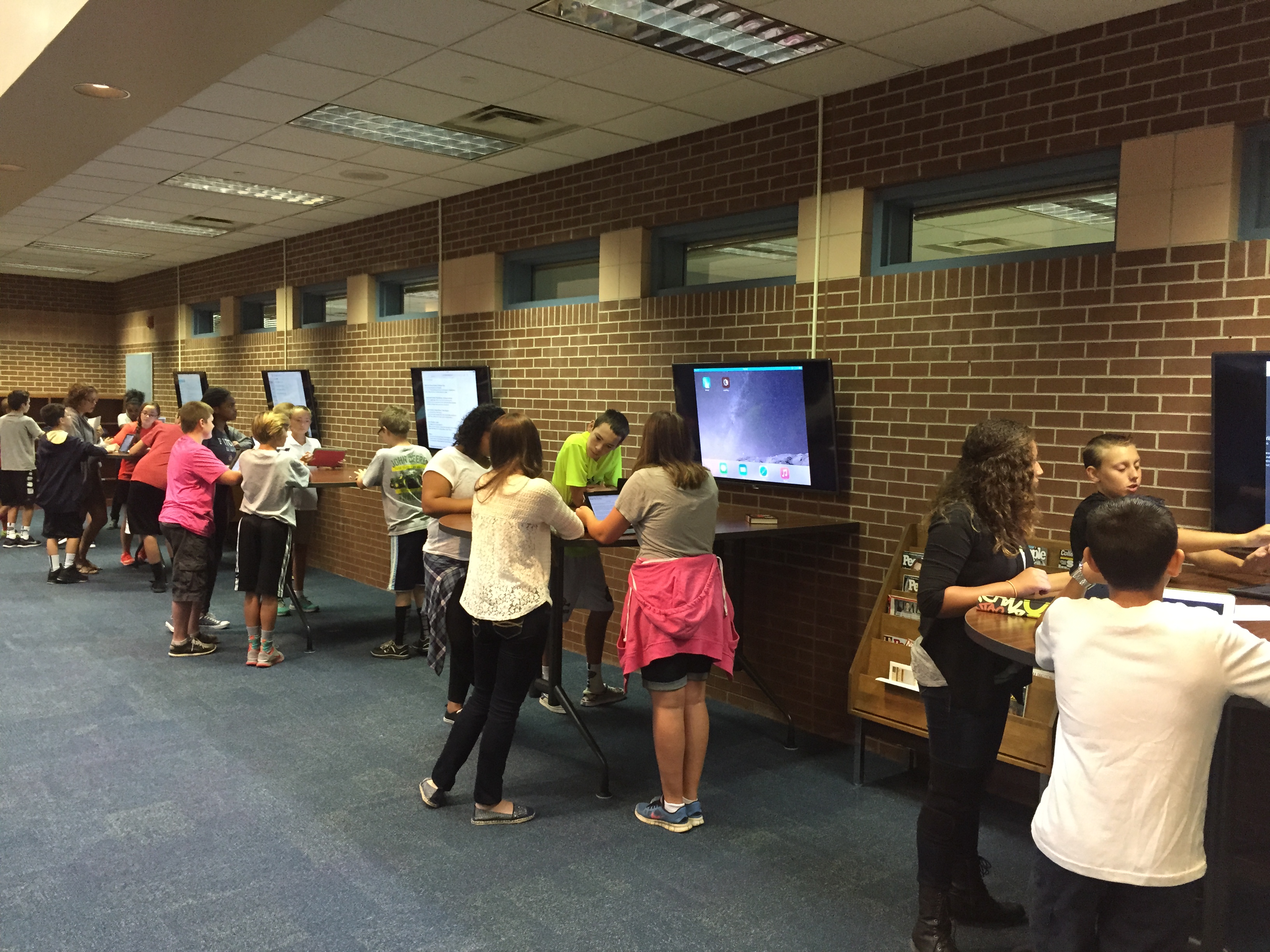
Teamwork, always an important part of instruction, has a new twist this year, though, with the addition of collaboration stations in the school’s Media Center. Each 50-inch screen monitor is synched with an Apple TV – giving students the ability to project one’s iPad screen in view of the entire group. Add PowerPoint Online to the mix, and students can work together to create a presentation in real time, with the most current version of the presentation on the ‘big screen’.

IMG_0506FCJH media specialist Mrs. Distler says, “We are very excited to have these stations for our students to use in conjunction with our 1:1 initiative.  It creates a great opportunity for students to work collaboratively while using their iPad as a tool to enhance their learning.”

School Start Time Question = Project-Based Learning Opportunity

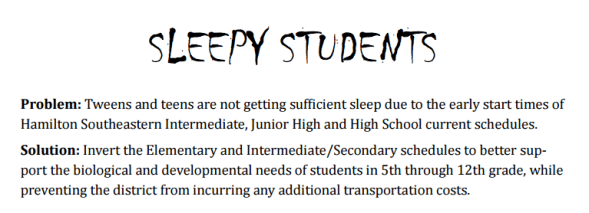
Students in Mr. Hamm’s Language Arts classroom at Riverside Intermediate were learning about non-fiction reading strategies when a Problem Based Learning (PBL) opportunity presented itself following the reading of one specific text.  An article about the benefits of adjusting school start times for teenage students sparked a discussion on why Hamilton Southeastern Schools is fighting mother-nature.  The discussion led to a PBL experience for the students entitled School Start Times in HSE.

Screen Shot 2015-08-23 at 2.19.45 PM

Students were put into collaborative groups tasked with the problem, “How do we better serve the students of HSE based on scientific research regarding school start times?”  After a few weeks of working, students were required to present their research and solution to their peers.  While all groups did a fantastic job, two specific groups stood out and were allowed to collaborate toward a final presentation that was made to the HSE School Board in May 2015.  The students used their digital tools to develop a presentation that impressed the school board members.  While there is no guarantee that times will be changing for the students in HSE, the process students used were focused on the goals of HSE21.

Animal Adaptations

Thank you to Riverside Intermediate science teacher Liz Bradley for sharing the engaging way that her students applied their new knowledge of physical and behavioral adaptations in the animal kingdom! This assignment gave students choice and allowed for their own creativity as they demonstrated their understanding of concepts learned. 

“For this assignment we were studying behavioral adaptations and physical adaptations in science.  The children were asked to download the app Puppet Pals 2 and I let them play around with the app for about 5 minutes the day before we started the project.  I did this so they were comfortable with the app.  On the day that we made the videos, I had the children search for an animal of their choice and screen shot the picture.  Then they were able to upload the picture from their photos into Puppet Pals as their background.  I told the children that they needed to use the puppets to point out one physical and one behavioral adaptation.  The children then uploaded their videos to our class YouTube account.”

Check out this example!

https://youtu.be/BvBePgcWXY0

And click this link for a second example!

The Future of Fishers: Students Visit With the Mayor

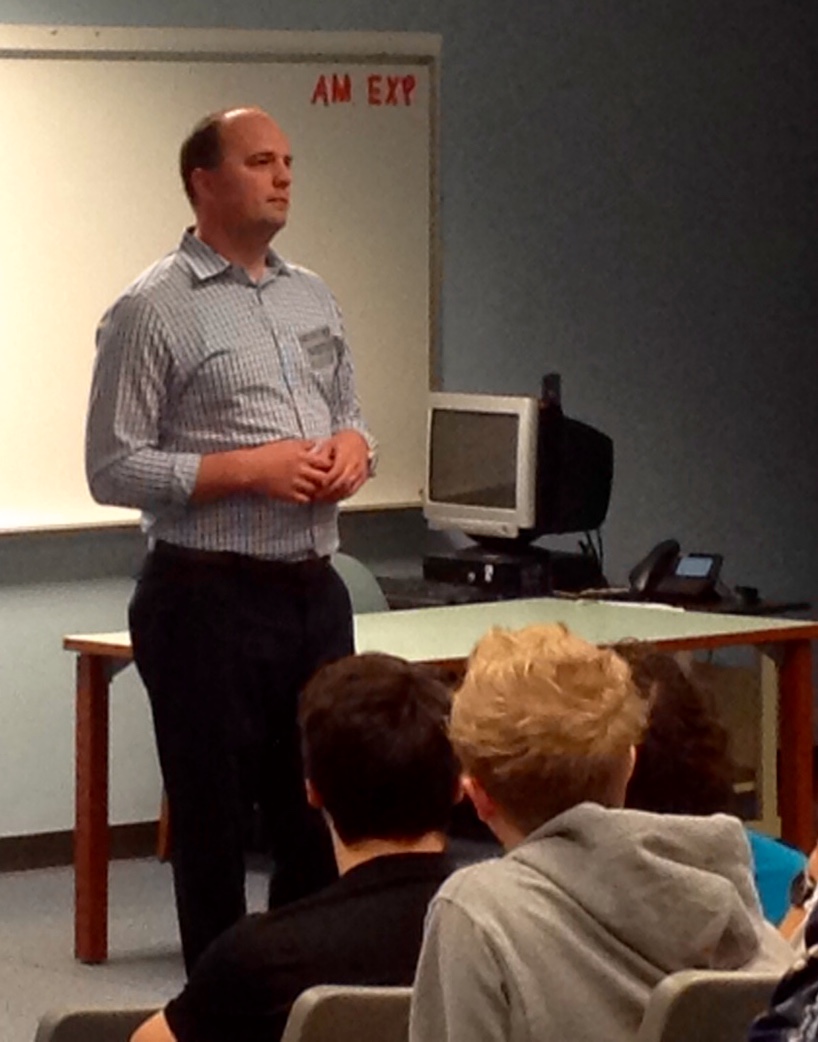
unnamedHamilton Southeastern High School students in Katie Gelhar’s government and current issues classes made some real world connections when Fishers Mayor Scott Fadness recently visited to talk with the teens about the growth of Fishers and what’s in store for the future.

Mayor Fadness gave a basic overview of how our town–now city–has developed, and described his own journey to become very first mayor of the City of Fishers.  The students asked great questions of Mayor Fadness. Students queried the Mayor on topics current issues like mass transit, jobs, and their future as Fishers residents.

The students were also curious for details of new innovations and changes that are on the horizon here in Hamilton County and Fishers in particular. The Mayor explained some of the new traffic patterns and roundabouts added to I-69 at 106th Street.  He shared his vision to create a unique community, with features such as  farm-to-table restaurants and community art.  He also spoke about a new sports complex announced recently that will house a hockey rink and thirty-two basketball courts.  The city will be leasing 12 courts for the community to use.

Thank you, Mayor Fadness, for sharing your expertise–allowing young adults in our Fishers community to connect their in-class learning to real world processes, experiences, and challenges!

Give a Hoot for Kahoot  

2318646_adbb03cfWhen pieces of a puzzle come together  to create a great picture it makes for an outstanding learning experience.

Puzzle Piece #1:

Students at Lantern Road Elementary having been studying digital citizenship all year.  Recently, the fourth grade students had an educational visit from members of the Fishers Police Department.  Officers Johnson and Ahnert spoke about making good choices when students are online as well as in the real world.  Officer Johnson shared a video from www.commonsensemedia.org titled “Oversharing – Think Before You Post.”  The video stressed the Top 10 things to think about  before you post something online.  Students were encouraged to respect themselves, others and the rules in order to be good citizens in our community and the virtual world.

 p2Puzzle Piece #2:  

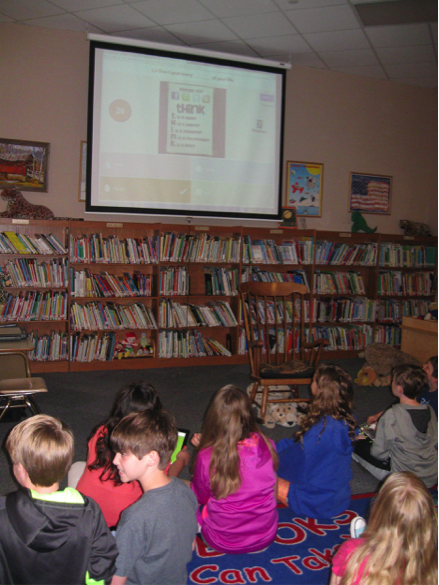
Third and fourth grade teachers along with Ms. Silbert, the Library Media Specialist at LRES, visited Riverside Intermediate School to witness how iPads were being used this year with students.  Although 1:1 is still in the future at the elementary school, we wanted to examine how they are used in the school setting.  We saw many amazing things happening!  In a couple of classrooms the students were reviewing what they had learned via www.getkahoot.com.  Teachers had made multiple choice quizzes on that site and the students were responding to the questions via https://kahoot.it/#/ .  Teams earned points for correct answers.  The students were TOTALLY engaged!

p3Puzzle Piece #3:

Ms. Silbert was inspired by the educators at RIS.  She decided to make a review quiz for the fourth grade students covering the lessons they learned with the Fishers’ Officers. Digital Citizenship was the focus.

p4Puzzle Piece #4:  

During library classes in April, students in 4th grade used iPads to compete.  Team Digital, Team Citizen, Team Awesome and five others answered questions about those important online concepts using Kahoot.  They are now excited to move on to Riverside and use their iPads for many new adventures.

p5The picture is complete:

Lantern Road Elementary fourth grade students now can confidently say, “Don’t post photos online that you wouldn’t want your Grandma to see” or “avoid TMI” when posting online.  Several entities came together to reinforce these important 21st century messages.

p6

-Thanks to Lantern Road Elementary Media Specialist Lori Silbert for sharing an example of how HSE educators and Fishers School Resource officers work are working together to help our students learn how to tread safely and securely in today’s digital world! 

Second Graders Tour the States!

Mrs. VanWynsberghe’s and Mrs. Philhower’s classes recently filmed a tour of the entire United States! The Fall Creek Elementary second graders have appreciated the music of The Brainbeats while learning about our fifty states. Enjoy their fifty states tour, based on the catchy Brainbeats song, Tour the States.


https://www.youtube.com/watch?v=rAJH-nt-Anc&feature=youtu.be


Here’s the official Tour the States video by the Brainbeats. And…here’s their new music video, Tour the World. (It’s a little longer!) One more…Brainbeats music is available for purchase here.

Sphero – From Club to Classroom

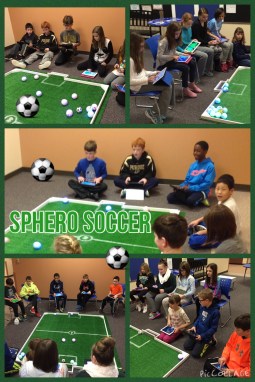
Yesterday HSE21 Shorts featured a new club at Fall Creek Intermediate School: Club Sphero. Club Sphero is essentially a computer coding experience where, as sponsor Brad Lowell puts it, “the learning is disguised within the fun”! 

What’s especially exciting to those of us who’ve followed Hour of Code (and realized what an essential skill coding can be), is the possibilities Sphero brings to the classroom. I asked Mr. Lowell how he and his colleagues plan to integrate Spheros and coding into their curriculum in the future.

Have you used the Spheros in class as well? Or just during the after school club?

We are planning on using Spheros much more next year in the classroom. Here are just some ideas we have brainstormed, based on our particular academic standards:

  • Ecosystems: Sphero tag to demonstrate predator prey relationships, classification, or invasive species
  • Space: Coding moon phases; coding or creating orbits of planets; demonstrating the process of nuclear fusion in the sun where the Spheros are coded as atoms or photons; coding rotation vs. revolution and/or elliptical orbits.
  • Matter: Spheros representing the particles in states of matter. I’m going to try this, see the attached picture.phase changes…using Spheros to represent subatomic particles when given an element.there’s got to be something we could do with physical and chemical changes.
  • Technology: Engineering lunar rovers (Sphero powered) to navigate the moon’s surface (in sand); engineering boat/barges to transport mass over a distance; engineering Indy 500 racers to compete in a race in May; engineering Sphero semi-chariots to carry mass; coding obstacle course.
  • Social Studies: Sphero racing to states and capitals on our outdoor recess concrete map.
  • Math: Coordinate graph racing (race to a given set of ordered pairs) coding regular and irregular figures.

And one final question for Mr. Lowell:

What, from a teacher’s perspective, has been the best thing about this endeavor?

The kids are picking up coding quickly and are really enjoying engineering around the Sphero.  I love seeing them get excited about their learning.  They like having the power to control their own designing and learning.

IMG_2543

To learn more about computer coding as a 21st century skill, check out the website of Code.org.

For more details on how objects like Sphero can help develop coding skills, visit the Sphero website.

Club Sphero: “The Learning Is Disguised Within the Fun!”

Screen Shot 2015-04-04 at 9.14.01 PMMany thanks to Fall Creek Intermediate science teacher Brad Lowell for sharing the evolution of Club Sphero. What a perfect example of using today’s digital tools to extend and deepen learning! 

How did Club Sphero get started?

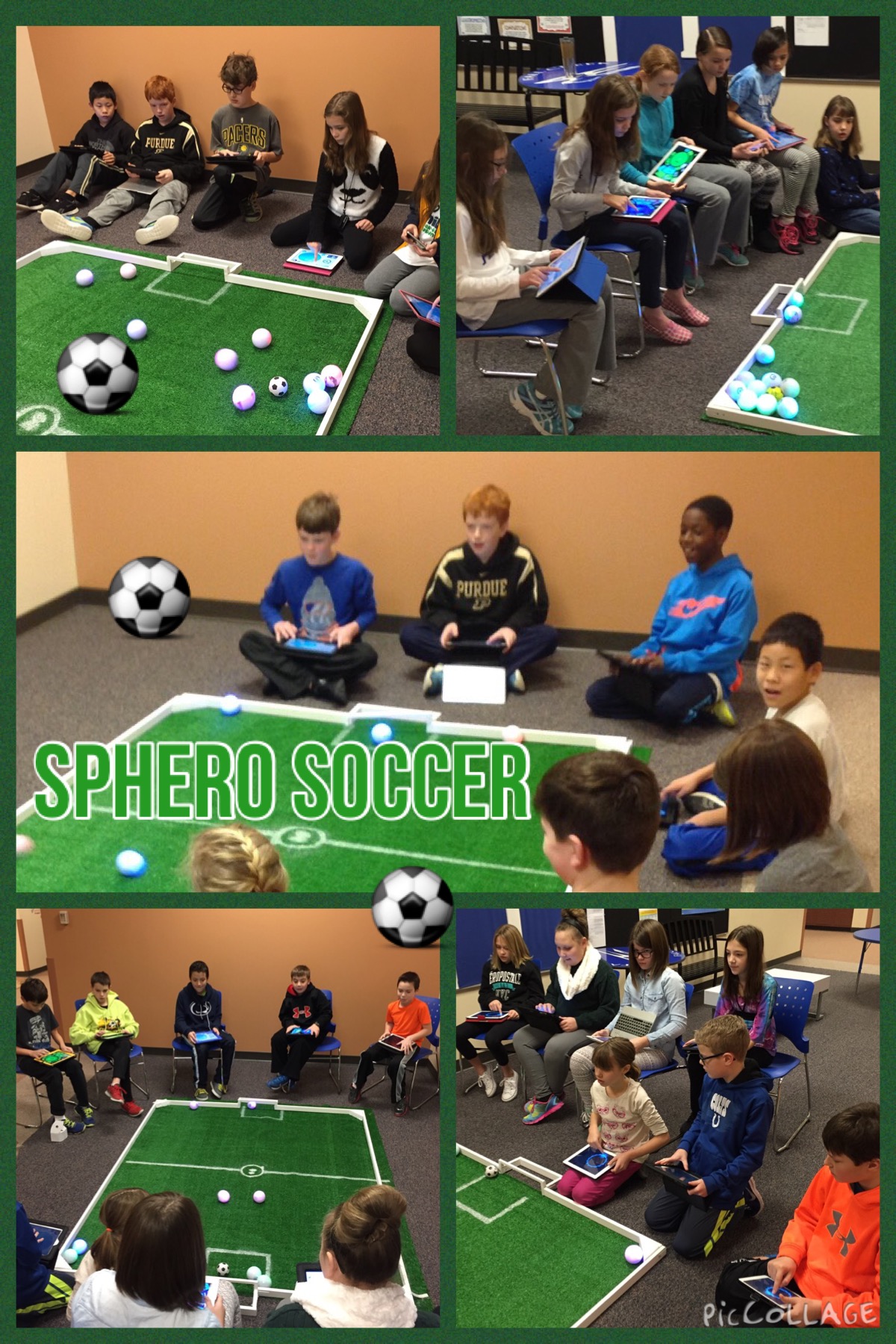
The club started almost on accident.  I saw the Sphero for the first time at a birthday party for a friend’s wife.  Listening to a teacher in Carmel talk about how they used them only started my wheels spinning.  After showing my students the online video clips for Sphero, many said they already had them but didn’t really IMG_2604play with them much.  I had them bring their Spheros in one morning before school and saw how much excitement they generated and the club just took off from there.  My co-sponsor, Josh Tegrotenhuis [also a science teacher at FCI] had his kids bring theirs.  Two weeks into our informal club, we had over 30 kids showing.  We started off with a few old putting holes playing putt-putt golf with various obstacles, played some ‘World Cup’ Sphero soccer, coded bowling, and are now playing ‘Final Four’ basketball.  The kids keep coming and they keep challenging Josh and I as teachers to come up with new fun ways of using the Spheros.  The learning is really disguised within. the fun.  We’ve coupled the club with 3d printing and it has taken us to a whole new level of design and learning.

IMG_2604What skills, abilities, and interests are the students developing?

Cooperation, coding, science, math, engineering, and technology.

What do you think has made the club so successful? 

The club is very interactive and students get to use their devices.  I think the kids really like learning outside the classroom and beyond the textbook.  Keeping the learning game-oriented makes it fun and competitive for them.

HSeLearning: We Love Cohort PD!

IMG_2789This year, one focus of professional development in our junior high buildings has been preparedness for next year’s one-to-one technology roll out. To be clear, teacher training in our district is never centered on technology as an end in itself, but on ways in which digital access serves as a powerful tool to extend, deepen, and personalize learning.

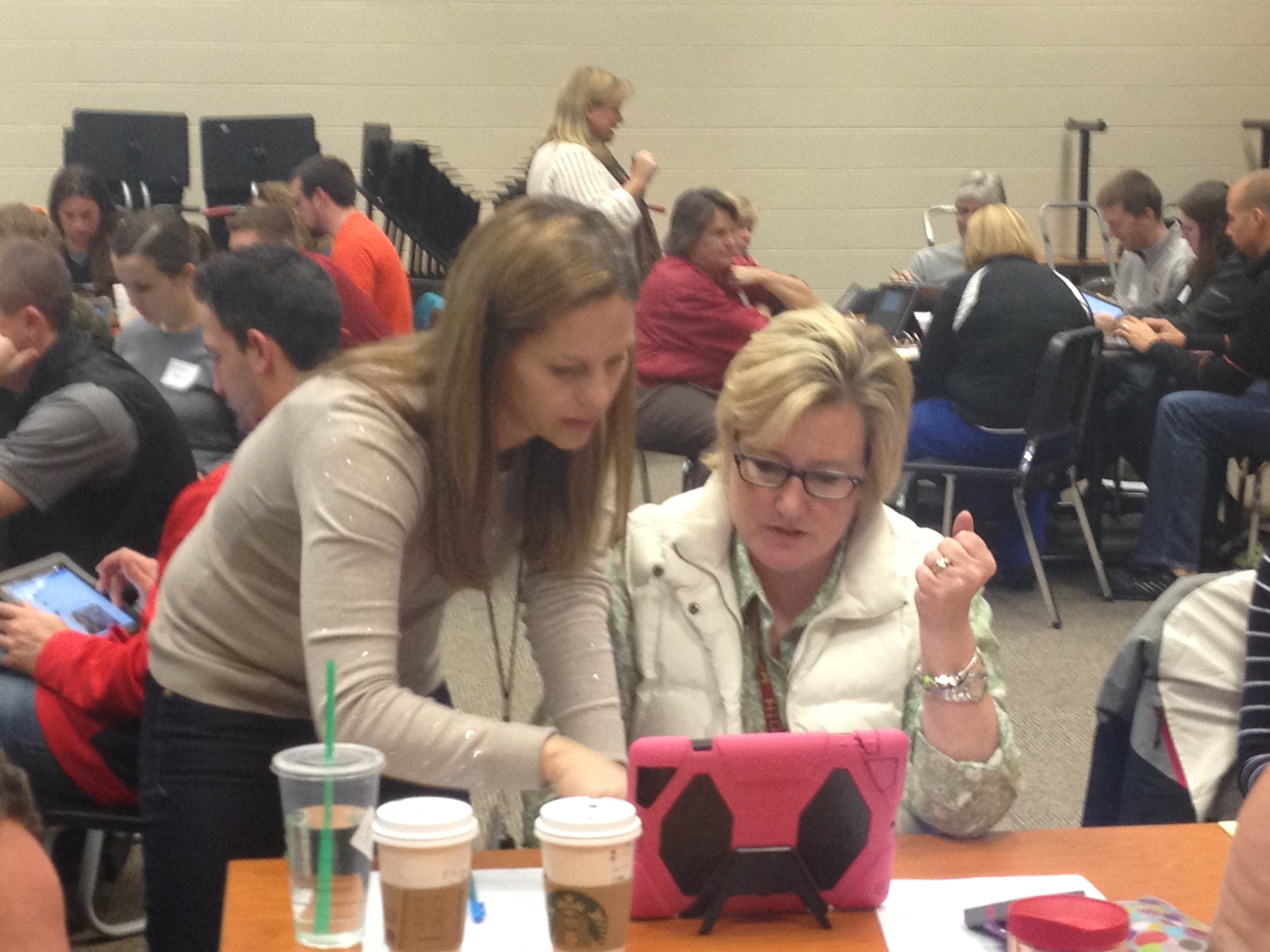
Today, HSE21 Shorts would like to introduce you to a PD model that has been successful and rewarding this year: the HSeLearning Cohort. Our inaugural HSeLearning Cohort has been a group of seventh and eighth grade teachers who are meeting this spring to expand their skill sets and prepare for change. The Cohort is composed of ten teachers from each of our District’s three junior high buildings (30 in all). Selected by their principals, these teachers cut across all subject areas but are united by their growth mindset and willingness to risk.

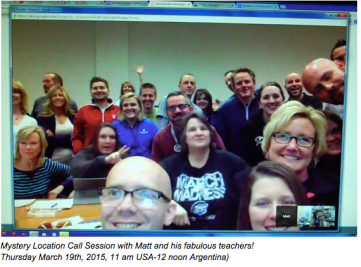
The HSeLearning Cohort has thus far completed three of four full days of learning together. Topics have ranged from district-supported software applications to social media to digital tools for formative assessment. Working in subject area teams, teachers have discovered portals fScreen Shot 2015-03-29 at 9.13.36 PMor rigorous and relevant digital content, and have explored their role as modelers of digital citizenship for this generation. With the help of Matt Miller (www.ditchthattextbook.com), the Cohort even dialogued with teacher in Argentina via Google Hangouts. Matt used this experience to help our teachers understand the potential global reach of our classrooms in the 21st century.
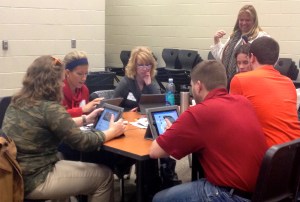
IMG_2792What has made the Cohort PD model enjoyable and successful? Many things: relevant, timely content that has emphasized practical classroom applications, time to design lessons and plan for next year, and, above all, relationship and connections. In coming back together each month this spring, HSeLearning Cohort teachers have had the opportunity to work together with others who teach the same academic content. They’ve built friendships. Though their buildings are miles apart (RJH to FJH to HJH = 12+ miles), HSE21 Shorts predicts that many of these teachers will continue to share ideas and collaborate–something that’s vital to highly effective teaching practice in today’s digital world.

 *Special thanks to CIESC for inspiration in the design of  the HSeLearning cohort model, and to the Indiana DOE’s Office of eLearning for professional learning grant funds.