GES: A Marketplace of Learning

Geist Elementary School students and faculty have come together this spring to impact their community! As a school-wide project-based learning experience, classroom pairs have collaborated on products for the GES Marketplace, set to take place on March 31st. Watch this clip to learn more!


Digital Citizenship: Not Just for Students!

Meaningful participation in the global, digital world necessitates new literacies; in essence, it involves taking what we know about citizenship in the physical world and creating parallel expectations for virtual spaces. Components of citizenship–rights, responsibilities, etiquettes & manners, security & privacy concerns, legality issues, and more–matter a great deal in the digital world. This fresh, virtual territory, however, isn’t as defined or clear-cut as behaviors and social norms are in physical spaces.

As HSE’s secondary schools shift to a Bring Your Own Device (BYOD) environment next year, it’s important that all teachers are prepared to model and reinforce wise and proper digital citizenship in their students. HSE High School teachers considered digital citizenship this week, as they completed a virtual learning module designed to stimulate thinking on the meaning of these words, and how digital citizenship plays out in our modern lives as teachers and learners.

Conversation and further more professional development will take place in the next several months, as teachers anticipate BYOD. Here are just a few of the components of the learning module teachers completed this week. It’s food for thought for all of us!

Here are a few words to think about from Dr. Henry Jenkins, clipped from a longer thought-provoking film on Edutopia, followed by a short explanation of digital citizenship from Common Sense Media:

https://www.youtube.com/watch?v=xIcImXdLTgU&feature=youtu.be

https://youtu.be/Ifc_wFSxfRs

Shark Tank…with Heart

IMG_0771This week’s Shark Tank at HSE High School was not a literal pool of Great Whites, but a lecture hall filled with peers and several sharks, community members who volunteered their time to listen to students pitch Genius Hour projects-in-development. Teachers Kelsey Habig and Jill McGrath have spent the last several months helping their eleventh-grade English students design and conduct research for individual projects based on each student’s individual interests and passions.

IMG_0791The next step in this learning process has been for students to offer up their plans to an authentic audience for comments and suggestions. School board members, business owners, and others have made up the HSEHS Shark Tank. Unlike ABC’s Shark Tank, though, these Sharks weren’t invited to invest in entrepreneur wannabes. The local Sharks were in the audience to listen–to ask probing questions and to provide helpful feedback: “Have you thought about what might happen if you…?” “What about contacting ___? Their office might have some resources to get you started.” “I love your energy and passion–now what might your action steps be?”

IMG_0803By the time most students reach high school, they are used to being called upon to answer questions in class and to present projects to classmates. To stand on a stage before an audience of peers and adults, however, in order to present individual work based on personal interests and passions–this is very new. Students shared from their hearts, backing up their project designs with data and research. Whether a project sprung out of a need connected to a personal past time, an issue observed in the school community, or a cultural concern with global ramifications, students revealed their ability to analyze and come up with creative solutions to real-world problems. HSE21 Shorts can’t wait to see the follow-through!

Nighttime (Kindergarten Musical) Ninja

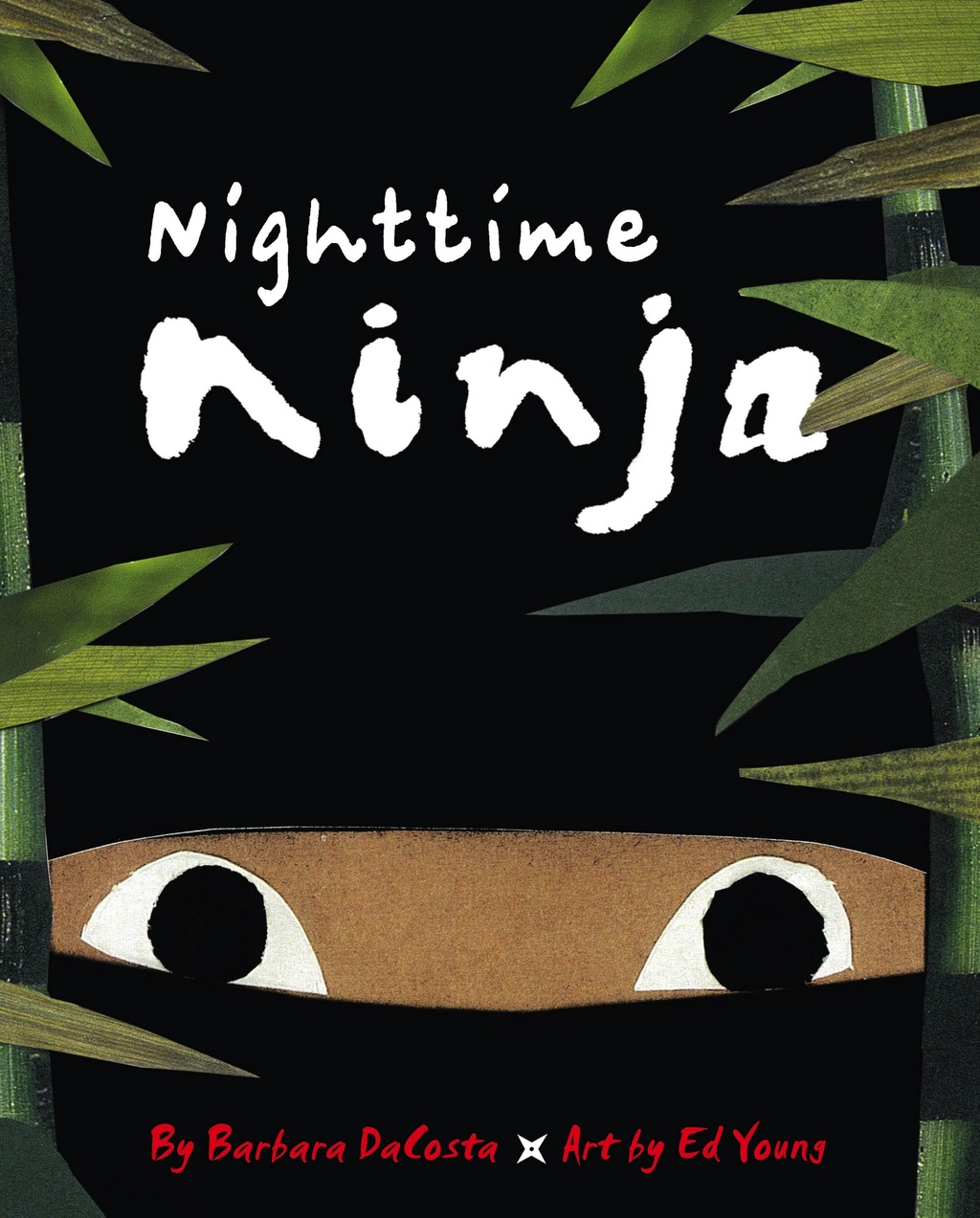
893a85213729dc7455843d3fafd13475Have you ever acted out a book? Put a story to music? Take a look at this quick snapshot of Cumberland Road Elementary kindergarteners, as they experience the book Nighttime Ninja in music class. Note the imagination and creativity these five and six year olds display! Thanks to music teacher Suleman Hussain for sharing this lesson with HSE21 Shorts!


Jazzin’ It Up with Technology

photo (2)Chances are you grew up doing research by visiting encyclopedia pages. Also, chances are that you presented your learning by writing a research paper. And…(one more), chances are, you don’t remember anything you learned by doing that assignment!

Today’s digital tools make possible a plethora of multimedia information resources for research study; these same digital tools also enable new, highly creative ways for students to share their learning.

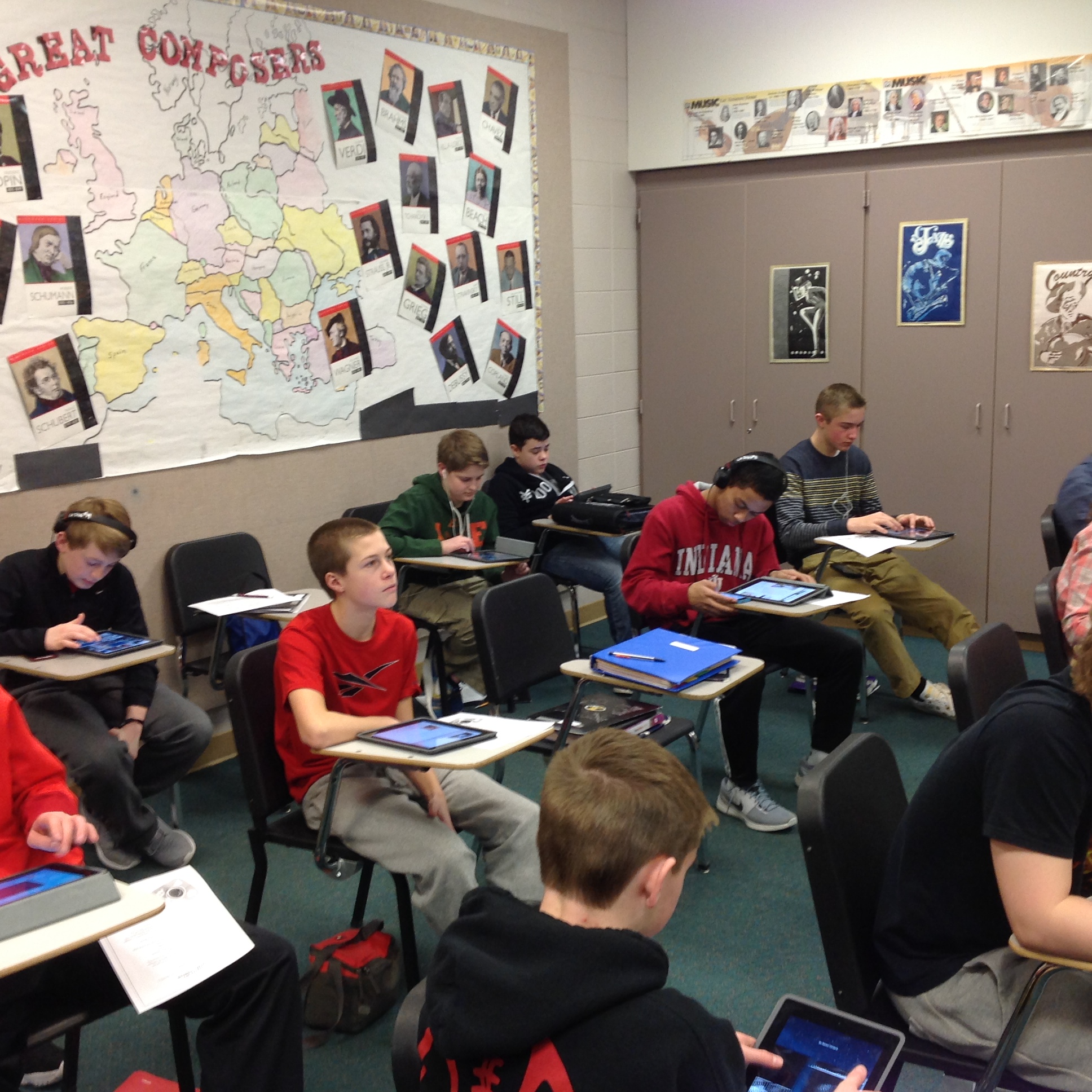
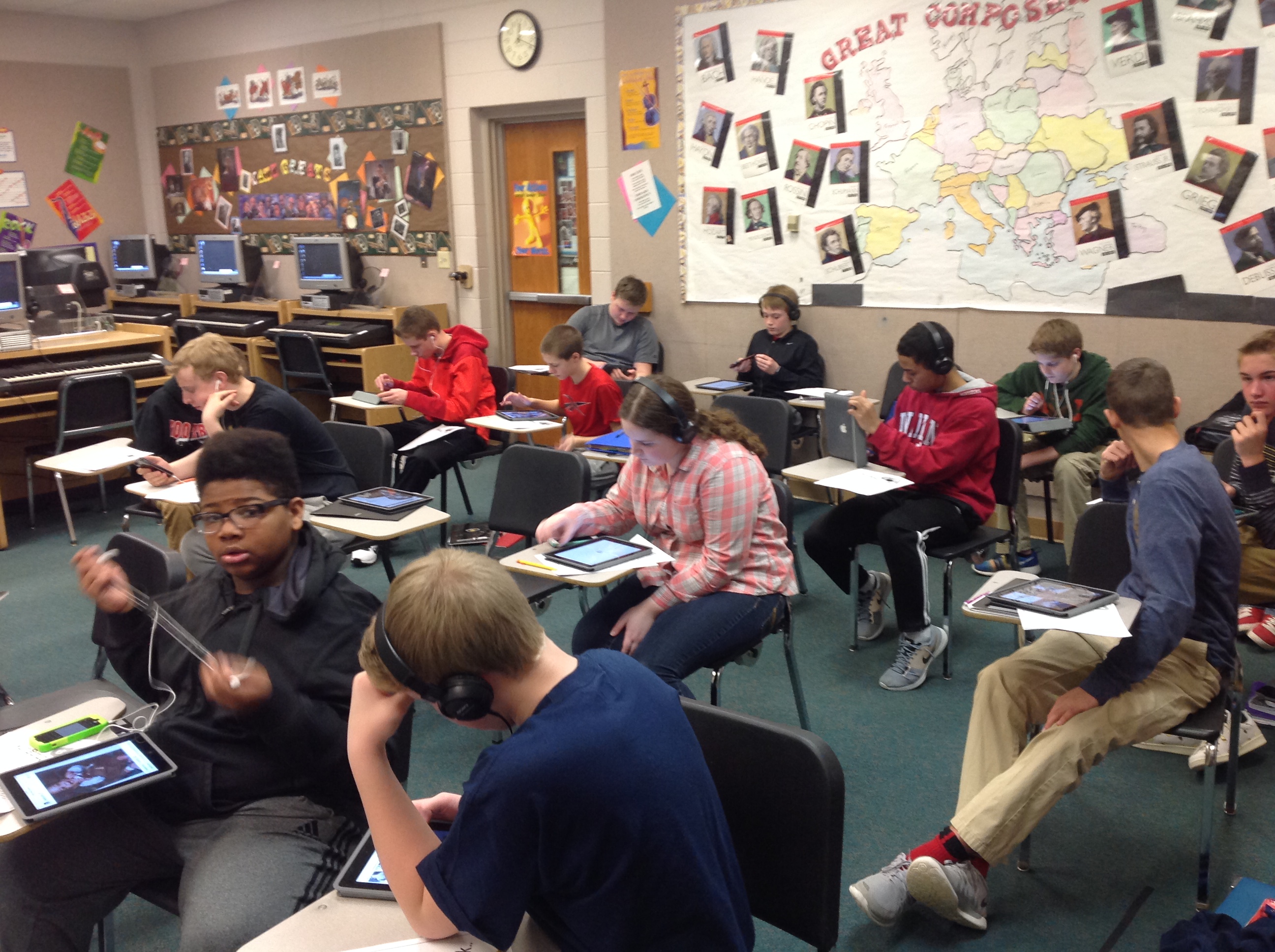
imageA project recently completed in Brandon Spidel’s, general music classes at Fishers Junior High offers a great example of how technology can unleash creativity to make learning fun and meaningful. Mr. Spidel’s general music classes are studying jazz–both the movement and the musicians. Instead of learning about jazz greats through likely outdated books, Spidel led his students to sites like The Radio Hour, where they could not only read, but also listen the work of the musician under study. All in one location.

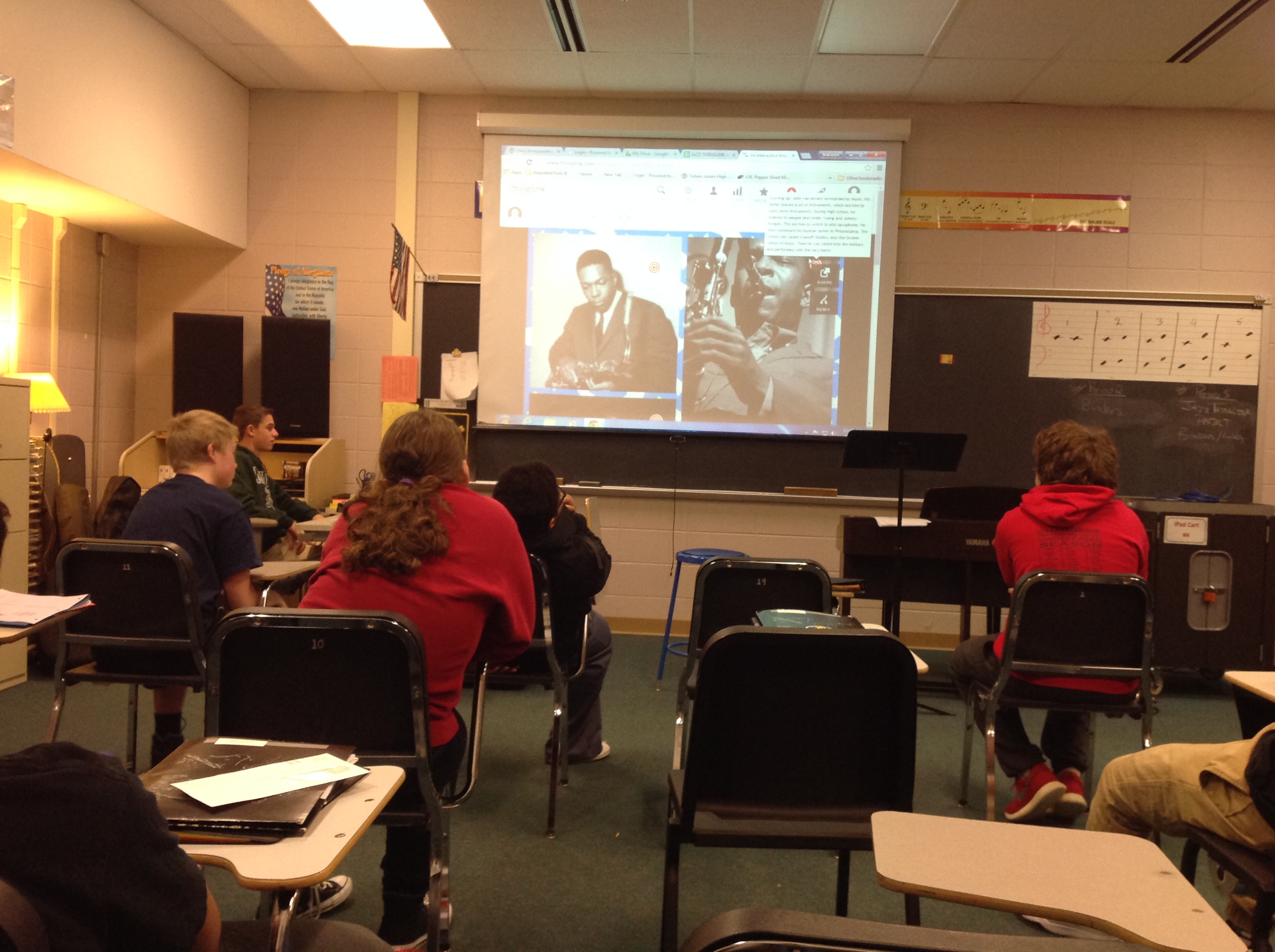
photoThe eighth graders augmented their learning with key images, using these to create unique PicCollages of their chosen jazz musician. Through an app called ThingLink, the students were able to link segments of their PicCollages to music and information on the web–links that could easily be visited by others wishing to learn more about the particular musician. According to Spidel, the ability to research online has given students a much fuller picture of jazz music and jazz musicians. Being able to use their own creativity and digital apps to display their new-found knowledge…well, these eighth graders won’t be forgetting what they’ve learned any time soon! Sometimes you need to write a research paper. Sometimes you don’t.

HSE Schools Spoke Up!

Screen Shot 2015-03-02 at 9.11.57 PMEarlier in the year, HSE21 Shorts noted our district’s participation in SpeakUp, a national educational technology research study. Since 2003, the Speak Up National Research Project has provided “participating schools, districts and non-profit organizations with a suite of online surveys and reports to collect authentic feedback from students, educators and parents.” SpeakUp and its parent organization, Project Tomorrow, also summarize and share the national findings with education and policy leaders in Washington DC.

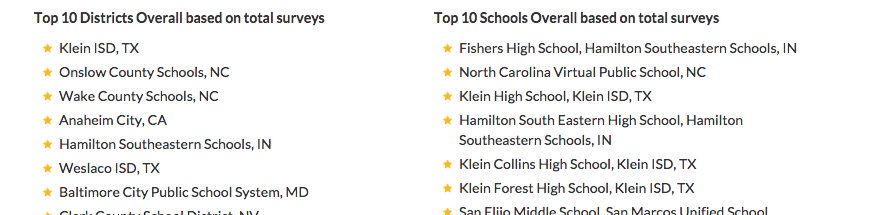
In the coming days, Shorts will be highlighting Hamilton Southeastern’s SpeakUp data. For today, we want to acknowledge the stellar participation and follow-through of our district buildings in this endeavor. The screenshot above is taken from the SpeakUp website. You’ll note that our district placed fifth in worldwide participation, and that our high schools were both top five individual schools. Quite an accomplishment–one that will give us important local data to drive decision-making in the area of educational technology!

Learning in Community: BSE Math & Science Night!

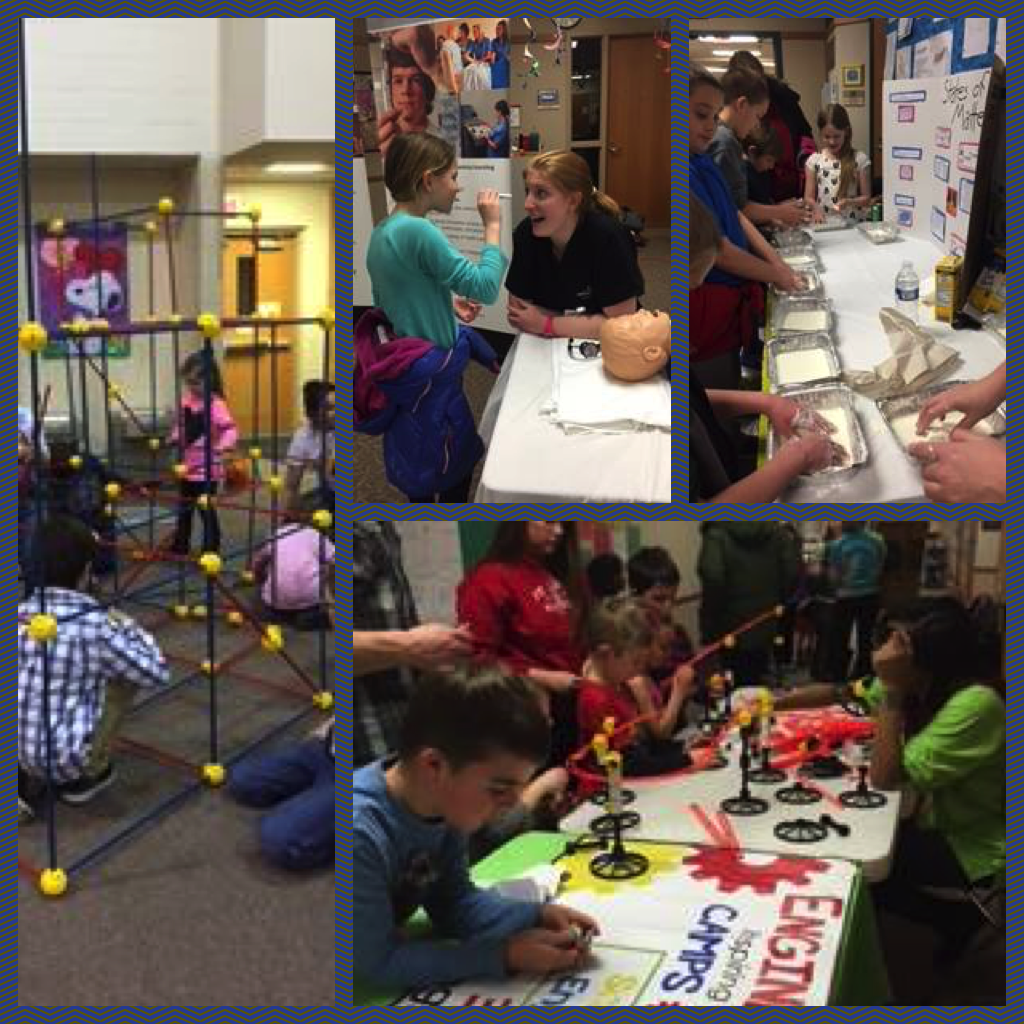
11021102_10206030606269406_1659028471392239613_nIt’s a powerful thing when an entire learning community comes together to promote exploration and discovery! This was exactly the case recently at Brooks School Elementary. BSE’s annual Math & Science Night has grown in several years from a few exhibits in the gym to an extensive, not-to-be-missed evening for teachers, students, and families.

Planned and sponsored by the BSE PTO, Math & Science Night is not a fundraiser, but  a community learning event-an opportunity for parents and children, teachers and students to explore math- and science-related exhibits together! The evening is structured as an open house, with tables set up all around the school hallways and gym. Exhibitors come from within and outside the school community; all provide fun and interactive learning experiences. This year, both the HSE Robotics club and FHS First Robotics teams brought robotics exhibits including robots driven with video game controllers (HSE) and a robot that throws a large ball (FHS).  Several FHS AP Biology students ran tables with exhibits as well. Kristin Patrick, BSE’s media specialist, spent the evening in the computer lab showing how technology-rich learning experiences happen in classrooms every day and answering any questions parents had.

BSEManthandScienceNightOutside presenters included Chemistry is a Blast! from Eli Lilly, Star Lab’s mobile planetarium, IUPUI Forensics, Indiana Astronomical Society, National Weather Service, Anderson University School of Nursing, Anderson University Engineering, Stryker surgical instruments, Purdue Entomology (hold live bugs!), Ball State Archaeology, Purdue Food Science, and others too numerous to mention!

When asked what made Math & Science Night such a powerful success, PTO Chair Amy Pollak responded, “It put math and science in such a fun, positive light. I even heard a little girl say, ‘I want to be a scientist when I grow up!’ Perfect.”

Tone, English Class, and Electronic Tattoos

Screen Shot 2015-02-25 at 9.56.19 PMHere’s the understatement of the day: social media is a thing. If you are 13-18 years old, it’s THE thing, when thinking about communication and connection with friends. For high schoolers–and often younger students–Instagram and Twitter are today’s personal scrapbooks, snarky commentary forums, and ‘Dear Diary’ platforms. And, for the most part, these forums are public with a capital P. Twenty-first century students desperately need guidance in using these sites–and the public connections they generate–wisely.
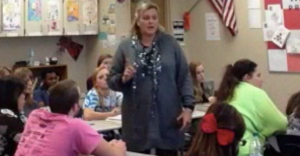
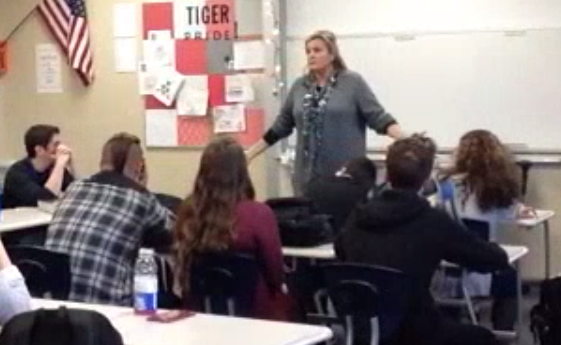
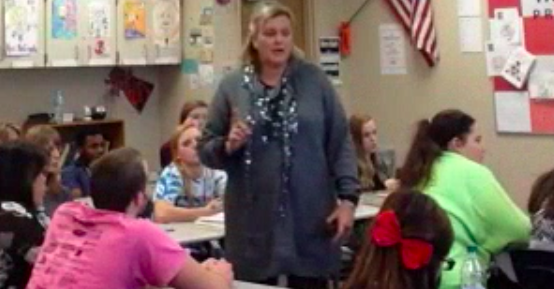
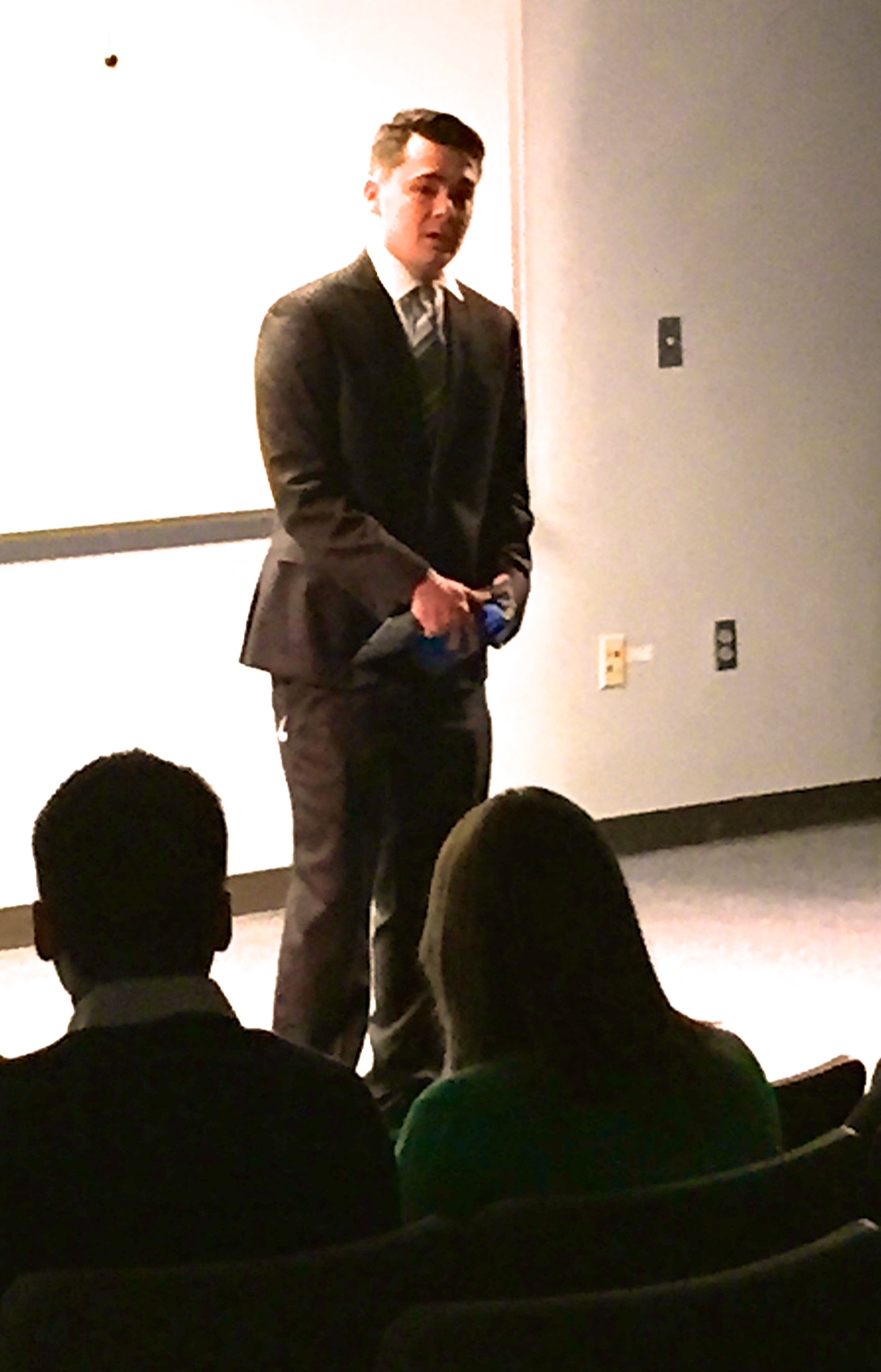
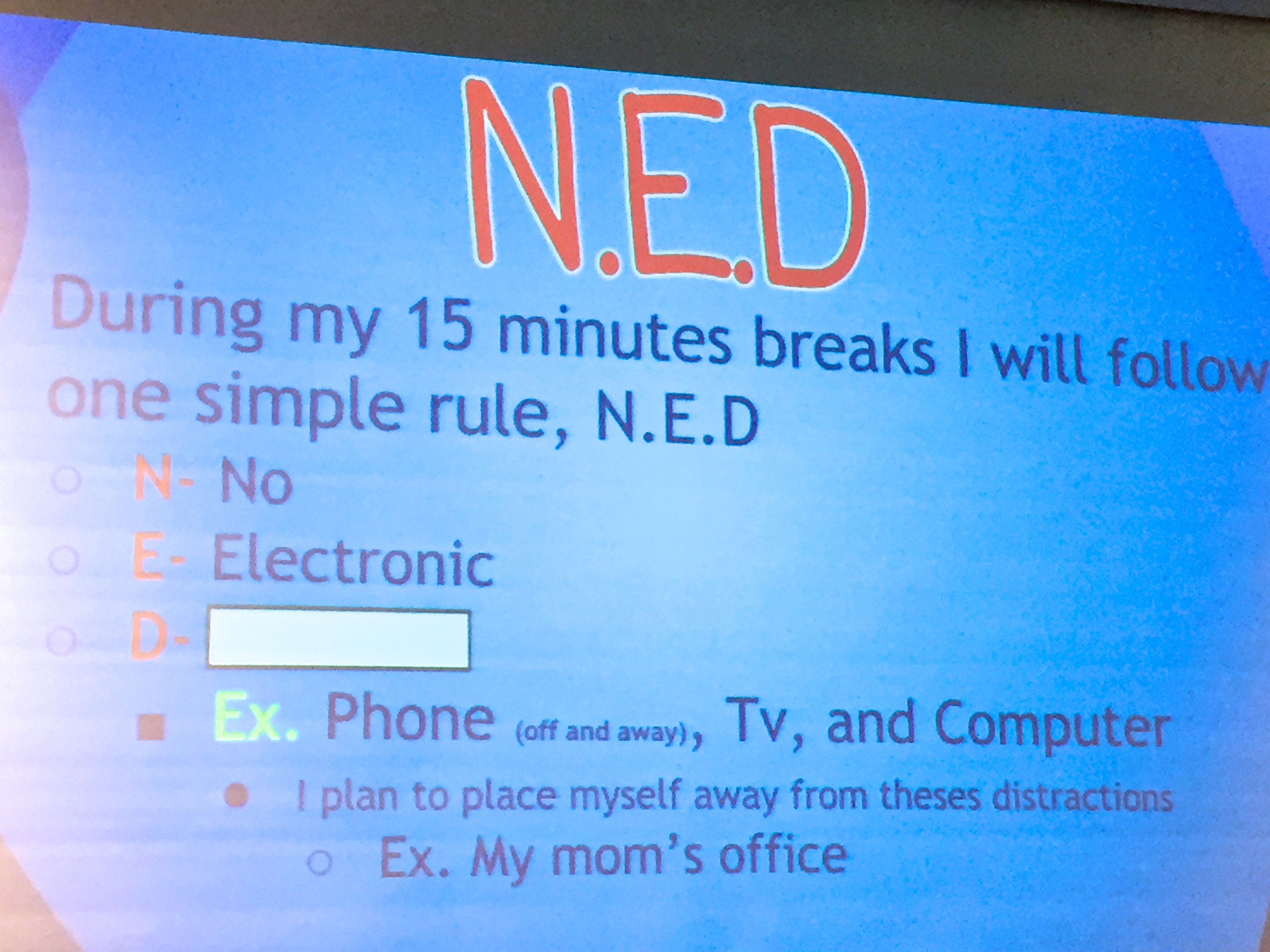
Screen Shot 2015-02-25 at 10.06.16 PMHedy McGrath, an English teacher at Fishers High School, believes strongly that teachers have an important role to play in educating students on what it means to be a wise social media user. HSE21 Shorts recently spent an afternoon in Mrs. McGrath’s eleventh grade English class. With thought-provoking clarity, McGrath deftly wove the day’s English objective (on ‘tone’) into a lesson connecting tone in literature to tone in our digital footprints–those lasting Tweets and images that make up our personal online trails.

A TED talk by Juan Enriquez entitled, Your Online Life, Permanent as a Tattoo, provided background information and added credibility to McGrath’s big idea that tone is not only recognizable in literature–it’s made clear on our social media profiles as well. In cyberspace, however, the tone we want to project may not be at all what the reader perceives. McGrath challenged her students to revisit their own recent Tweets, photos, and/or posts, looking for the overall tone that comes across in their personal writings and illustrations. Just as tattoos are difficult to erase or remove, so are the online trails we leave behind.
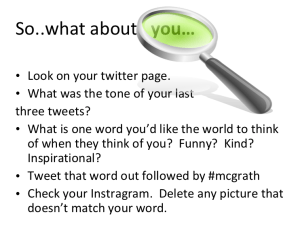
Screen Shot 2015-02-25 at 10.11.30 PMFinally, students were encouraged to take an action step. Choose one word that accurately describes the tone you want to convey in social media. For example: loyal, friendly, honest, or committed. Delete any social media posting that doesn’t convey that tone to the world and, from now on, filter any potential posting through this word. A few of the words chosen that day: caring, determined, funny, open-minded, loving, outgoing, successful, and honest. Clearly, the next generation is on the right track.
Seeing Is Believing…in a whole new way!

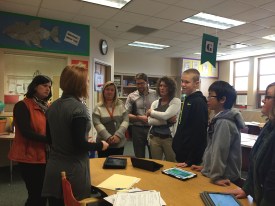
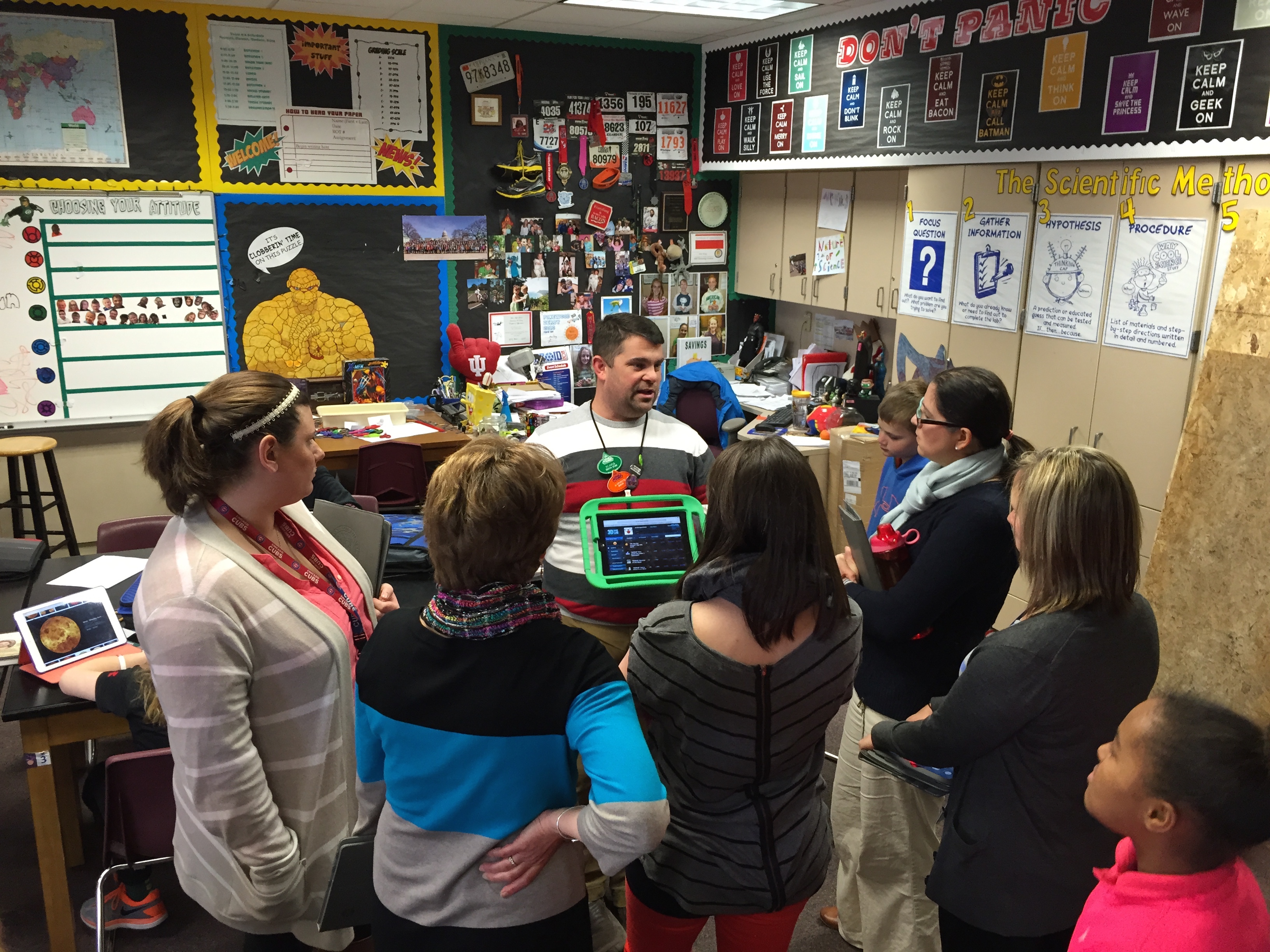
SometiIMG_0574mes seeing is believing. For classroom teachers, seeing other teachers in action (what we call ‘shadow visiting’) isn’t as much about ‘belief’ as it is about sharing curriculum and methodology across grade levels. It’s also about noting successful innovation–which is exactly what happened when fourth grade teachers from HPE*, HRE* and SCE* recently spent half a day visiting Sand Creek Intermediate, the building that many of their current fourth graders will attend next year.
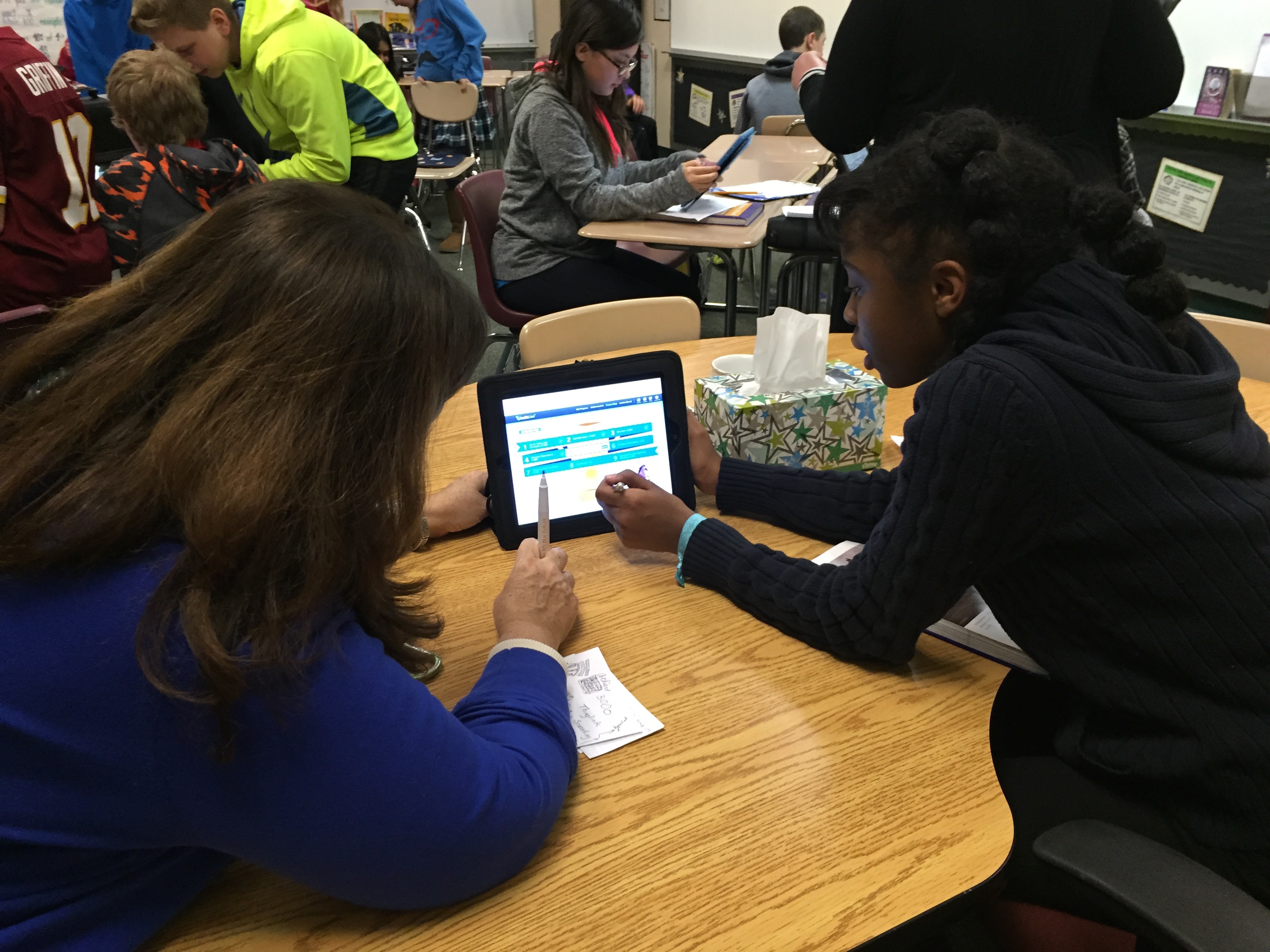
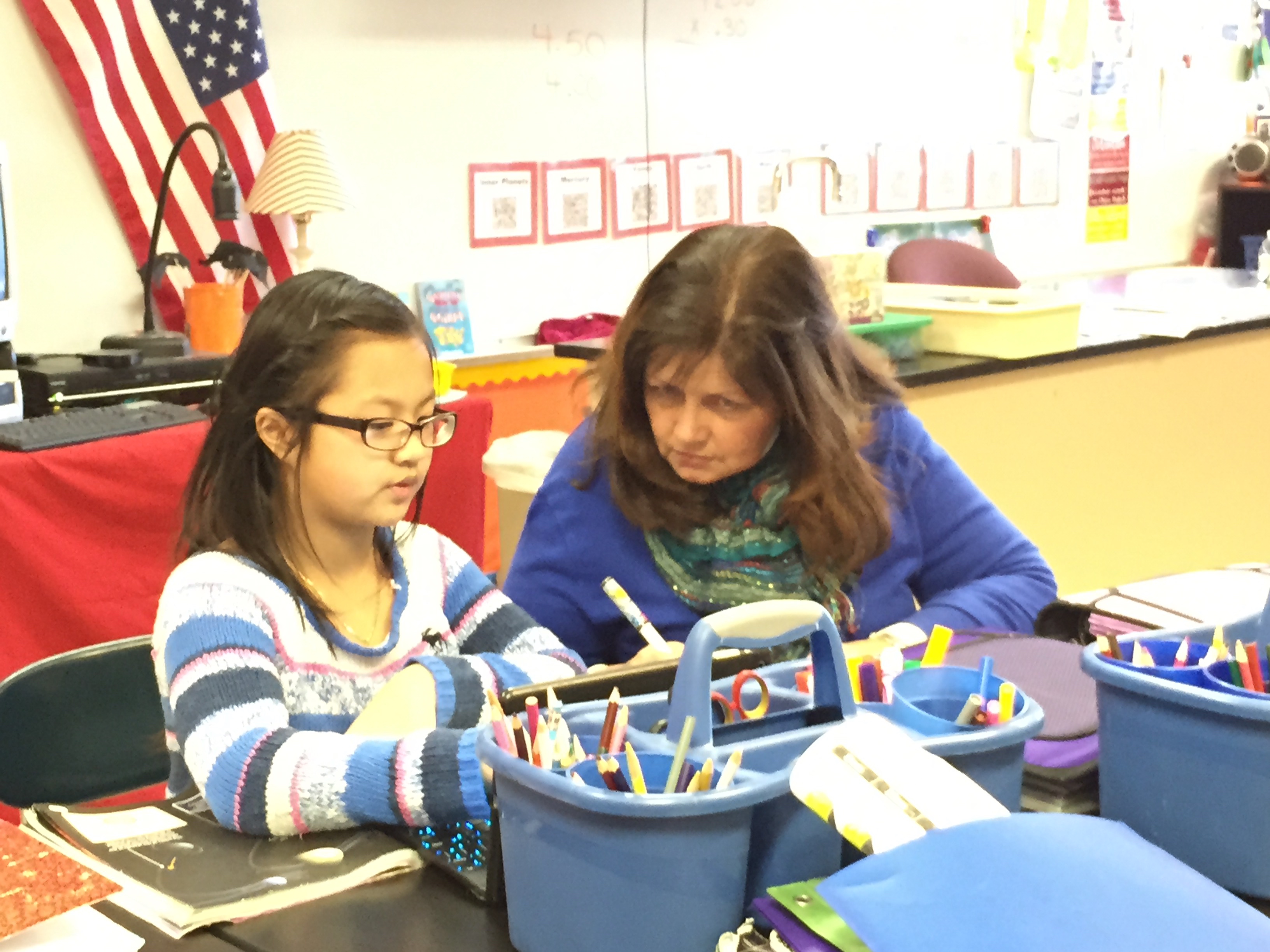
IMG_0539Last week’s fourth-to-fifth grade shadow visits (still more visits are slated to occur this year!) were prompted by a very specific curricular innovation: blended learning with technology. iPads have been incorporated as a tool for learning for each 5th and 6th grade student this year; seeing this blended learning in action has giveIMG_0530n the elementary teachers a clearer picture of what blended learning looks and sounds like. The fourth grade teachers were even able to learn from their former students (this year’s 5th graders) — teacher and student iPad pairs quickly sprang up as the fifth graders pulled aside their former teachers to tutor them on iPad basics!

*Harrison Parkway Elementary, Hoosier Road Elementary, & Sand Creek Elementary

IMG_0537

IMG_0618