It’s hard to believe that it’s already been over three years since HSE21 first got off the ground. It was the fall of 2011 when a small group of HSE educators and administrators met to research new possibilities for teaching and learning–possibilities in which classrooms would no longer be bound by four walls and static textbooks. Digital technologies and the World Wide Web were leading to major instructional shifts around the nation. Clearly, the world was moving from print to digital, from local to global, and from an industrial economy to a knowledge economy.
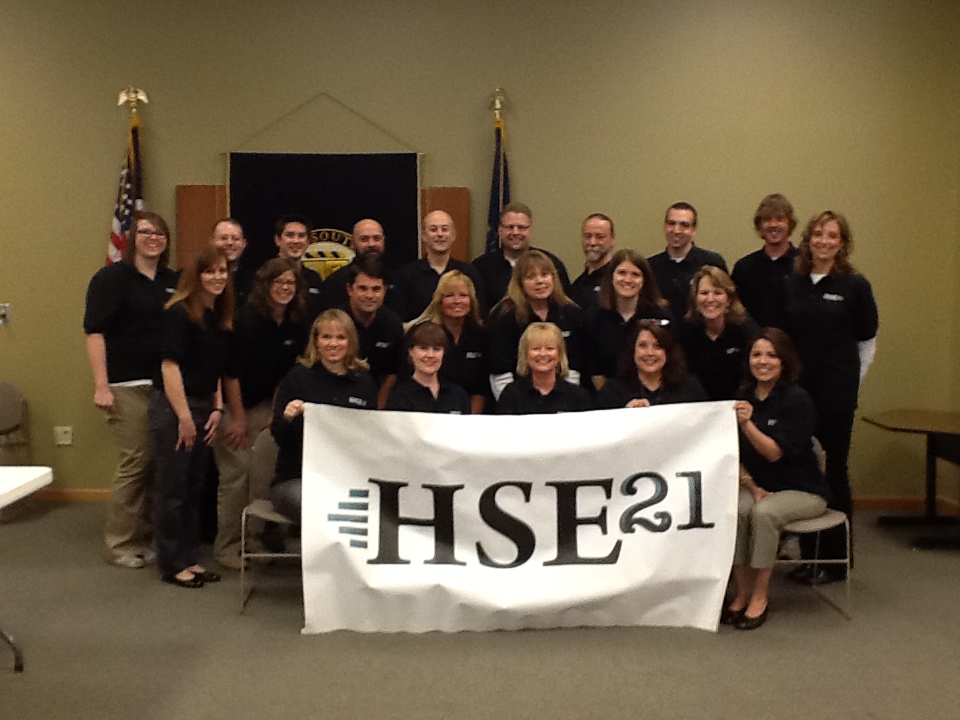
The original HSE21 Pilot Team in 2012.
Fast forward a year, and a pilot team composed of dynamic HSE teachers was selected to roll out classroom innovations. These twenty educators represented each school level (K-4, 5-6, 7-8, and 9-12) and a variety of subject areas. Their charge was two-fold. First, these teachers were to begin to shift their instruction from the traditional (teacher-centered, lecture-reading-homework-test model of instruction) to a 21st century best practice learning model (student-centered, inquiry-driven and problem-based). Second, they were to incorporate digital tools for learning into their daily classroom practice. Each teacher received a cart of thirty iPads with instructions to use this technology to deepen and extend learning.

The HSE21 Pilot Team reconvened recently to reconnect and share experiences. It was a time to reflect and to look forward.
Over two more years have passed. Our pilot teachers are in their third year of teaching forward–that is, preparing our students for the world they will soon inherit. Many other faculty have joined suit. This year, our fifth and sixth graders use iPads every day. Our 7th through 12th graders will add digital devices for learning next year as well. The most important thing to remember is that these devices are not an end in themselves. They are learning tools that provide for up-to-date information access, teacher-student collaboration, communication, global connections and creativity. Taking advantage of our 21st century advantages. The pilot team led the way. They have much of which to be proud.
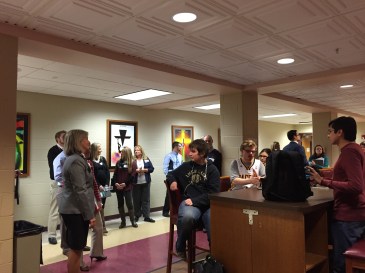 HSE’s August 2015 BYOD roll out is the culmination of several years of research, strategic planning, and practical preparation. For our school district, part of this preparation has included visiting other schools and districts throughout Indiana, especially those that have gone before us in this major curricular shift. The image here is of a recent visit to Brebeuf, a nearby high school already in its third year of a BYOD program. The group of HSE and Brebeuf teachers and educators spent half a day relating experiences, discussing concerns, and learning from one another. Just as collaboration among students deepens learning, so it is with teachers. Our teachers hope to continue the relationships that have begun with Brebeuf’s educators, and with today’s digital tools, continuing conversations are just a mouse click away.
 f Cumberland Road Elementary, has developed several online spaces through which he highlights student learning, shares lessons with parents, and gives students information to practice musical skills and pieces. Mr. Hussain keeps lessons up-to-date on Google Drive in grade level folders, accessible to parents and students 24-7. Through his YouTube channel within HSE’s domain, parents now have a window









![image[1]](https://hse21shorts.com/wp-content/uploads/2015/01/image1.png)
![image[2]](https://hse21shorts.com/wp-content/uploads/2015/01/image2.png)
![image[3]](https://hse21shorts.com/wp-content/uploads/2015/01/image3.png)









 HSE21 Shorts