Coding in the Real World

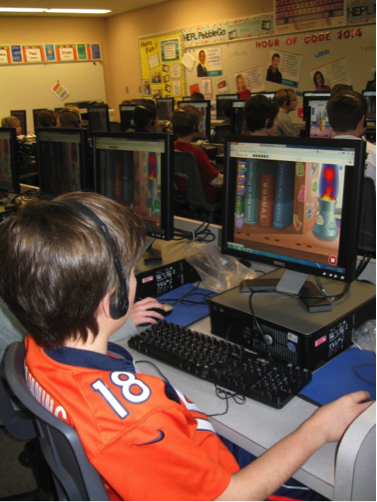
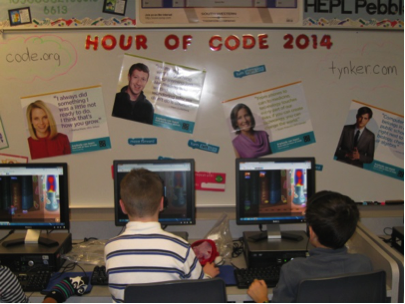
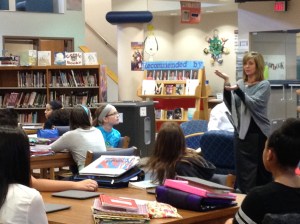
sce1Students at Sand Creek Elementary participated in Hour of Code during their library time with Mrs. Collier, SCE’s media specialist. After the students understood the meaning of ‘coding’ and had gotten a chance to practice, it was time to make it real, and third-grade teacher Lorena Forbes, had just the connection that was needed!
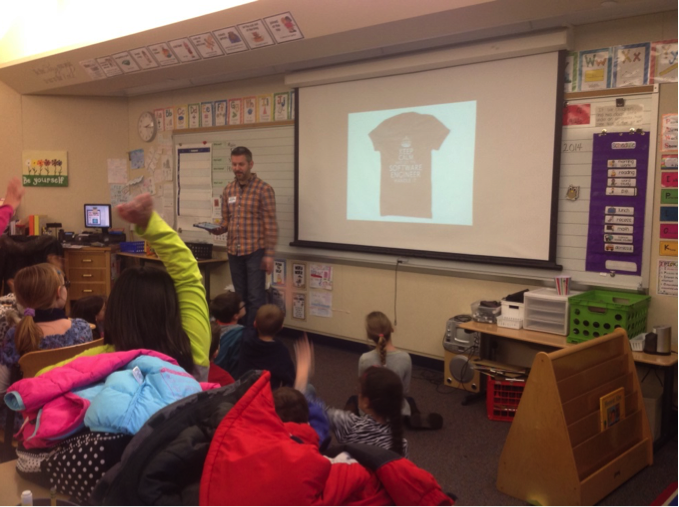
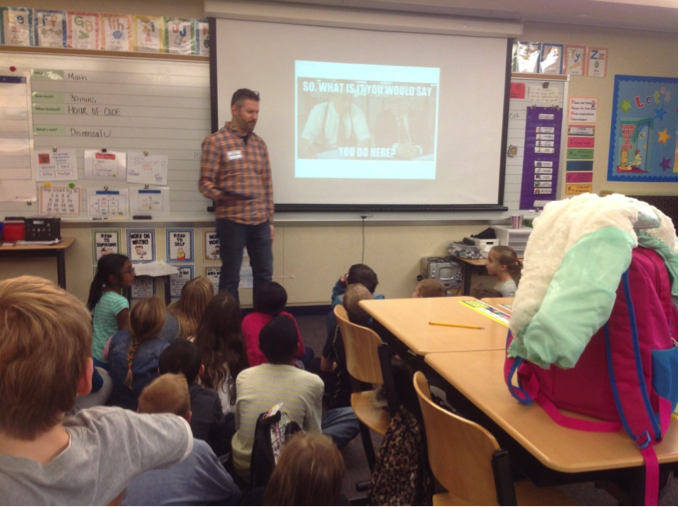
sce2Mrs. Forbes brought her husband, Randy Forbes, to school for the day! Mr. Forbes is a software engineer with Salesforce, and is experienced in all types of coding. Mr. Forbes traveled to several classes to give students some background on what computer programmers do in the real world. The biggest surprise for students was that Mr. Forbes’ job isn’t all about gaming! Mr. Forbes also worked with some students to finish an Hour of Code in the computer lab.

sce3Through taking part in fun coding activities and through hearing about the amazing things grown-up programers do, SCE students are now hooked on coding!

-Submitted by Laura Collier, SCE Media Specialist

Hour of Code…Hour of COOL!

We continue our week-long focus on the many ways that HSE schools and classrooms have implemented the Hour of Code! Thanks to Lori Silbert for today’s post.

lre1At Lantern Road Elementary, students prepared for coding before Hour of Code officially kicked-off. The site www.tinkersmith.org offered lesson plans to get us thinking about programming techniques. We thought about the “small pieces of the puzzle” that would lead to creating the “big picture.” Together we gave “human robots” commands to move forward, move backward, ‘pick up cup’ and ‘put down cup’ in order to build a pattern of paper cups on a table. Students took turns being the robots and writing the code using left, right, up and down arrows. Now students were ready to program on-line!

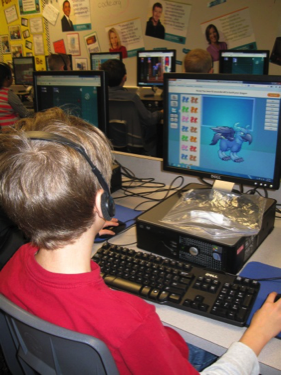
lre2All K-4 LRE students are participating in Hour of Code this week. They have written codes to help Anna and Elsa skate across the frozen ice by using commands like move forward and turn right 90 degrees! Using the site www.tynker.com/hour-of-code, they created creatures and programmed them to maneuver along paths to find peppermint drops and lollipops. A poor little puppy lost his family and the students wrote the code to help him find them again – forward, turn left, jump, turn right, forward!!! Often, students have needed to figure out a pattern and have their characters repeat actions. We even decorated the national holiday tree in Washington DC at www.holidays.madewithcode/project/lights#.

lre3Hour of Code has provided each LRE student with sixty minutes of engaged learning that will take them down new paths of their own!! Our 21st century students need core subjects; learning and innovation skills; information, media and technology skills; and life and career skills. This week we are blending all of these important areas in many cool activities!

-Submitted by Lori Silbert, LRE Media Specialist

Hour of Code Kick-off

This week, many HSE students are  participating in Hour of Code – a global movement to stress the importance of computer science in education. Through computer programming activities, students practice skills that involve problem-solving, creativity and logic – important skills for 21st century learners. Last year over 15,000,000 students participated in Hour of Code in 180+ countries around the globe. This year organizers are hoping that more than 20,000,000 will experience the fun! For more background,check out this clip:


HSE21 Shorts plans to devote the remainder of this week to posts highlighting Hour of Code around our district. Stay tuned! Whether you are 4 or 104, you’ll soon see that computer coding…well, it’s just plain FUN!

Thanks to LRE media specialist Lori Silbert for today’s post!

The Pagemaster and the Performing Arts

3917_aaEach spring, the Fishers High School performing arts department showcases students in a unique way. An event, known as the Performing Arts (PA) Festival, is the culmination of a year’s focus around a common theme. During the year, all teachers in the performing arts department–band, orchestra, choir, drama, speech, and tech theater–engage their students in curriculum-driven ways to foster learning around the chosen theme. Throughout the year, learning deepens, connections are made, and collaboration grows, culminating in a stellar event that conveys a deeply understood and heart-felt message to eager audiences. Past themes include War & Peace, Love, The Oscars, and The Magic of Disney.

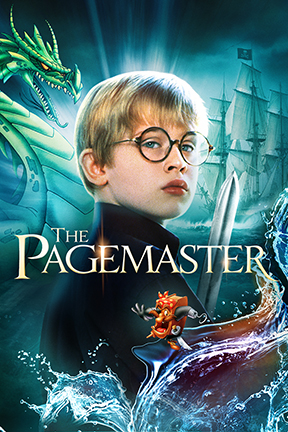
This year’s PA Festival will be based on the film The Pagemaster, a story of transformation from timidity to courage. Throughout this fall semester, performing arts students have been reading, researching, and collaborating. They’ve begun the artistic design process. In the spring, they’ll continue design, and begin rehearsals. In May, the Fishers community will be treated to the product of a year’s work of nearly five hundred students and faculty. HSE21 Shorts will revisit preparations for the PA Festival as the event approaches. Stay tuned!

The Pagemaster Project exemplifies 21st century learning. In the example below (from the vantage point of the FHS Bands), notice that student-choice, creativity, collaboration, critical thinking, creation and presentation are all integral parts of the assignment. This fall, these factors have been at work within performing arts sectors. In the spring, these elements will still be present, as collaboration happens between the areas. HSE21 Shorts is excited to see how these groups, working together, will connect the dots and build the Festival!

View example: The Pagemaster Project – band

Image Source:
http://images.zap2it.com/moviephotos/AllPhotos/3917/3917_aa/the-pagemaster.jpg


Who’s Your Hero?

IMG_7897[1]HSE Freshman Campus English teacher Jen Torres’ class has focused on heroes this fall. Throughout the semester, Torres’ students read books of their choice about persons who could be classified as heroes. The freshmen also researched in depth to learn more about the lives of their heroes, in order to answer the driving question, What makes a hero? Are heroes born? Did something in a hero’s childhood build heroic character? Or…do heroes just make wise choices at pivotal times?
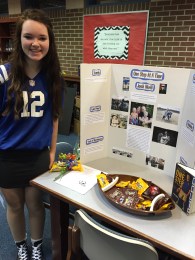
This weIMG_7900ek, the ninth graders’ hero study culminated with a Hero Fair in the school media center. Students used a variety of presentation tools and methods to share their learning with peers, school administrators, and other teachers. Many discoveries about heroes were shared; among others, students realized that heroes can definitely reside close to home! Local war veteran Josh Bleill‘s response to adversity definitely revealed his “hero-ness’, shared Kennedy, a student, in her presentation. Kennedy read Josh Bleill’s autobiography, One Step at a Time: A Young Marine’s Story of Courage, Hope and a New Life in the NFL and shared his story of triumph over adversity.
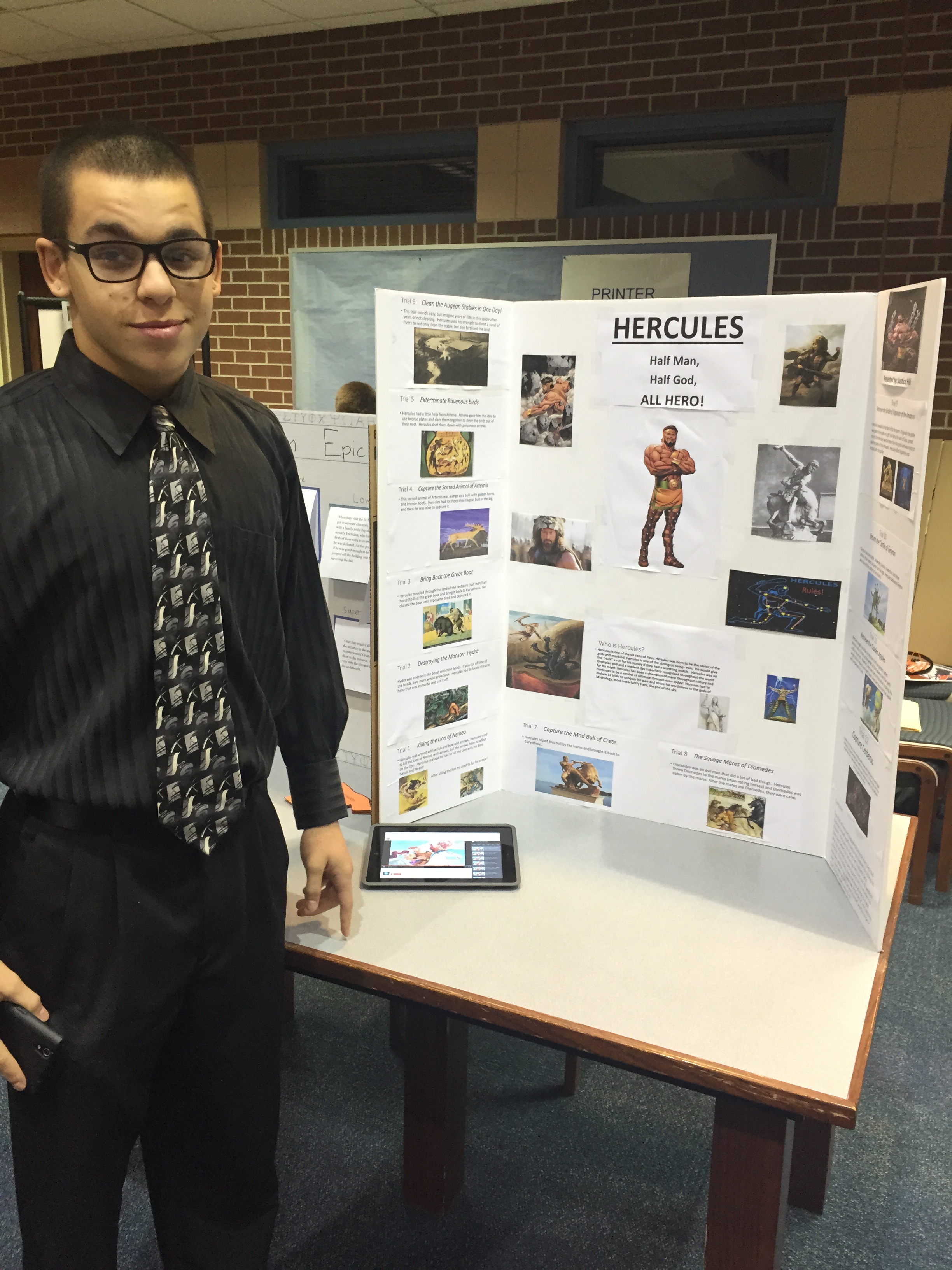
IMG_7898IMG_7896[1]The theme of ‘heroes’ clearly had an impact on Ms. Torres’ students. Through reading, writing, speaking, listening, designing, and pondering, the ninth graders all took away a deeper understanding of what heroism really means.
 

Authentic Assessment: The Power of Words Narrative

dalton1At Riverside Junior High, Stephanie Dalton’s 8th grade language arts classes just finished their study of Markus Zusak’s acclaimed novel, The Book Thief. In order to leave a lasting impression, Miss Dalton decided to replace her traditional assessment with something more authentic and relevant. Thus was born the power of words narrative. Believing that assessment should be meaningful, transferable, and engaging, Miss Dalton challenged her students to prove that words are powerful through narrative writing with a twist.

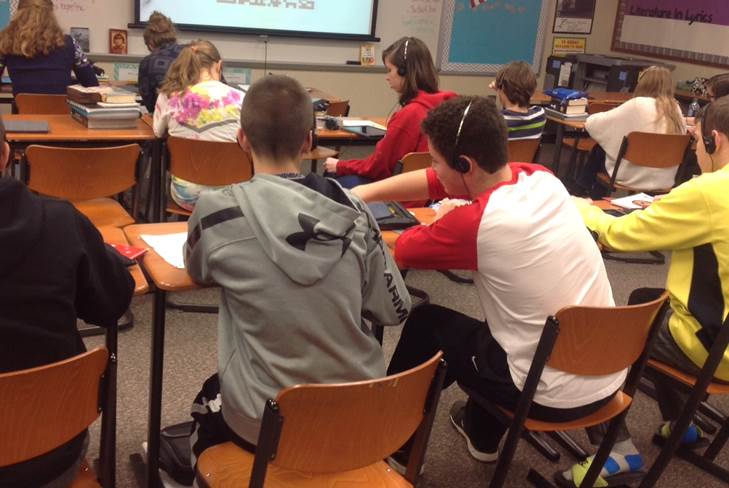
dalton2The first step for students was to find a group of words that had had some impact on their life, such as a quote, lyric, or piece of wisdom. The second step was to tell the story that surrounded that quote. Students shared the moment they heard the quote, or the moment they have seen the quote play out in their own lives. Step three was to record their narratives. Students recorded their narratives in their own voices on iPads. Then, presentation day! Students sat comfortably throughout the classroom, listening to each other’s stories.

The transformation that happened from a writing piece for a one-person audience to a verbal piece for a multi-person audience made all the difference. Students longed to create something that their peers appreciated. Students reflected and re-recorded when their writing was not excellent. And students left the room proud, as their classmates praised their stories and made connections to their own struggles.  In this authentic, meaningful assessment, Miss Dalton’s students demonstrated their understanding of the most important message from Zusak’s novel: words are powerful.

‘Comical’ Monomyths

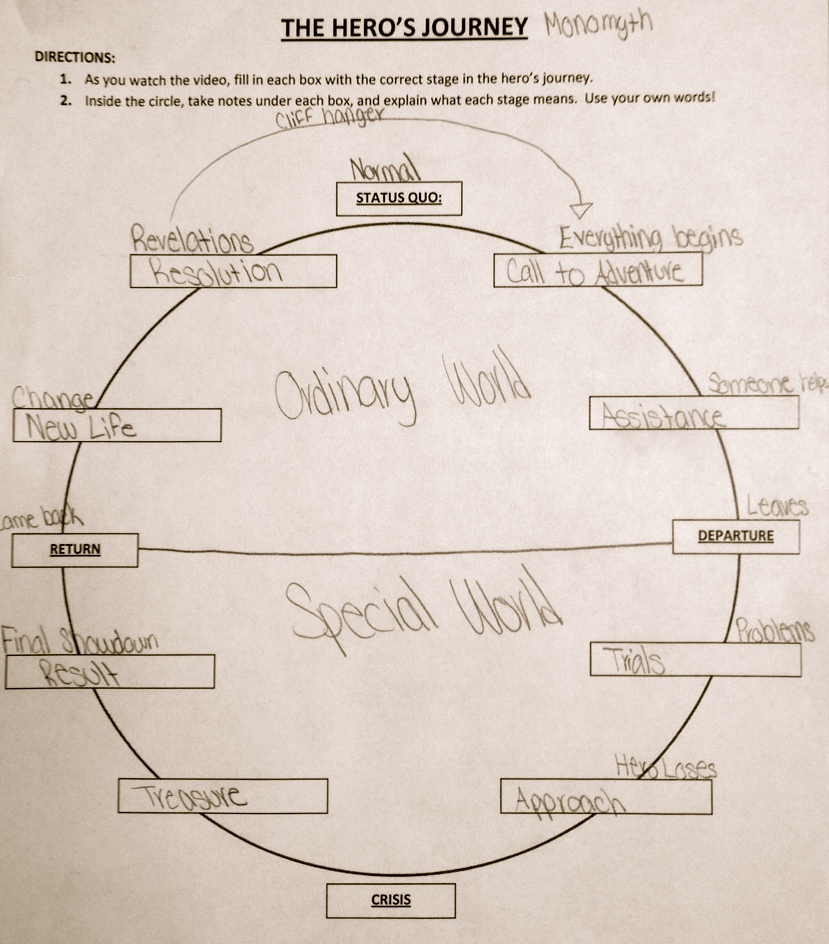
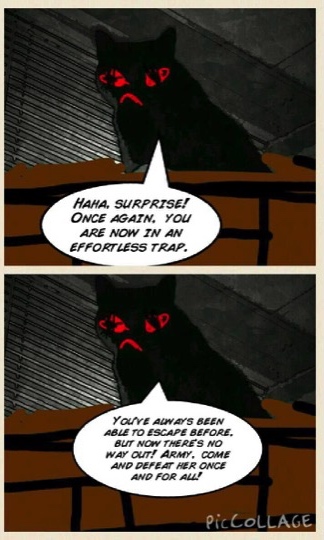
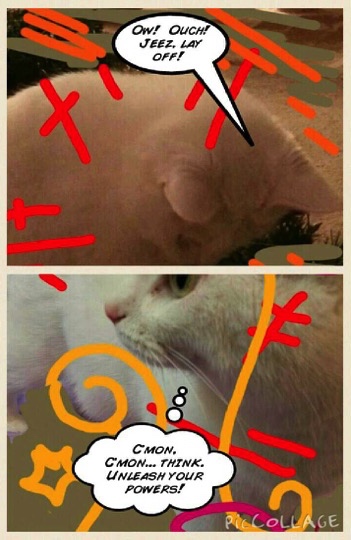
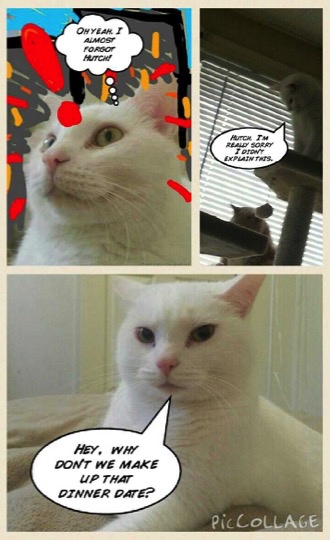
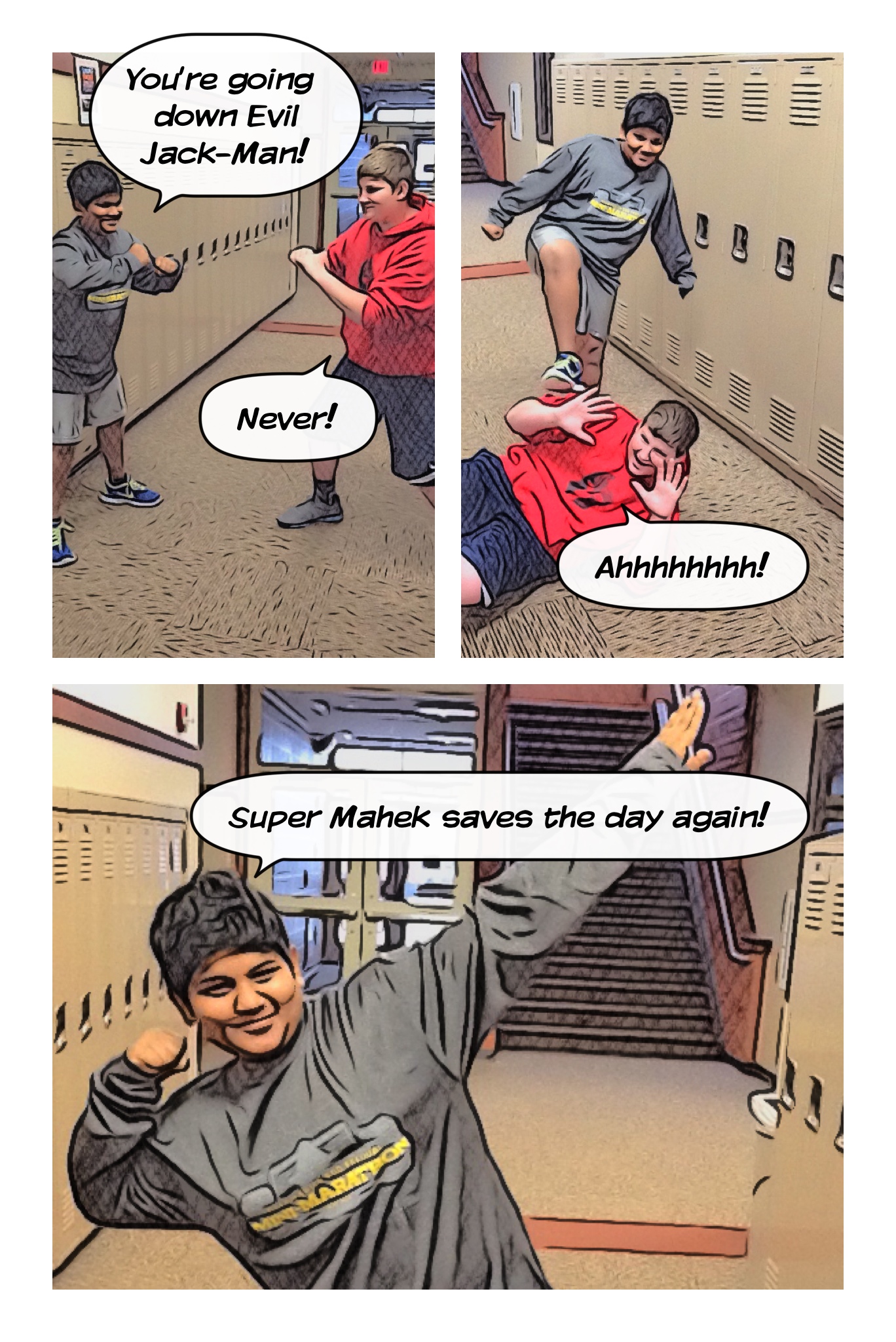
SUPER MAHEKWhen it was time for HSE Junior High’s Jeff Libey to teach the monomyth, aka, the ‘Hero’s Journey’, to his seventh grade English composition students last year, he didn’t even consider mere lecture. This key story structure, integral to much of classic and modern literature, begged for an interactive project–an activity in which the students could demonstrate understanding by constructing a narrative of their own. Libey’s answer: the monomyth comic book! This 2013 project was so successful that Mr. Libey recently encored it with this year’s seventh graders.

IMG_1531When HSE21 Shorts visited HSEJH last week, Libey had just finished covering introductory material–the Hero’s Journey cycle–with his students, and had shown examples of the hero’s journey in film and text. Then it was the students’ turn to show what they’d learned: HSE21 Shorts followed along as each student storyboarded their own monomyth, i.e., wrote the tale of a hero’s journey. Students acted out and photographed (with iPads and smartphones) their monomyths , and then edited the photos (comic-y filters!). Next would come layout and the addition of text, then peer-to-peer sharing to locate  hero’s journey elements in classmates’ myths.

Interacting with new concepts through creation and presentation aids in deep learning. Jeff Libey’s students will remember this creative and fun class project for years to come–even more, they’ll remember the Hero’s Journey cycle and recognize it as they approach literature in the future.

Slide1

Slide2 Slide3 Slide4

Slide5 Slide6 Slide7

Lessons in Etiquette – Social Media Etiquette, That Is!

IMG_2674Media Specialist Sharon Deam makes the most of ‘real life’ teaching opportunities. During her digital citizenship unit this week at Fishers Junior High, Deam reminded her seventh graders that anything and everything they text or post online can affect their futures–and an NBC news report helped to prove her point!

In each HSE school building, the librarian/media specialist instructs all students on digital citizenship topics such as internet safety and security, digital footprints, and more. Mrs. Deam began her recent lesson by recounting the (true) cautionary tale of a congressional aide who was forced to resign last month after she ridiculed President Obama’s daughters on social media. The aide’s demeaning Facebook comments quickly grabbed the attention of media and spread. Mrs. Deam used this sad story as a real-life picture of the importance to ‘think before you post’. In the same way that we emphasize politeness and wisdom in our physical actions, so we must live in thIMG_2682e digital world, using the amazing access provided by social media with discretion. Sharon and the other HSE media specialists are committed to helping our students learn these vital information literacy and digital citizenship precepts.

Student Choice Makes Learning Meaningful

Nance2
Riverside Intermediate fifth graders in Jenny Nance’s Humanities class have just finished a unit studying Native American regions. In planning the lessons and activities, Mrs. Nance was committed to offering options to engage all of her students–to tap the various interests, talents, and abilities of her young learners. Nance’s overarching goal: for every student to engage with and understand Native American history and culture in an enduring way.

Nance1The resulting project combined research, teamwork, creativity, presentation and choice, and was a smash hit with the fifth graders! Following mini-lesson introductions to the unit’s topics, student teams were formed. Through research and discovery, each team became the class experts on one native american region. Students were given choice in how they’d present their learning to the class–dramatic presentations, Minecraft creations, artworks and life-sized displays were all used to convey important facts and concepts to classmates. Throughout the presentations, Mrs. Nance served as Guide, helping to weave essential elements of all regions into a unified whole.

Active, student-driven learning – that’s HSE21!

Bookmarks That Take You Places

IMG_1502The ability to generate connections amongst ideas is one reason technology can be a powerful learning enhancer. Digital technologies even allow us to create new or additional purposes for traditional objects. Take the bookmark, for example. Media Specialist Carolyn Gundrum at Hamilton Southeastern Junior High has helped her students to take advantage of digital technologies to enhance learning–via the ordinary bookmark. Mrs. Gundrum explains:

“We use Word to create three tables, and then use the Table Tools Layout to change the direction of the font. Then we type in the title of their favorite book, author and keywords. After the information is complete, the students customize the bookmark to their liking.”

“The next step is to create a QR (or Quick Response Code) using a QR Code generator and linking it to the author’s website. The QR code is copied and placed by the title of the book. Now a simple scanning it through their tablets or smartphones.”

“When the bookmarks are complete, they are printed on heavier stock paper and laminated. Each student receives his/her own bookmark, and the library keeps a copy too. Now a simple QR code scan–from a bookmark–leads to extended learning!”

“I started this project this year with the eighth grade students; now the seventh grade students want to do it too!  So, this is going to be a new semester project for the seventh grade students!  What fun in learning.”

-Submitted by Carolyn Gundrum, Media Specialist, HSE Junior High