Today’s post is written by Max Goller, one of the eighteen teachers who has been an integral part of our HSE21 pilot for the past two-and-a-half years. HSE21 Shorts asked Mr. Goller to talk about what a technology-enabled classroom has meant to him as an educator. The Gonzo Journalism example is lagniappe!
The digital invasion of Hamilton Southeastern is drawing to a close. Soon, student’s faces will be basked in the glow of their electronic devices. It will be a time of fear and loathing…and more fear as we reconsider everything we have ever learned about learning. Having been on this runaway train since the term 1:1 first came into the district lexicon, I am here to inform you that your fears are all…
Let me stop there for a moment and share some background on the author Hunter S. Thompson. As you might already know, Hunter was the founder of a brand of journalism known as Gonzo Journalism. Gonzo Journalism is characterized by the insertion of a very strong, often dark bias about the subject being covered, frequently with the writer as a first-person protagonist. As you might have guessed, I have made use of this technique to introduce you to my experiences with 1:1, although I have to be honest and tell you there is very little to fear, and certainly nothing to loath about our move to digital technology. Here are some of my experiences as a 1:1 pilot instructor. Results may vary.
As an English teacher, I have found much to appreciate about students having technology in their hands. Student compositions, which I have them type up in Google Docs, are much easier to handle. I can guide students through multiple revisions of papers and track their activity at all times. This not only gives me insight into their personal work ethic and motivation, but also it allows me to have a student turn in a paper before they have even begun working on it. This means I have a lot fewer missing assignments. Additionally, accommodations for different learning needs of students are easier to manage because I can see in real time what they are comprehending and what they are missing.
Technology in the classroom has opened more opportunities to tap into each student’s creative flair. I frequently invite students to select the apps that they think will work best for different projects. This might mean Tellegami character narrating a book talk, or sock puppets acting out scenes of a Shakespeare play, or multi-media iMovies of a rhetorical advertisement. It is a joy for me to see students interpret their tasks is ways that I could never have imagined on my own.
Group work plays a big part in my curriculum, and Google Drive has added flexibility to that process. Through Google Drive, students are able to share their work with each other, and members can be given the ability to read other member’s work to use as guidance for their own contribution, or they can be given the ability to fully edit a project collaboratively. When minds are able to connect and work cooperatively together, greater individual learning is often the result.
I won’t say that a move to the digital classroom will not be without its moments of frustration, fear, and at times maybe a little loathing. However, for me the opportunities have far outweighed the frustrations, and I have no desire to look back.



 on a time there was the abacus. Then the slide rule. By the time I entered high school, handy multi-function calculators were all the rage (pictured at left is a TI-30, circa 1976). Calculating machines, like other technological tools, have slowly become more sophisticated.
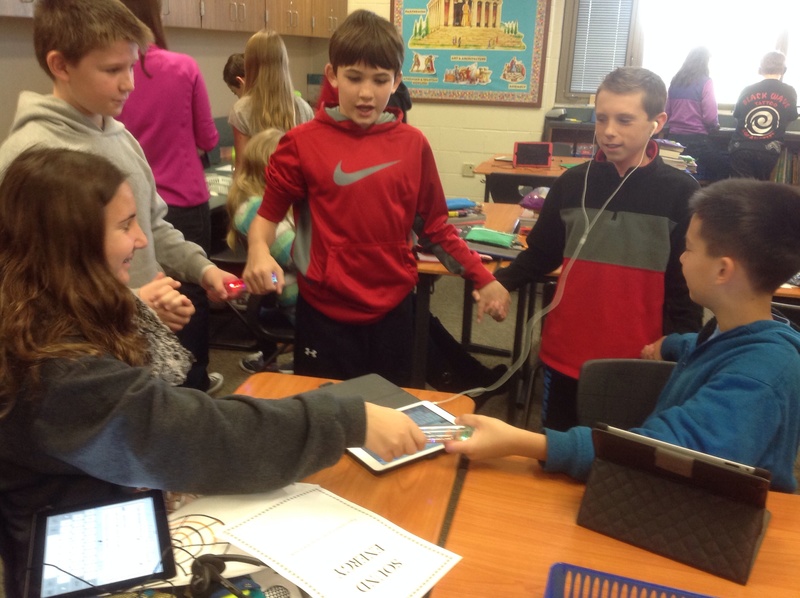
 Slowly, that is, until the computer age took hold. Today’s calculators are no less than specialized mini-computers, designed to assist scientists–and students–in performing complex calculations and solving mathematical and scientific problems. What’s more, these calculating ‘systems’ can easily be networked, making the once silent, straight-rowed math class an interactive, responsive mathematics lab! Take a one-minute peek into Kathleen Robeson’s room at Fishers High School to see how TI-NspireTM calculators and the CX Navigator SystemTM combined with the leadership of an excellent teacher, have transformed instruction.


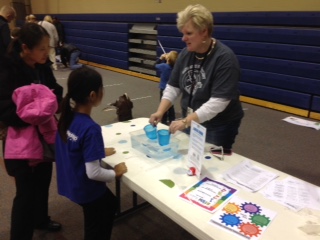
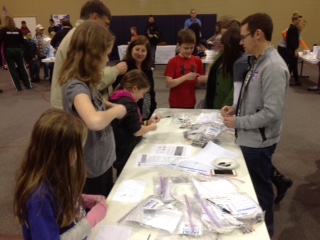
 children are naturals when it comes to creation and design. Catapults, rockets, roller coasters…just mention these words, and creative constructions are not far behind! Sand Creek Elementary recently provided a wonderful opportunity for budding engineers and designers to explore science, technology, engineering, and mathematics (STEM). The event, known as Family Engineering Night, brought together over two-hundred-and-fifty members of the SCE community.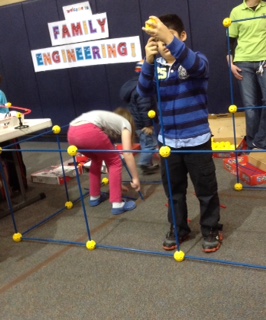
![FullSizeRender[1]](https://hse21shorts.com/wp-content/uploads/2014/11/fullsizerender11.jpg)


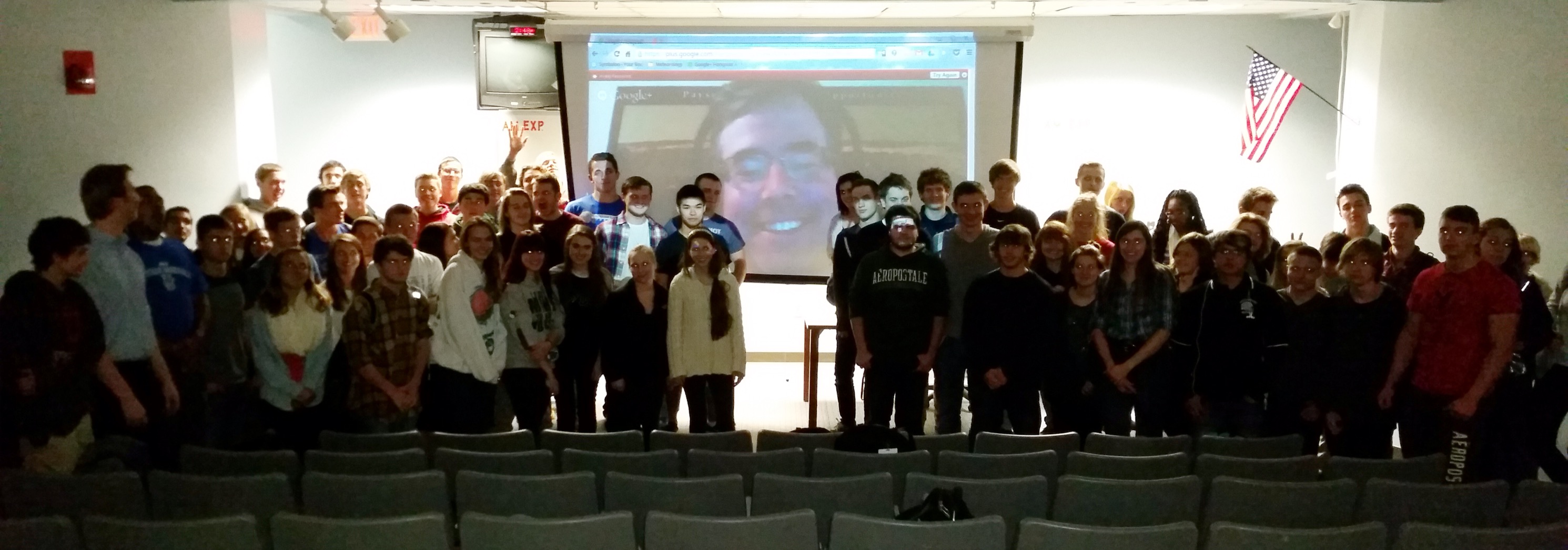

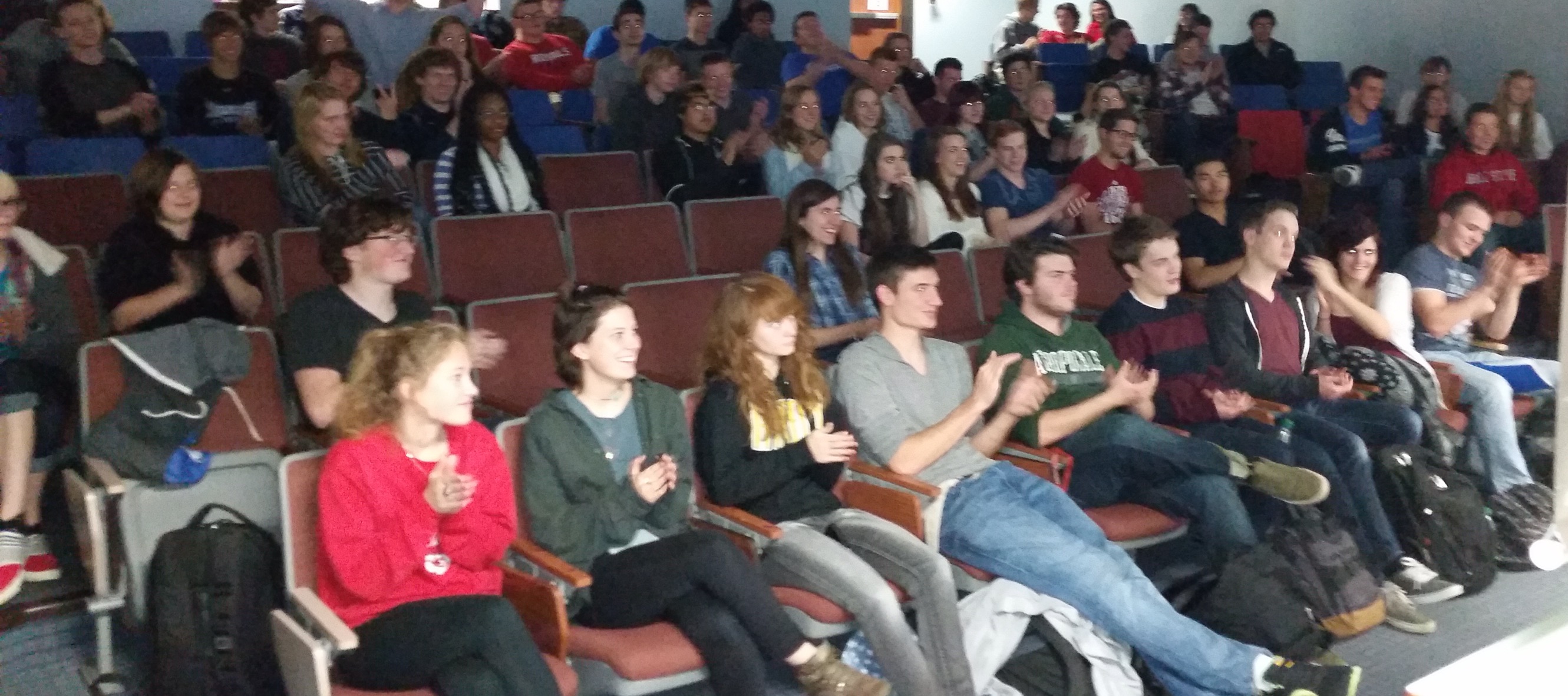
 Weir also took questions form the students. To the question, “What advice to do have for aspiring authors?” he responded, “It sounds simple, but just write. Don’t give away the ending or share your work. Most writers want to have an audience or someone to share their work with. If you hold off on sharing, this will act as motivation to finish your work.” Students also wanted to know who inspired the book’s main character, Mark Watney. To this, Weir replied, “Mark is very similar to me. A nerd, sarcastic and a smart-alec. I guess he has all of my good qualities and none of my bad qualities.”
 HSE21 Shorts